
You've probably seen the online criticism. Wood is porous. It can harbor bacteria. It splinters. These concerns aren't baseless, but they're incomplete. Proper sourcing, heat treatment, and washing address every one of these risks in practice.
This article breaks down why heat-treated, food-grade wood pallets remain safe, compliant, and widely trusted across dairy, produce, meat, and packaged goods supply chains, and what happens when the safety practices behind them get skipped.
TL;DR
- Heat-treated pallets (ISPM-15 certified) eliminate pests and pathogens without chemical residue
- Food-grade washed pallets add a sanitation layer for direct food-contact use
- Wood pallets meet FDA transportation equipment requirements when properly maintained
- Safety depends on sourcing, treatment, and inspection, not the wood itself
- Palleton supplies heat-treated, food-grade pallets built for food and beverage supply chains
What Makes a Wood Pallet "Food-Safe"
A food-safe wood pallet has gone through heat treatment, washing, or both to meet sanitation standards for food-contact transport. These aren't specialty items reserved for one niche. They move dairy, produce, beverages, meat, and packaged goods every day.
A food-safe pallet is a risk-reduction tool for moving product without adding contamination risk. The FDA's sanitary transportation rule doesn't ban wood. It requires transportation equipment that is:
- Suitable and adequately cleanable
- Maintained so it doesn't contaminate food or compromise container integrity
- Free of jagged edges and splinters that can damage packaging
That's the real standard: condition and maintenance, not material.
Key Reasons Wood Pallets Are Safe for Food Industry Use
Three controls make wood pallets viable for food use: heat treatment, food-grade washing, and disciplined sourcing with inspection. Each one maps to a different risk—pests, surface sanitation, and structural or contamination variability.
Heat Treatment Eliminates Pests and Pathogens Without Chemicals
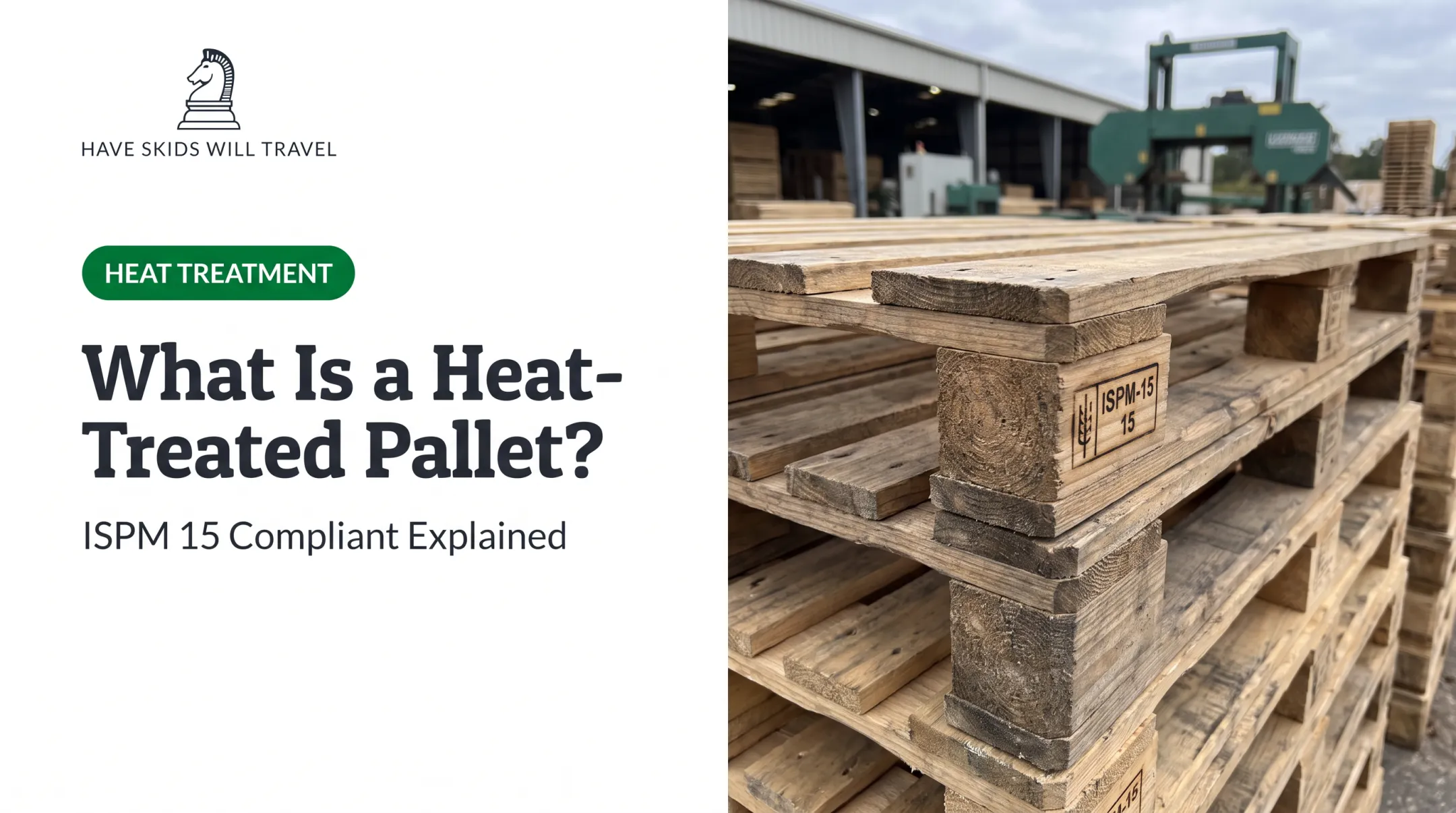
ISPM-15 heat treatment requires wood to reach 56°C (133°F) at its core for at least 30 continuous minutes. That's a global phytosanitary standard, not a marketing claim. Palleton's ISPM-15 Heat Treat Certification applies this exact process to pallets and crates, including custom crates for oversized machinery and equipment loads.
Unlike chemical fumigation, heat treatment works all the way through the wood profile:
- Kills insects, larvae, and fungi at the core, not just on the surface
- Leaves no chemical residue near food-contact surfaces
- Produces a visible ISPM-15 mark showing country code, facility ID, and treatment code (HT)

Methyl bromide fumigation is a weaker alternative: the IPPC actively discourages it for larger wood sections, and it still depends on chemical penetration rather than uniform heat.
Noncompliant pallets don't get a warning at the border. USDA APHIS states that shipments with noncompliant wood packaging won't enter the country and may trigger an Emergency Action Notification—safeguarding, treatment, destruction, or re-export. For international exporters and high-volume perishable shippers, a held container can mean spoiled product, longer clearance times, and avoidable contamination risk.
Food-Grade Washing Adds a Sanitation Layer
Heat treatment handles pests inside the wood. Washing handles what sits on it. Food-grade washing removes residue, debris, and surface bacteria before a pallet reaches food-contact areas. Palleton offers food-grade washed pallets as an added sanitation step beyond standard treatment for food and beverage shippers.
That step answers the common "porous surface" objection. Many processors prefer plastic because it can be washed repeatedly, while unwashed wood can hold residue over time. Food-grade washing closes that gap for wood and supports stronger sanitation audit results.
Retailers and auditors typically expect:
- No prior use with trash, waste, chemicals, or animal byproducts
- No visible damage, off-odors, or pest activity
- Clean, undamaged surfaces before entering production or warehouse space

These checks matter most for direct food-contact shipments and repeat-use pallet pools, where the same units cycle through a facility again and again.
Proper Sourcing and Inspection Reduce Structural and Contamination Risk
Treatment and washing only go so far if pallet quality is unpredictable. The point most "wood is unsafe" arguments miss: contamination complaints usually trace to inconsistent sourcing, not the material itself.
Mixed-origin used pools—units from dozens of unknown suppliers—are where splintering, hidden damage, and cross-contamination cluster.
Palleton reduces that variability by consolidating sourcing, tracking, and inspection under one provider:
- Grade selection — new hardwood/softwood, combo, or recycled options matched to load and budget
- In-house inspection and repair — every recycled pallet meets a defined standard before reentering rotation
- Centralized purchasing — pallets are bought, tracked, and sold exclusively through Palleton
- Cloud-based tracking — 24/7/365 inbound and outbound detail; McCain Foods has credited this for audit trails and monthly quality recaps

That model supports the FDA expectation that a loader confirm sanitary condition before loading. Guaranteeing that is far harder when pallets arrive from unpredictable sources. High-turnover pools and multi-vendor chains feel the difference first: lower damage and failure rates, and stronger supplier audit scores.
What Happens When Pallet Safety Practices Are Ignored
Skip the treatment, sourcing, or inspection steps, and the risks stack up quickly:
- Contamination exposure: bacteria or pests reach food products through untreated, unwashed wood
- Failed audits: sanitation reviews and retailer compliance checks flag inconsistent pallet condition
- Customs delays: non-ISPM-15-compliant export loads get held, quarantined, or turned back at the border
- Product damage: splintered boards puncture packaging, triggering claims and potential recalls
- Rising costs: replacing damaged or noncompliant pallets on an emergency basis costs more than managing quality upfront

These risks come from skipped controls, not from wood as a material.
How to Get the Most Safety Value from Wood Pallets
Wood pallet safety works best as an ongoing practice, not a one-and-done task:
- Source from a certified, tracked supply chain rather than mixed used-pallet pools with unknown history
- Apply heat treatment and washing consistently, not just when a shipment happens to be crossing a border
- Inspect pallet condition regularly and pull damaged units from rotation before they reach production areas
Palleton supplies food-grade washed and ISPM-15 heat-treated pallets through its multi-facility network and national manufacturing partners, with cloud-based tracking on pallets sourced through Palleton. That combination helps food industry customers keep quality consistent across locations instead of relying on whichever vendor filled last week's order.
Conclusion
Wood pallet safety in food supply chains comes down to three things: treatment, sourcing, and maintenance. Not the material itself.
- ISPM-15 heat treatment eliminates pests and pathogens at the core of the wood
- Food-grade washing removes surface contaminants before pallets enter food-handling environments
- Consistent sourcing and inspection prevent the structural failures that drive contamination complaints
Partnering with a provider like Palleton that treats, tracks, and inspects pallets consistently turns pallet safety from a recurring worry into a manageable practice.
Frequently Asked Questions
What are wooden pallets used in the food industry called?
They're typically called "food-grade pallets" or "heat-treated pallets" in shipping contracts. Some specifications combine both terms, requiring ISPM-15 heat treatment plus food-grade washing for direct food-contact loads.
Which wooden pallets are considered food-safe for use in the food industry?
ISPM-15 heat-treated pallets and food-grade washed pallets are the accepted standard. Heat treatment addresses pests and pathogens at the wood's core, while washing removes surface residue before food contact.
Are wood pallets FDA-compliant for food transportation?
Yes. FDA sanitary transportation rules focus on the condition and maintenance of transportation equipment, not on banning any specific material. A well-maintained wood pallet meets the same standard as any other suitable, cleanable equipment.
Is heat treatment better than chemical fumigation for food-safe pallets?
Heat treatment avoids chemical residue near food products while still eliminating pests and pathogens throughout the wood core. That's why ISPM-15 favors heat treatment over methyl bromide fumigation for most wood packaging.
How often should wood pallets in the food industry be inspected or replaced?
Inspect pallets visually before each use. Pull damaged units—those with splintering or broken boards—from rotation immediately so they never reach production or shipping.
Can wood pallets be reused safely for food shipments?
Yes, as long as they're properly cleaned, inspected, and sourced from a controlled pallet management program. The risk comes from mixed-origin, unmanaged pools, not from reuse itself.