
Softwood has pulled ahead of hardwood in overall usage across U.S. pallet manufacturing, largely because of faster-growing pine supply and lower cost per unit. But "more popular" doesn't mean "right for your load." This guide breaks down the real differences so you can match wood type to what you're actually shipping.
TL;DR
- Hardwood (oak, maple): denser and stronger for heavy, multi-trip loads; higher cost and weight
- Softwood (Southern Yellow Pine, spruce, fir): lighter, lower cost, and the dominant U.S. pallet material
- Match the wood to load weight, trip frequency, budget, and ISPM-15 export needs
- Palleton builds custom hardwood and softwood pallets with ISPM-15 heat-treat certification
Hardwood vs. Softwood: Quick Comparison
Cost
- Hardwood: Higher upfront cost, driven by slower-growing trees, denser lumber, and tighter supply
- Softwood: Lower cost, widely available, especially Southern Yellow Pine
Palleton doesn't publish a fixed price spread between the two, since actual quotes depend on grade, condition (new, combo, or recycled), and treatment. If you need firm numbers, a custom quote is the fastest way to compare apples to apples.
Density & Strength
- Hardwood: Higher specific gravity and modulus of rupture (MOR), built for heavy loads
- Softwood: Lower density, often needs thicker boards to hit the same load rating
Weight
- Hardwood: Heavier, which is harder on manual handlers and adds tare weight to every shipment
- Softwood: Lighter, easier for manual handling and automated systems
Availability
- Hardwood: Slower tree growth and tighter regional supply
- Softwood: Fast-growing pine plantations keep supply abundant
Softwood's dominance isn't a recent blip. A Virginia Tech thesis analyzing U.S. pallet manufacturing survey data found softwood made up roughly 81% of board feet used in wooden pallet manufacturing in 2021, up from just 36% in 2006. That's a steady, multi-decade shift.
Best Use Case
| Wood Type | Best For |
|---|---|
| Hardwood | Multi-trip, heavy industrial loads |
| Softwood | Single-use, lighter shipments, cost-sensitive programs |

What Is a Hardwood Pallet?
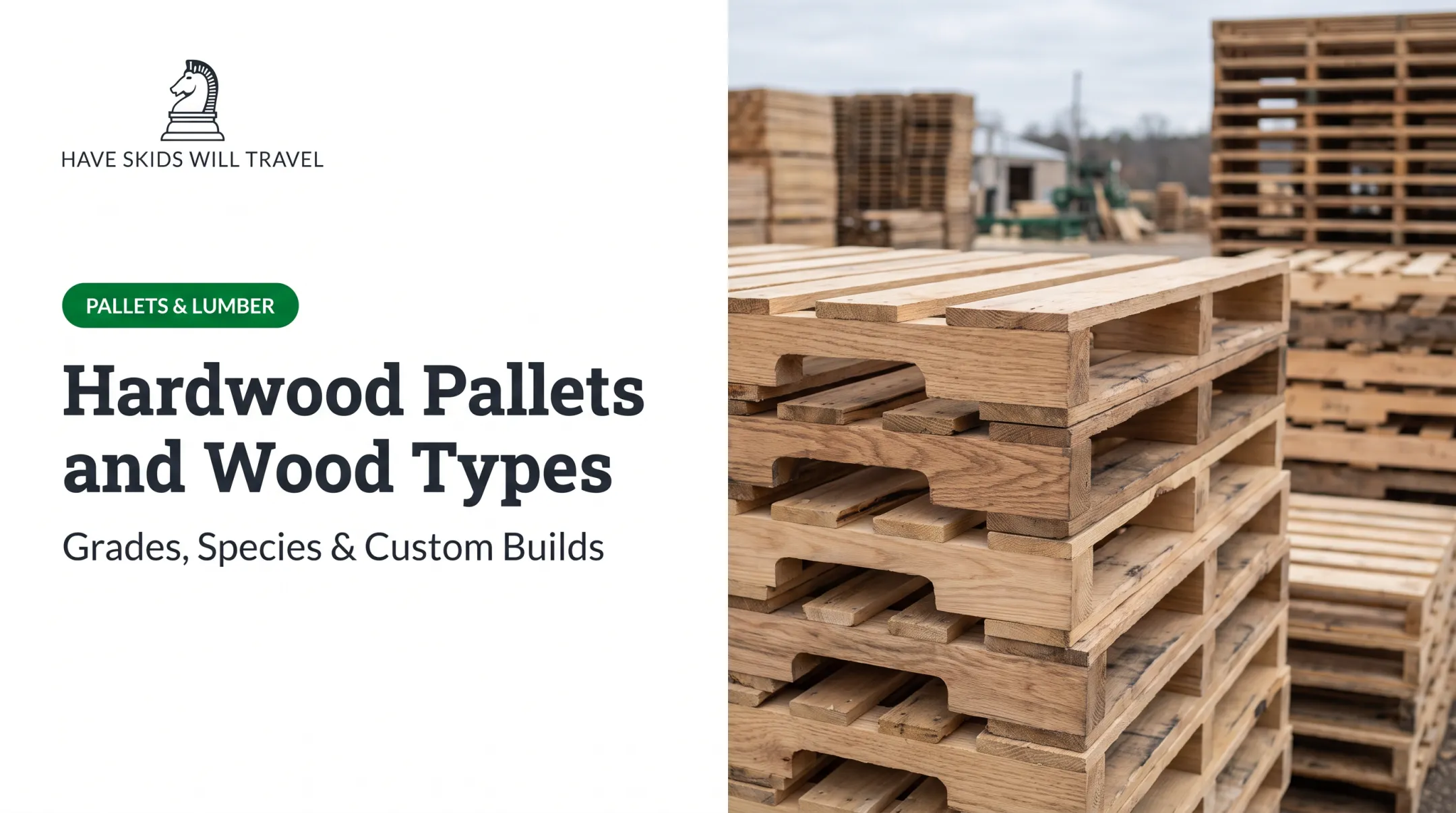
Hardwood pallets come from deciduous trees: oak, maple, birch, and ash are the common ones. These species grow slower than pine, which is exactly why they're denser and tougher.
Core benefits:
- Higher load capacity per board
- Longer service life in reusable pooling programs
- Better resistance to wear from repeated forklift handling and racking
Hardwood density varies widely. High-density species like oak, maple, and birch sit at the top end for strength. Lower-density hardwoods such as poplar and aspen offer a middle ground: sturdier than most softwoods, but lighter and cheaper than oak.
Use Cases of Hardwood Pallets
Hardwood earns its keep where structural failure isn't an option:
- Heavy machinery and industrial equipment
- Automotive components and steel products
- Dense goods where a cracked deck board means a damaged load or a safety incident
It's also the standard choice in multi-trip pooling programs. The higher upfront cost gets absorbed over dozens of reuse cycles, making the total cost of ownership lower than it looks on day one.
The numbers back this up. USDA's Forest Products Laboratory Wood Handbook lists white oak at a specific gravity of 0.68 and a modulus of rupture of 15,200 lbf/in² at 12% moisture — meaningfully denser and stronger than typical softwood lumber. That's a material benchmark, not a finished-pallet load rating, but it explains why oak shows up again and again in heavy-duty pallet builds.

What Is a Softwood Pallet?
Softwood pallets come from coniferous trees: Southern Yellow Pine, spruce, and fir top the list. These trees grow fast, which keeps supply steady and prices manageable.
Core benefits:
- Lower cost per unit
- Easier manual handling due to lighter weight
- Reduced freight tare weight, which matters when you're paying by the pound
Standard Southern Yellow Pine (SYP) covers most general-purpose applications. For heavier-duty needs without jumping to hardwood, Douglas fir offers a denser softwood alternative.
Use Cases of Softwood Pallets
Softwood fits naturally into:
- Single-use shipments where the pallet isn't coming back
- Food and pharmaceutical applications requiring kiln-dried wood
- General warehouse operations moving lighter, non-critical loads
- Export shipments requiring ISPM-15 heat treatment (required regardless of species)
That same Virginia Tech survey found Southern Pine represented 42% of all softwood species used in pallet manufacturing in 2021, up from prior years, with Douglas fir close behind at 40%. Whether you're running food-grade programs or general shipping, softwood is increasingly the default choice.

Hardwood vs. Softwood: Which Is Better for Your Business?
There's no universal winner here. The right call comes down to four factors:
- Load weight: Heavier or denser goods call for hardwood's extra strength
- Trip frequency: Multi-trip pooling programs favor hardwood's durability; single-use shipments favor softwood's lower cost
- Compliance needs: Export shipments need ISPM-15 heat treatment regardless of wood type
- Total cost of ownership: Don't just compare sticker price; factor in reuse cycles, freight weight, and damage risk
Quick rule of thumb:
- Choose hardwood if you're running a multi-trip pooling program or shipping heavy, dense industrial goods
- Choose softwood for single-use, cost-sensitive, or lightweight shipments

Many operations don't pick one wood type and stick with it. They blend both: hardwood for the heaviest product lines and softwood for everything else.
Getting that mix right—plus custom design and heat-treatment specs for each shipment type—is where a supplier earns its keep. Palleton builds hardwood and softwood pallets to spec and can walk through load requirements before you commit to either.
Frequently Asked Questions
How do I tell if a pallet is hardwood or softwood?
Hardwood feels noticeably heavier and denser, with tighter grain patterns. Softwood is lighter, often shows visible resin or knots, and can carry a faint pine smell. Picking one up and checking the grain is usually enough for a field test.
What wood are most pallets made of?
Southern Yellow Pine (softwood) and oak (hardwood) are the two most common species in U.S. pallet production, with mixed hardwoods also widely used depending on regional supply.
Why is burning pallets illegal in some areas?
Many pallets carry chemical treatments, pesticides, or coatings. Burning them can release toxic fumes, which is why open burning of treated wood is restricted or banned in many states.
How much does one pallet cost?
Pricing depends on species, grade, condition, and treatment, so costs vary widely. Request a quote from a supplier like Palleton based on your load and volume needs.
Is oak or pine better for pallets?
Neither wins outright. Oak suits heavy, multi-trip use where durability matters most. Pine suits single-use, lightweight, cost-sensitive shipments where price and weight matter more than lifespan.
Do wood pallets need to be heat treated?
Not for domestic shipping. Under ISPM-15, heat treatment is mandatory for most international shipments regardless of wood species. Palleton is ISPM-15 heat treat certified for export-ready pallets and crates.