
ISPM 15 governs every piece of wood packaging that crosses an international border — pallets, crates, dunnage, the works. It doesn't matter if you're shipping automotive parts internationally or pharmaceuticals to the EU.
This guide breaks down what ISPM 15 actually requires, how heat treatment works, how to read the compliance stamp, and how to source pallets that won't get flagged at the dock.
Key Takeaways
- ISPM 15 requires heat treatment (56°C/133°F core for 30+ min) or methyl bromide fumigation, plus an official stamp
- Verify the importing country’s rules; ISPM 15 enforcement is destination-specific
- The IPPC "wheat stamp" on stringer boards is the only authoritative proof of compliance
- Domestic US shipments don’t need ISPM 15 marking; only international exports do
- A certified heat-treatment provider like Palleton removes compliance guesswork and shipment risk
What Is ISPM 15 and Why It Matters for Exporters
ISPM 15 is the International Plant Protection Convention's standard for regulating wood packaging material as a pathway for pests and diseases tied to living trees. It applies to solid wood packaging: pallets, crates, boxes, cases, dunnage, cable drums, and spools.
Who this applies to:
- Exporters shipping any product on wood pallets internationally
- Manufacturers sending machinery or equipment overseas
- International freight handlers and logistics coordinators
- Anyone whose supply chain touches a border
Those groups still can't treat the rules as universal. ISPM 15 is destination-specific, and USDA APHIS maintains a current list of markets that require compliant wood packaging material. Check the importing country's rules before you ship — don't assume.
What's covered vs. exempt:
- Covered: Pallets, crates, dunnage, packing cases, cable drums, wood used for bracing or blocking
- Exempt: Plywood, particleboard, OSB, and other processed wood products manufactured using heat, glue, or pressure
Ship non-compliant wood packaging, and you're looking at shipment rejection, quarantine, mandatory re-treatment at the border, or outright destruction. None of those outcomes are cheap, and none of them are fast.
Heat Treatment Requirements: The Core ISPM 15 Standard
Debarking and the Heat Treatment Process
Wood must be debarked before treatment. Bark harbors pests, so leaving it on defeats the purpose of treating the wood in the first place.
The core standard itself is specific:
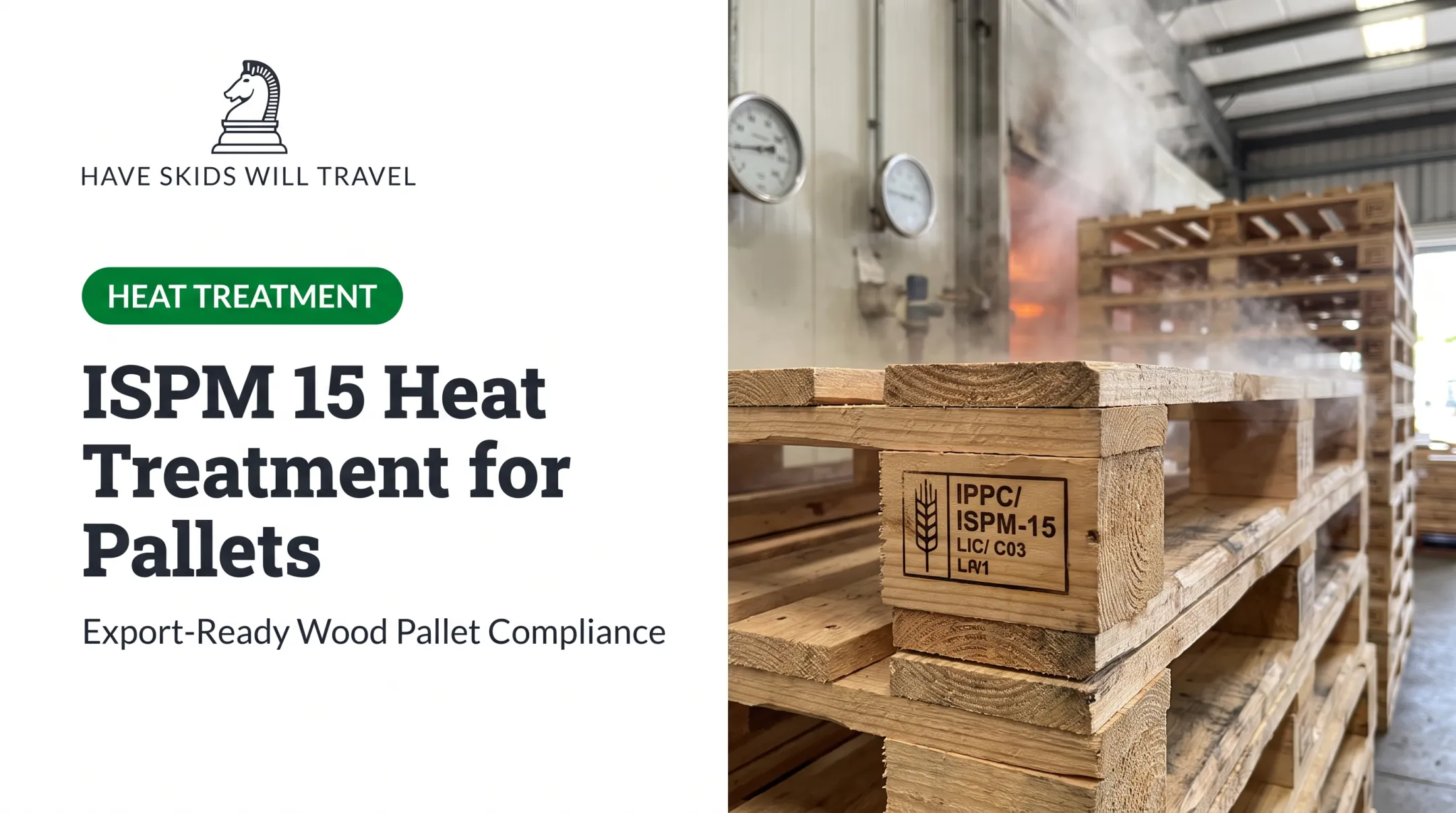
- Minimum core temperature: 56°C (133°F)
- Minimum duration: 30 continuous minutes at that core temperature
- Facility requirement: Treatment must happen at an NPPO-approved facility (APHIS-accredited in the U.S.)
That last point matters more than most exporters realize. A supplier telling you their wood is "kiln dried" isn't the same as ISPM 15 authorization. Kiln drying and heat treatment aren't interchangeable terms, even though they sound similar.
Methyl Bromide Fumigation vs. Heat Treatment
Heat treatment and methyl bromide (MB) fumigation are the two IPPC-approved methods. They're not equal in practice.
| Factor | Heat Treatment (HT) | Methyl Bromide (MB) |
|---|---|---|
| Process | Wood heated to core temp | Chemical fumigation |
| US status | Standard commercial method | Phased out for production/consumption since 2005, except quarantine/preshipment exemptions |
| Handling | Safe to handle immediately | Chemical residue concerns |
| Availability | Widely accepted globally | Restricted, harder to source |

Heat treatment is the more practical route for exporters today. MB still has a lawful place under quarantine and preshipment exemptions, but between regulatory restrictions and operational hassle, most shippers find HT simpler to manage.
Repairs, Remanufacturing, and Re-Treatment Rules
Here's where a lot of exporters get tripped up: Repaired pallets lose automatic compliance. A repaired or remanufactured pallet doesn't keep its old status by default.
If a pallet gets a new board, a replaced stringer, or any structural rework, that alteration triggers a new compliance decision. The old stamp doesn't necessarily apply anymore.
There's genuine industry tension here. The National Wooden Pallet and Container Association (NWPCA) has pushed for more flexibility on re-marking repaired units without full re-treatment.
The American Lumber Standard Committee (ALSC), which oversees HT certification enforcement in the U.S., has required that repaired packaging either get fully heat treated and recertified, or have its ISPM 15 marks removed entirely.
The practical takeaway: treat any repaired or reworked pallet as a fresh compliance question. Don't assume an old stamp still counts.
Decoding the ISPM 15 Stamp
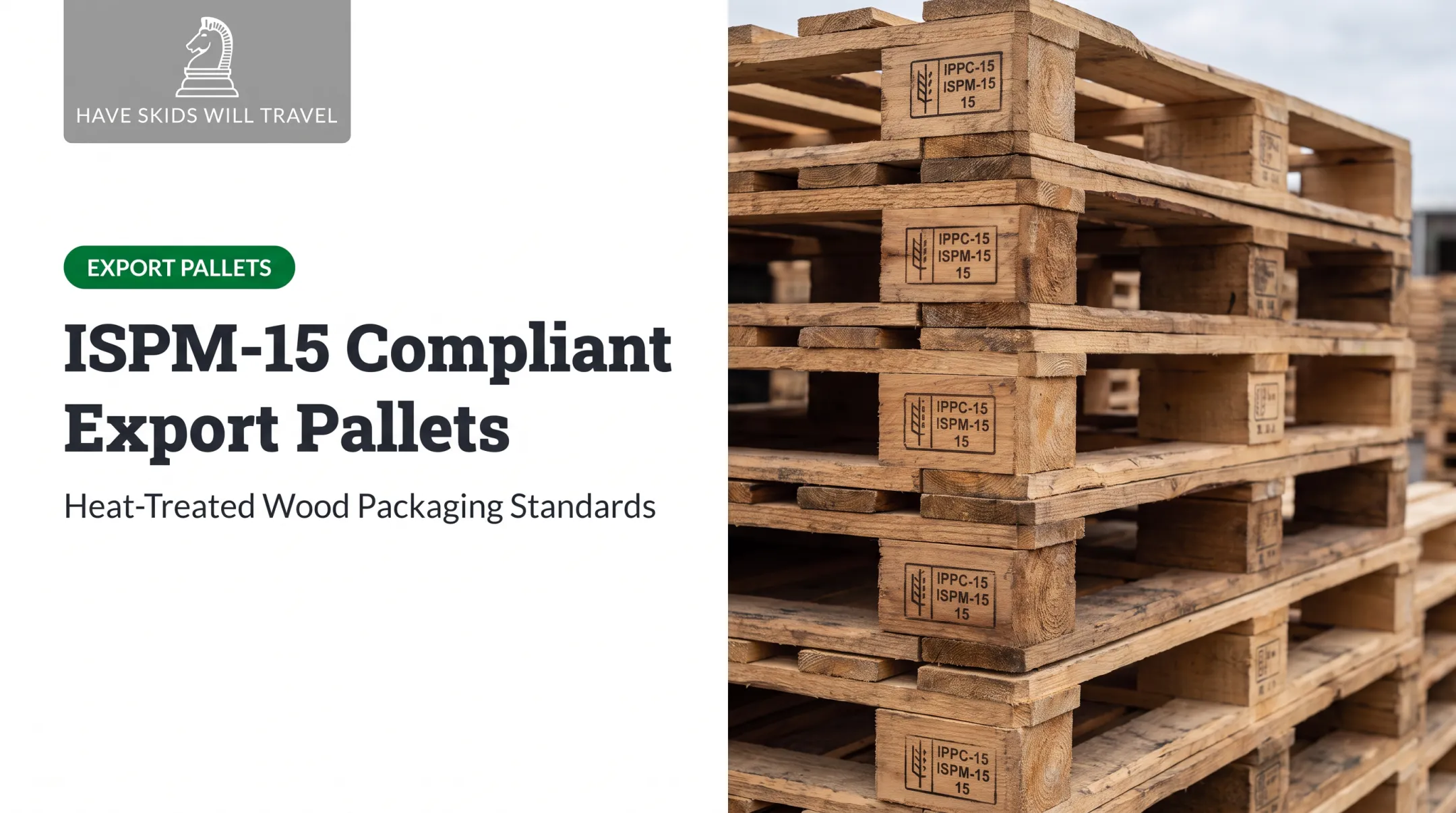
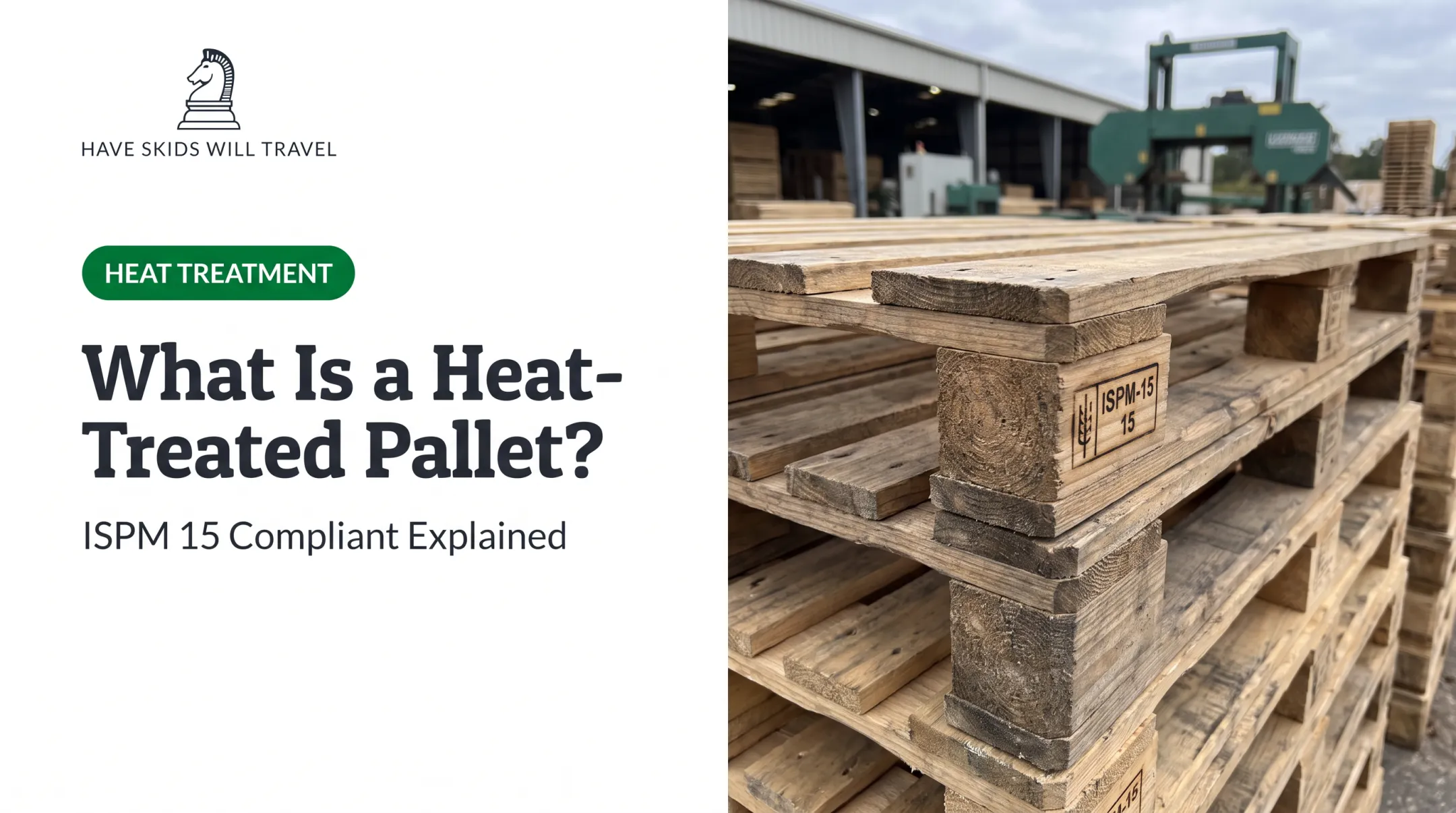
The stamp, often called the "wheat stamp" or "bug stamp," is the only proof customs officials will accept. It contains four elements:
- IPPC logo (the wheat/spike symbol)
- Two-letter country code
- Producer/facility number assigned by the certifying authority
- Treatment code

For reference, Palleton's stamp reads "US-02 334 HT" — country code US, facility number 02 334, and the HT treatment designation.
The stamp typically appears on the side stringer boards, and sometimes only on one face of the pallet. Before you treat a pallet as unstamped, inspect both stringer faces:
Clean off dirt or grime that may obscure the mark. Faded or dirty stamps get mistaken for missing ones constantly.
Treatment code cheat sheet:
- HT — Heat treated, compliant
- MB — Methyl bromide fumigated; avoid skin contact, never burn this wood
- KD — Kiln dried alone; this is not sufficient treatment on its own
- DB — Debarked; not a treatment code, just confirms bark removal
Falsifying a stamp is a federal crime. The Department of Justice prosecuted a pallet recycling company for stamping untreated pallets as compliant, resulting in a $100,000 fine and a separate $1,000 penalty with three years of probation for the company's former owner. That case covered hundreds of pallets over four years.
Choosing the Right Export Pallet Solution for Your Business
Picking a pallet supplier for export work isn't the same as picking one for domestic shipping. Look for:
- NPPO-approved or accredited treatment facilities, not just a verbal claim of "kiln treated"
- Consistent, legible stamping on every unit, not only the ones you happen to inspect
- A supplier who understands your cargo, whether pharmaceuticals, automotive parts, machinery, or food and beverage
Palleton is ISPM-15 heat-treat certified for pallets and crates, treating wood to a minimum core temperature of 140°F for at least 30 minutes before applying the required stamp. Exporters get a documented, audited trail from raw lumber to finished, marked pallet.

The stamp alone is not enough; pallet type has to match the cargo:
- Pharmaceuticals often need cleaner, more controlled packaging builds
- Automotive parts and machinery frequently need reinforced custom crates with bracing or padding
- Oversized or fragile freight benefits from crates built to actual product dimensions, not generic sizing
Palleton builds custom export pallets and crates around product weight, dimensions, and handling needs instead of forcing a standard 48x40 format on every shipment.
Multi-site export programs also get harder when each location buys pallets on its own. With seven company-owned facilities plus partner suppliers, Palleton can support sourcing across sites so teams are not stitching together a different vendor for every plant.
Frequently Asked Questions
What is a heat treated pallet?
A wood pallet heated to a core temperature of 56°C (133°F) for at least 30 minutes to kill pests and larvae. Once treated, it receives the ISPM 15 stamp certifying compliance for international shipping.
What is the ISPM 15 standard for heat-treated pallets?
ISPM 15 is the international phytosanitary standard requiring wood packaging in cross-border trade to be treated (heat or methyl bromide) and marked with an official compliance stamp. It stops pests from spreading through wood packaging.
What makes a pallet heat-treated?
The wood is debarked, then placed in a monitored kiln until its core reaches 56°C for a full 30 minutes. An authorized facility then applies the ISPM 15 stamp with the HT treatment code to confirm the process.
How long do heat-treated pallets last?
There's no fixed lifespan tied specifically to heat treatment. Service life depends on load, handling, storage conditions, and repair history; heat treatment addresses pest risk, not general durability.
Are heat-treated pallets safe to use?
Yes. Heat-treated pallets are safe to handle immediately after treatment and leave no chemical residue, unlike methyl bromide-fumigated pallets that can raise lingering exposure concerns.
Conclusion
ISPM 15 compliance keeps your shipment moving instead of sitting in a customs holding area. Skip the mark—or use a fraudulent one—and you risk a rejected load, costly delays, and possible legal trouble.
Palleton has spent more than 45 years in the pallet and lumber business. With ISPM-15 Heat Treat Certification, every export pallet and crate leaves with the documentation and stamping customs officials expect to see.
Need export-ready pallets or crates built for your next shipment? Contact Palleton at 402-933-3375 for a quote.