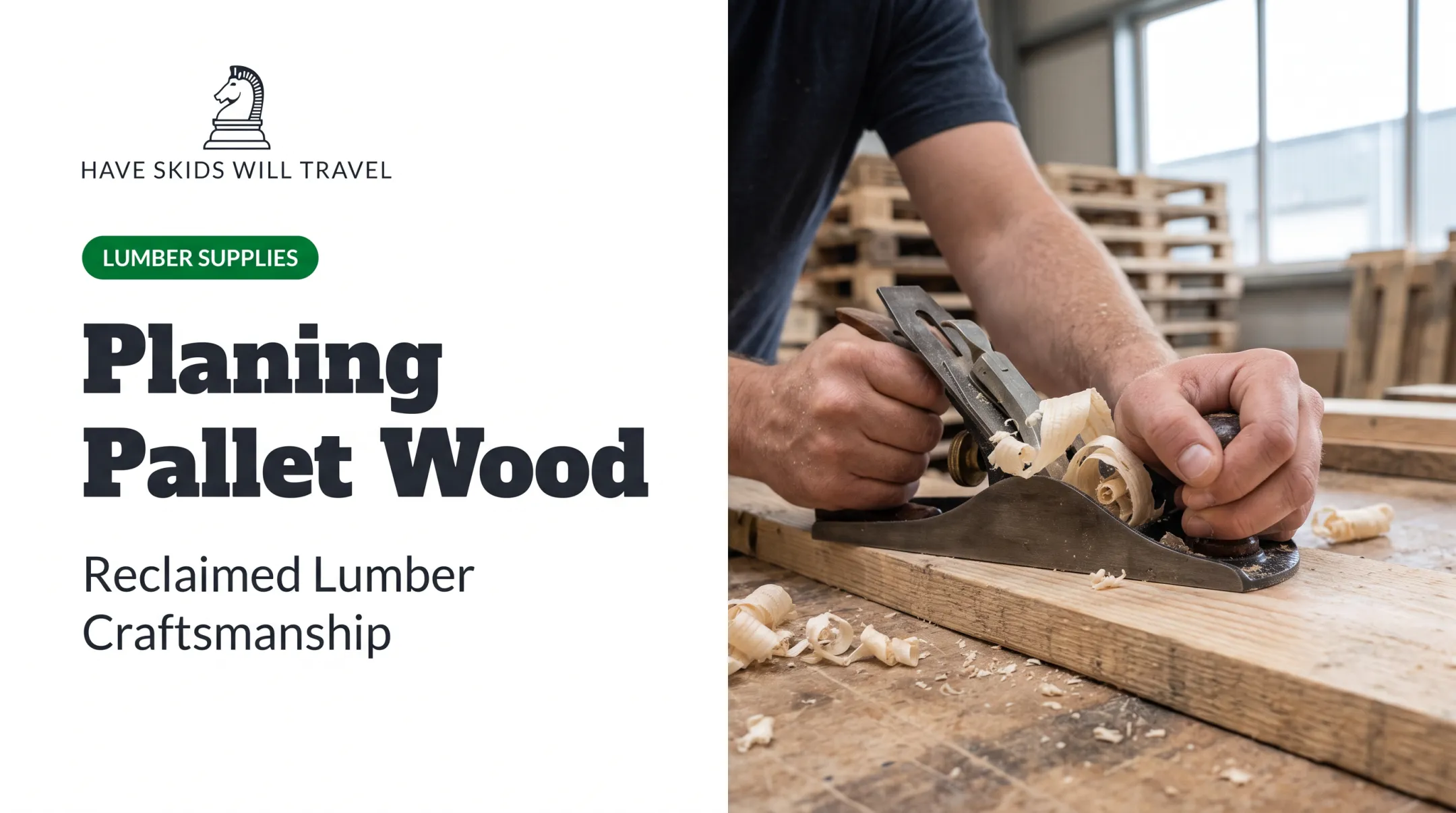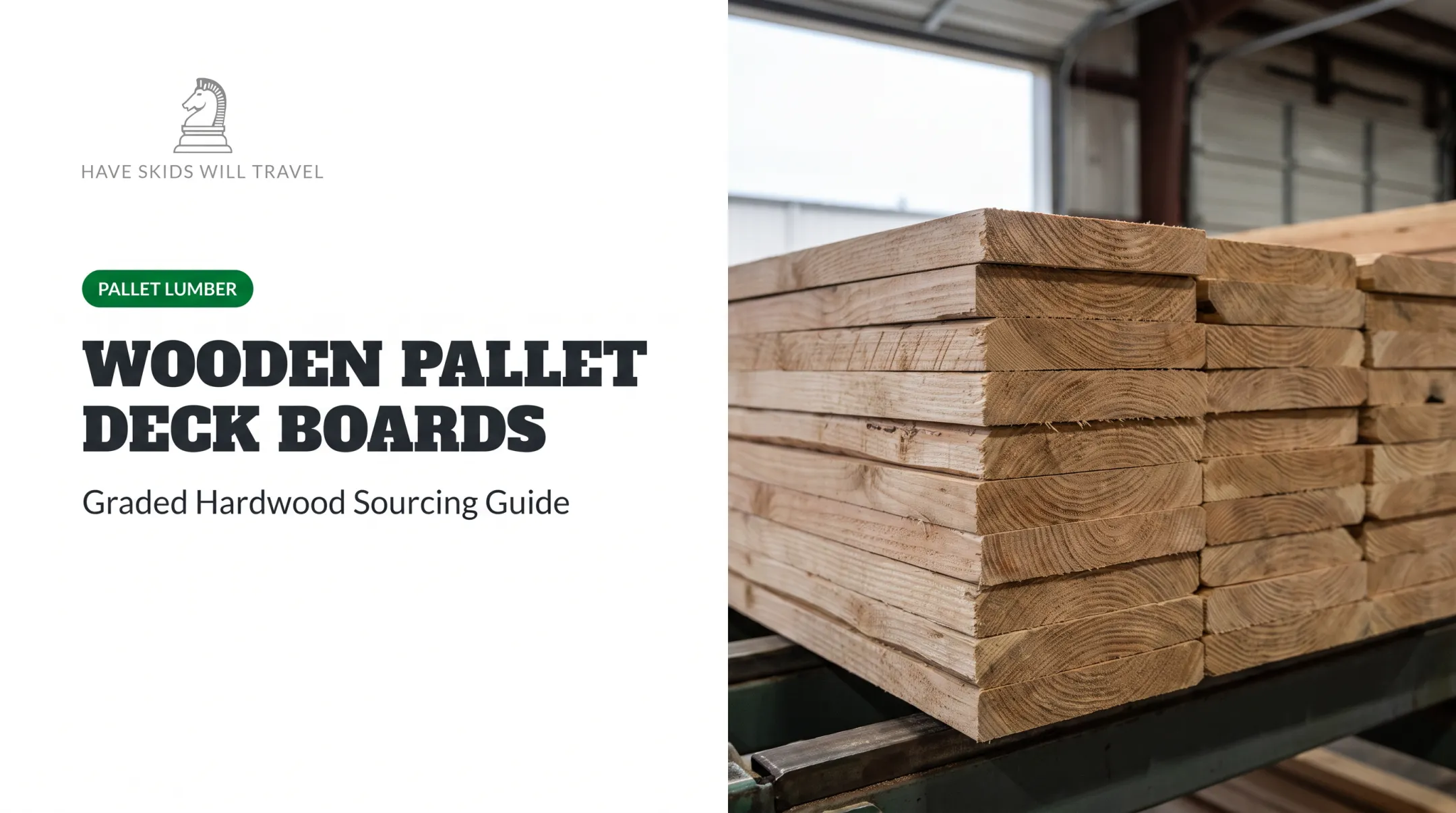

The good news: broken boards, loose nails, and cracked stringers are usually fixable without replacing the whole pallet. This guide walks through the common problems, the repair steps, and when replacement (or a professional partner like Palleton) makes more sense.
TL;DR
- Most frequent issues: broken deck boards, loose/protruding nails, cracked stringers, splinters
- Repair vs. replace: minor damage is fixable with basic tools; structural or widespread damage means replace
- 4-step repair process: diagnose, isolate the cause, repair, test
- High volume or export: use a pallet partner for bulk repairs and ISPM-15 heat-treated pallets
What Is a Wood Pallet and Why Repair It?
A wood pallet is a flat platform built from stringers or blocks and deck boards, built to move and store goods with forklifts and pallet jacks. The structure is simple, yet it takes heavy loads every shift.
Stacks, forklift entries, and long truck rides stress the same points: stringer notches, outer deck boards, and nail joints. This wear is predictable, which is exactly why repair works. You're not guessing where the damage will be.
Pallets are reusable assets. Treat them that way—with regular inspection and repair—and you extend working life, cut replacement spend, and keep freight moving safely.
Common Problems With Wood Pallets
Pallet failures follow a handful of predictable patterns tied to handling and load stress. A 2023 field study of 430 used stringer pallets found that stringer notches were damaged in 52% of field pallets, with splits, missing wood, and breaks as the leading damage types (BioResources study).

Cracked or broken stringers
- Symptoms: visible cracks along the support beam, rocking or sagging in the middle
- Likely cause: repeated forklift entry, overloading, or uneven weight distribution
Broken or cracked deck boards
- Symptoms: visible splits, sagging, boards giving way under weight
- Likely cause: forklift strikes, overloading, or prolonged moisture exposure
Loose or protruding nails
- Symptoms: nails sticking up, wobbly boards, snagging gloves or wrapping film
- Likely cause: repeated vibration, transport impact, or worn nail holes
Splinters and rough edges
- Symptoms: jagged wood surfaces that can injure handlers or damage wrapped goods
- Likely cause: natural wear, dry conditions, or splitting from impact
Ignore these issues long enough and you're looking at product damage, workplace injuries, and mid-transport load failures. OSHA has documented at least one fatality tied to a pallet breaking during retrieval (OSHA accident report). That's the worst-case outcome of a "we'll fix it later" pallet.

How to Fix a Wood Pallet (Step-by-Step)
Skipping straight to a repair without identifying the exact damage wastes materials and often leads to a repeat failure a few weeks later. Diagnosing first ensures the fix actually matches the problem.
Step 1: Inspect and Identify the Damage
- Check deck boards, stringers, and nails for cracks, looseness, or rot
- Test for wobble, sagging, or uneven weight distribution
- Document the type and location of damage before choosing a repair method
Step 2: Determine the Repair Category
- Decide whether it's a board replacement, nail fix, or structural stringer repair
- Rule out rot or moisture damage extending beyond the visible break
- Don't patch over deeper structural problems—they'll resurface
Step 3: Perform the Repair
If a deck board is broken:
- Pry out the damaged board and remove old nails
- Measure, cut, and nail in a replacement board matching original thickness and length
- Countersink nails and check flush alignment with neighboring boards
If nails are loose or protruding:
- Remove bent or worn nails and reposition the board
- Drive new ring-shank nails at a slight angle into fresh wood, offset from old holes
If a stringer is cracked or broken:
- For minor cracks: apply wood glue and reinforce with a metal plate or plywood splint
- For full breaks: remove attached deck boards, replace the stringer with matching dimensions, reattach boards
Lab testing on stringer reinforcement found restored 65-85% of original stiffness in single-fracture cases (Pallet Enterprise research). Performance dropped 15-29% when two stringers on the same pallet needed repair.
Mark any pallet with a reinforced or replaced stringer for light-duty use only.
Step 4: Test and Finalize the Repair
- Check the pallet sits flat with no rocking or gaps
- Confirm no nails protrude and all boards are secure
- Mark the pallet as repaired, noting light-duty status unless certified otherwise

When Should You Fix vs Replace a Wood Pallet?
Choose repair or replacement based on damage extent, safety risk, and cost versus a new or supplier-sourced pallet.
| Scenario | Fix | Replace |
|---|---|---|
| Minor, isolated damage (1-2 boards, one loose nail area) | Yes, repair restores full stability | Not needed |
| Multiple/structural damage (more than one cracked stringer or 30%+ boards damaged) | Only for light-duty use | Recommended |
| Repeated repairs on the same pallet | Diminishing returns | Better once repair cost nears 50% of a new pallet's price |
| Export, heavy-load, or compliance needs | Not advisable | Source certified, heat-treated pallets |
A note on cost: There's no universal industry rule for when repair stops making financial sense. Market pricing shows why the math varies. Fastmarkets assessed new 48x40 GMA pallets in Dallas-Fort Worth at $10-14 in April 2025, with used Grade A at $8.50-10.50 and Grade B at $4-8.50 (Fastmarkets pallet pricing).
When a used Grade B pallet costs less than a stringer repair's labor and materials, replacement often wins.
For export shipments or heavy/international loads, skip the repair math entirely if the pallet needs ISPM-15 certification. Palleton sources certified, heat-treated pallets built to spec for these loads—a repaired pallet's compliance status can't always be verified after the fact.

Common Mistakes and Preventive Maintenance
Mistakes to avoid:
- Patching visible damage without checking for hidden rot or stress fractures
- Skipping a stability test after the repair
- Using mismatched nail sizes or wood thickness
- Reusing a pallet for heavy loads after major stringer repairs
Preventive measures:
- Schedule regular visual inspections, especially at receiving and before loading
- Store pallets in dry, covered areas to prevent warping and rot
- Avoid overloading beyond rated capacity
- Train warehouse staff to spot early damage before it becomes a safety issue
When repair volume climbs, logging every fix in-house gets tedious fast. Many warehouses hand damaged stock to a supplier instead.
Palleton supports that handoff with recycling and buy-back options, plus consistent inspection standards on recycled and combo pallets—so repair criteria stay uniform without adding work to your floor team.
Frequently Asked Questions
Can a broken wood pallet be fixed?
Most minor damage, like a broken board or loose nails, is repairable. Multiple cracked stringers or extensive rot usually mean replacement is the safer call.
How much does it cost to repair a pallet versus buying new?
Repairs typically run a few dollars in materials plus labor time. A new standard pallet costs more upfront, which makes repair the cost-effective choice for minor, isolated damage.
What tools do I need to repair a wood pallet?
A hammer or nail gun, pry bar, saw, replacement boards, nails, and basic safety gear (gloves and eye protection) cover most standard repairs.
Is it safe to use a repaired pallet for heavy loads?
Repaired pallets, especially those with reinforced stringers, are best suited for light-duty or internal use rather than heavy or export shipments.
How often should pallets be inspected for damage?
Inspect before each use cycle, or on a regular schedule for high-turnover warehouses. There's no fixed federal interval, so build inspection into your receiving and pre-load process.
When should I use a professional pallet repair or supply service?
Large-volume repairs, ISPM-15 certification needs, or custom builds are strong reasons to work with a provider like Palleton. That usually beats managing every repair decision in-house.