
For US businesses, the stakes go beyond price per unit. You're weighing pallet fit, quality consistency, lead times, delivery coverage, and—if you ship overseas—export compliance. In a 2024 survey of 174 materials-handling professionals, 28% of buyers acquiring used pallets reported poorer quality as an ongoing issue, according to Modern Materials Handling's survey. That's not a rounding error; it's a sourcing problem hiding in plain sight.
This guide walks through how to define your pallet requirements, vet supplier capability, compare total cost of ownership, and set quality expectations that actually hold up over time.
Key Takeaways
- Base supplier selection on specifications, quality controls, delivery reliability, and total cost, not unit price alone
- Confirm the supplier can deliver the right pallet type, dimensions, load rating, and volume consistently
- Validate claims with vendor documents, sample inspections, references, and a trial order
- Export shipments may require ISPM-15-compliant marking; check destination rules before ordering
- Favor suppliers who support recurring demand, emergency orders, and recovery or buy-back programs
What Is a Wooden Pallet Supplier?
A wooden pallet supplier manufactures, distributes, sources, or manages wood pallets for business customers. Many also handle design, repair, recycling, delivery, tracking, or export treatment. The category covers more ground than most buyers assume.
Supplier models vary widely:
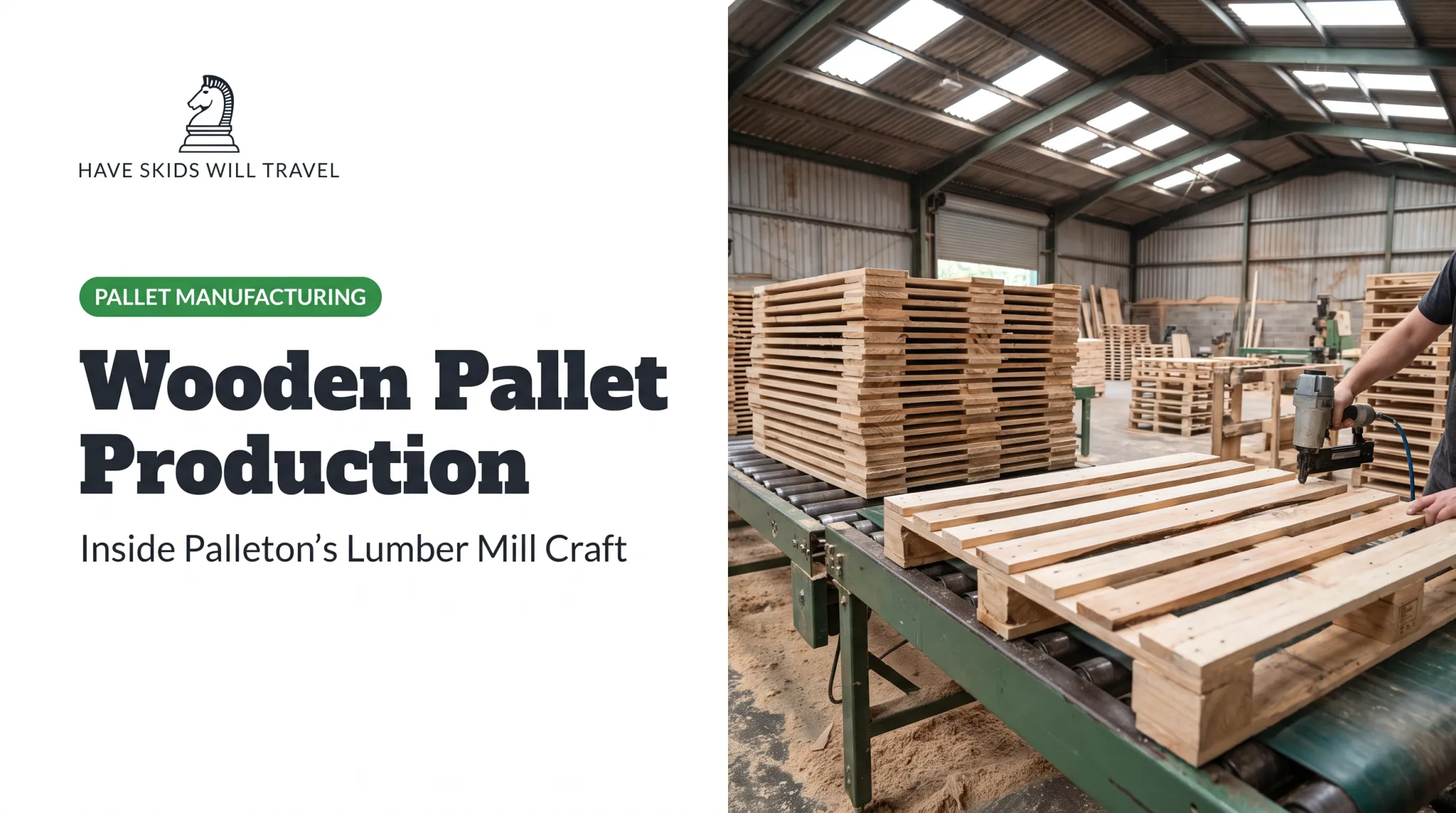
- Direct manufacturers that build pallets in-house from raw lumber
- Regional suppliers serving a defined geographic footprint
- National sourcing networks that broker capacity across multiple facilities
- Recycled or remanufactured providers that sort, repair, or rebuild used stock
- Pooling or rental programs that lease pallets rather than sell them
Your shipment volume, facility layout, product characteristics, reuse cycle, and domestic versus international shipping needs all shape which model fits.
A pharmaceutical shipper with strict hygiene requirements needs a different supplier profile than a machinery exporter shipping oversized crates twice a month.
Palleton, for example, sources through its own facilities and partner manufacturers, which lets it flex between standard supply and national account programs depending on what a customer needs.
Core Components of a Wooden Pallet Supplier
Evaluate any supplier relationship across four connected areas: product capability, quality assurance, logistics capacity, and account support. Weakness in any one area tends to show up as a cost or delay somewhere else in your operation.
Product Capability
A capable supplier should offer standard and custom builds, plus condition options that match your application:
- New, used, recycled, repaired, or combination pallets
- Stringer and block designs
- Heavy-duty builds for high-weight loads
- Food-grade stock and heat-treated units for export
Quality and Compliance
Consistent construction matters more than a single good sample. Ask how the supplier defines acceptable condition, what inspection procedures they run, and whether treatment or certification is documented and traceable back to a specific batch.
Logistics and Service
This covers delivery scheduling, recurring order cadence, emergency fulfillment, and coordination across multiple facility locations. A supplier who can't communicate clearly about lead times or substitutions will cost you more in downstream scrambling than their invoice ever shows.
Account Support
Strong account support means a named contact who knows your specs, answers quickly when something goes wrong, and handles substitutions without leaving you guessing. Weak support turns small quality or delivery issues into line-down events.
Benefits of Working With the Right Supplier
A supplier that fits your operation changes your day-to-day reality, not just your invoice total. The right fit shows up in:
- Fewer damaged loads during transit and handling
- Smoother forklift and pallet-jack movement through the warehouse
- Better compatibility with existing racking systems
- Reduced emergency purchasing when demand spikes
- More predictable inventory planning across production cycles
Right-sized or custom pallets reduce unnecessary material use while improving load stability for products that don't fit a standard 48×40-inch footprint. Oversized machinery, irregular equipment, and narrow or odd-shaped loads often need a pallet built to the product, not the other way around.

Sustainability claims deserve scrutiny here, too. Repaired, recycled, combination, and buy-back programs can reduce waste, but only if the supplier can document their process. Ask for specifics rather than accepting a green label at face value.
What to Consider When Choosing the Best Wooden Pallet Supplier
Supplier selection varies by application, but the goal stays the same: connect technical pallet requirements to measurable business outcomes like damage frequency, freight cost, and order fulfillment reliability.
Before requesting quotes, write a specification that covers:
- Product dimensions, loaded weight, and load distribution
- Stacking method, racking or floor-storage conditions
- Forklift and pallet-jack entry
- Reuse expectations, destination, and treatment needs
- Forecasted order volume
A vague request invites a vague quote.
Pallet Design, Size, and Load Requirements
Ask whether the supplier can recommend or manufacture pallets matched to your product's dimensions, center of gravity, load distribution, and handling equipment. Standard formats work fine when they genuinely fit the operation.
Custom pallets make more sense for machinery, oversized products, irregular loads, or automated handling systems. A pallet that doesn't fit the load creates product damage, wastes cube space in trailers, and slows down handling at every touchpoint.
Quality Standards and Inspection Controls
Require the supplier to define their quality grades and acceptance criteria up front: allowable repairs, broken or missing boards, protruding nails, contamination, moisture damage, warping, and structural defects. Terminology like "Grade A" or "Grade B" sounds standardized, but it isn't always.
Recycled grade descriptions are not always uniform. A Grade A pallet at one supplier might permit repair plates but not companion stringers, while another supplier's Grade A allows both, according to Pallet Enterprise's grading guide.

Inspect a sample or trial shipment and document dimensions, construction, condition, and treatment marks before you commit to volume.
Volume, Capacity, and Supply Continuity
Evaluate whether the supplier can meet normal, seasonal, multi-site, and emergency demand while holding the same specifications and condition every time. A supplier who nails your first order but can't repeat it at scale isn't actually solving your problem.
Ask for evidence of:
- Production or sourcing capacity relative to your order volume
- Inventory practices and backup facilities or partners
- Lead times and minimum order quantities
- A contingency plan for lumber shortages, transportation delays, or plant disruptions
These answers connect directly to your stockout risk. A supplier with one facility and no backup plan is a single point of failure for your packaging line.
Delivery Coverage, Logistics, and Communication
Compare delivery areas, freight arrangements, recurring schedules, and emergency options across suppliers you're considering. Ask whether they can coordinate deliveries across multiple facilities if you operate more than one site.
Service-level clarity matters as much as the delivery itself. Confirm how the supplier communicates:
- Quoted lead times and what happens when they slip
- Substitutions when a specified grade or size isn't available
- Shortages or delays before they become your problem
- Damaged deliveries and the process for replacement
- Specification changes as your product or packaging evolves
Vendor Qualification, Reputation, and Documentation
Review the supplier's business history, customer references, insurance or contractual requirements, and documented quality and sustainability policies. Online reviews can support your research, but they shouldn't replace direct reference calls and sample inspections.
Ask for references from customers with volume, product sensitivity, or handling equipment similar to yours. A supplier that performs well for a small retailer may not have the capacity or quality controls needed for a food manufacturer running multiple shifts.
Total Cost of Ownership and Sustainability
Compare delivered cost, not unit price. That means factoring in freight, storage, repairs, labor, disposal, product damage, emergency orders, and replacement frequency over the life of the program.
Ask how the supplier sources lumber and whether they run repair, recycling, recovery, or buy-back programs. Request measurable documentation—tonnage recycled, defect rates, repair volumes—rather than accepting a general sustainability claim without evidence behind it.
Export Compliance and International Shipment Requirements
If any shipment uses solid wood packaging for international transport, check the destination country's current requirements before ordering. Rules vary by country and aren't always covered by a blanket assumption.
The US exporter is responsible for confirming destination rules and obtaining properly treated, marked wood packaging when ISPM-15 applies, according to APHIS's export guidance.
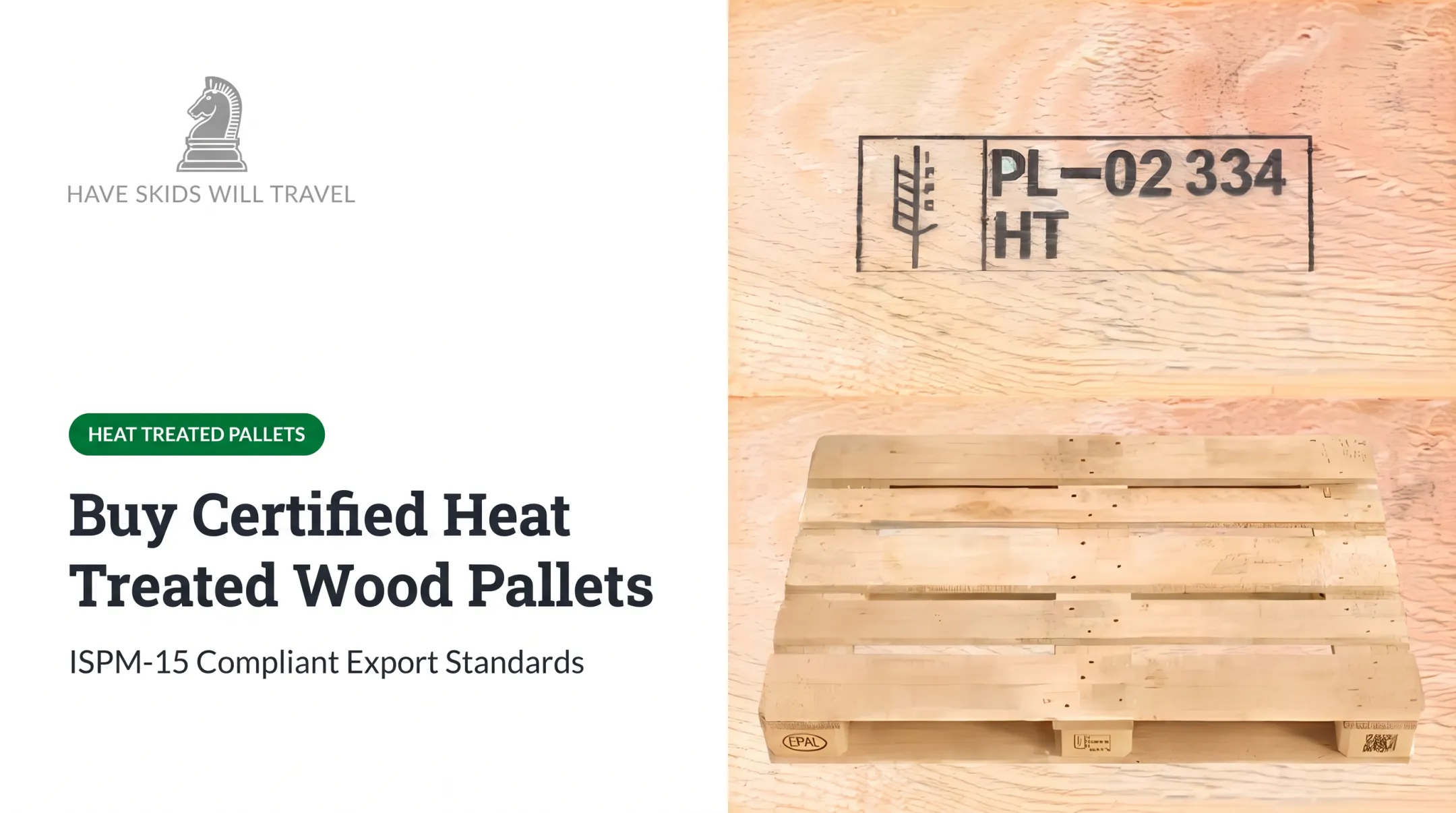
For the standard heat-treatment route, the wood core must reach at least 56°C (133°F) for a minimum of 30 minutes, and the mark must show the IPPC logo, country code, facility code, and treatment type. A supplier's certification confirms their process; it doesn't eliminate your responsibility to verify route-specific documentation.

How Palleton Can Help
If you're sourcing standard, custom, recycled, combination, or export-ready pallets, Palleton is worth comparing against your own written specification. We've spent more than 45 years in the pallet and lumber industry, and that history shows up in how we handle the details that cause problems down the line.
What sets our setup apart:
- Seven strategically located facilities, including a company-owned lumber mill and a custom pallet and crate shop
- National account sourcing that consolidates purchasing through one provider instead of juggling multiple vendors
- Technology for sorting, tracking, monitoring, accounting, and rental management, with 24/7 access to inbound and outbound pallet details
- ISPM-15 Heat Treat Certified pallets and crates for applicable export shipments
We work with food and beverage, pharmaceutical, automotive, chemical, technology, retail, agriculture, and machinery-shipping businesses. These industries have different pallet needs.
Hormel Foods has relied on us for consistent product quality and on-schedule delivery for years. McCain Foods USA points to our paperless tracking and audit-ready pallet documentation as a reason the partnership works.
Whatever you're shipping, destination-specific export requirements still need verification on your end. Our certification covers the treatment, not the route-specific rules for every country.
Share your pallet dimensions, load requirements, handling environment, delivery cadence, facility locations, and export destinations, and we'll help build a specification-based quote. Reach us at 402-933-3375, 1-800-364-6099, or info@palleton.net.
Conclusion
The best wooden pallet supplier is the one whose products, capacity, quality controls, logistics, and compliance support actually fit your operation, and keep fitting it as volume or product lines change. Lowest quoted price alone rarely tells the full story.
Qualify suppliers using written specifications, sample inspections, references, and total-cost analysis rather than a single quote comparison. Then keep checking.
Review performance periodically against:
- On-time delivery rates
- Defect or damage frequency
- Emergency order counts
- Repair or disposal costs
A supplier that was right for you two years ago might not still be the right fit today.
Frequently Asked Questions
What are the requirements for vendor qualification?
Look for proven capability and capacity, documented quality processes, customer references, relevant certifications, and insurance or contractual compliance. A sample or trial-order review should confirm these claims before you commit to volume.
How do I check pallet quality?
Inspect dimensions, boards, stringers or blocks, fasteners, and any contamination, moisture damage, or warping. Check repair quality and structural integrity, and confirm required treatment markings are present and legible.
What are the pallet requirements for international shipments?
ISPM-15 may apply to solid wood packaging moving internationally, requiring heat treatment and a specific IPPC mark. Verify your destination country's current rules and the supplier's treatment documentation before shipping.
How do I compare wooden pallet suppliers?
Compare specifications, delivered cost, quality consistency, production capacity, lead times, and geographic coverage. Factor in emergency support, compliance capability, and customer service responsiveness, not just the quoted unit price.
Should I buy new, used, or recycled wooden pallets?
The right choice depends on load requirements, hygiene needs, reuse expectations, appearance standards, and budget. Review the supplier's condition standards and inspection process before deciding, especially for export or food-contact applications.