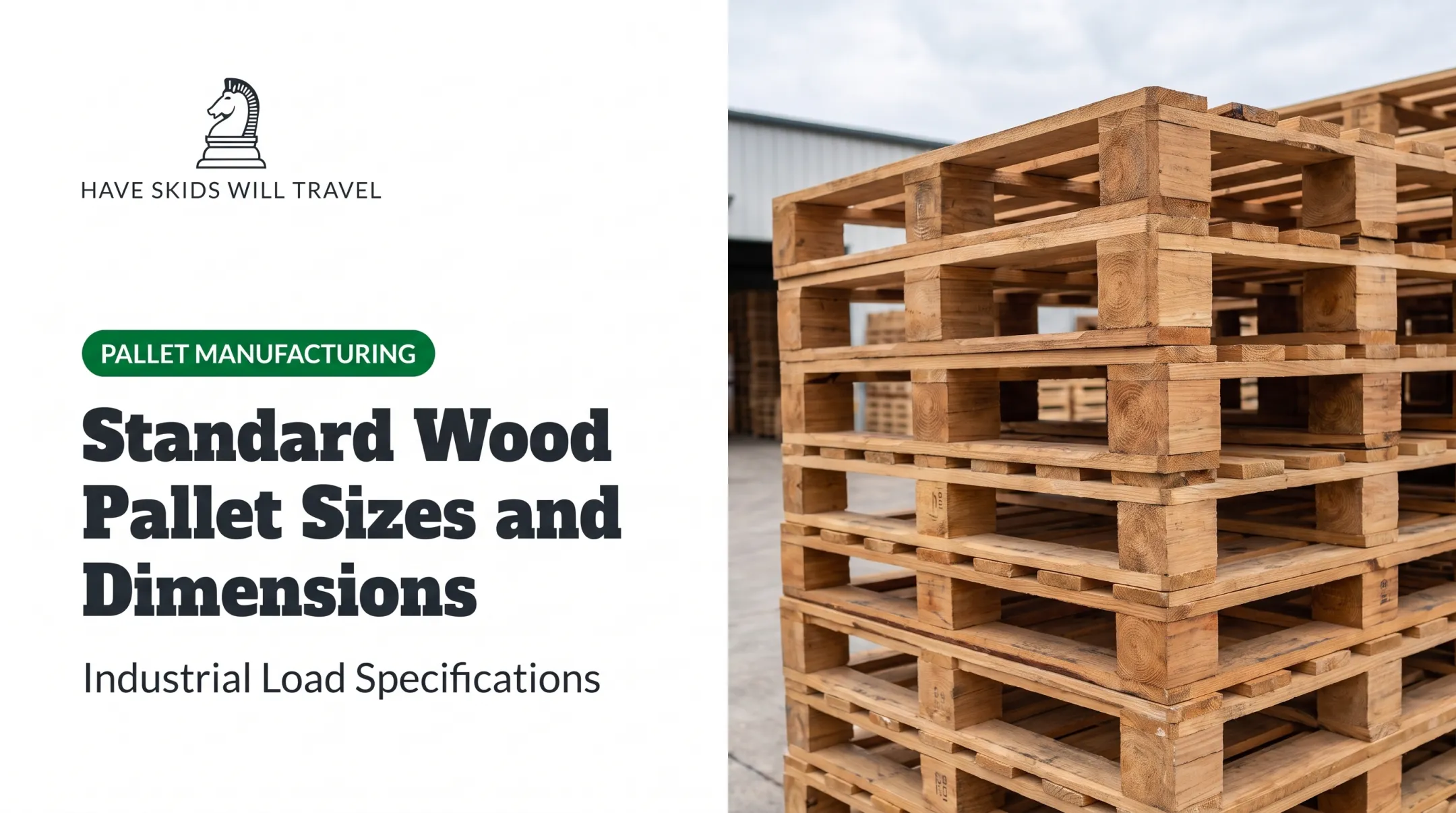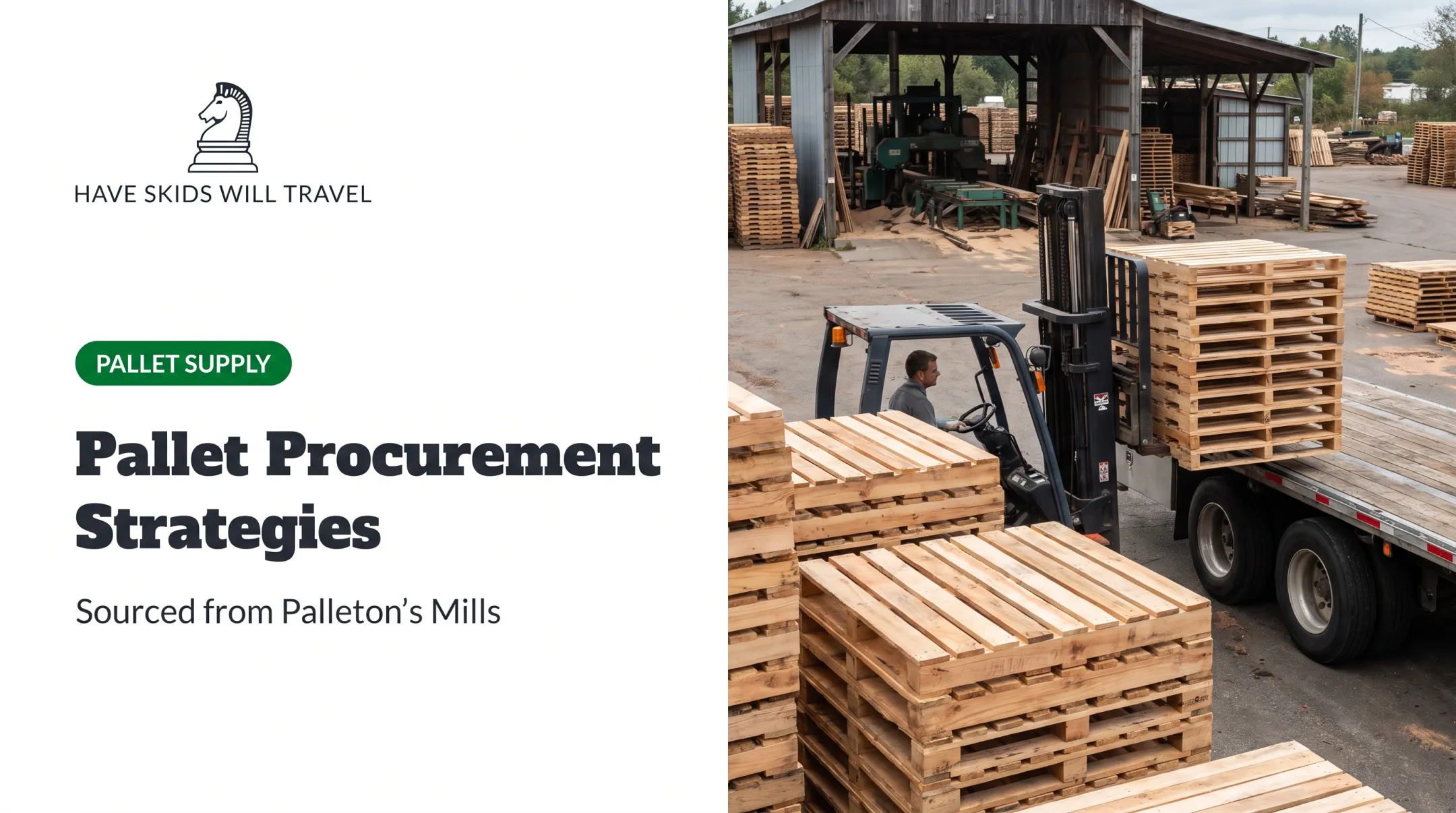

Pallet dimensions affect freight costs, warehouse footprint, forklift compatibility, and product protection. This holds true whether you're moving food, automotive parts, or chemical drums. Get the size wrong and you're paying for it at every step of the supply chain.
This guide covers standard US pallet dimensions, the most common types in use today, how to choose the right size for your product, and where custom pallets come into play.
TL;DR
- The 48"×40" GMA pallet dominates the US market
- Square pallets (42×42, 48×48, 40×40, 36×36) serve niche industries like chemicals, dairy, and beverage
- Pallet dimensions are listed as Length × Width, not L × W × H
- Match size to your product, load weight, and equipment compatibility
- Palleton builds standard and custom sizes across its Midwest facility network
What Is a Standard Pallet Size?
A standard pallet size refers to length and width dimensions widely agreed upon across an industry or region. In the US, that agreement traces back to the Grocery Manufacturers Association (now the Consumer Brands Association), which helped establish the 48"x40" footprint as the dominant wooden pallet size.
"Standard" isn't universal, though. It shifts by region:
- North America: 48"x40" GMA pallet
- Europe: Euro pallet at 1,200x800 mm (roughly 47"x31.5")
- International (ISO 6780): Several formats, including 1,219x1,016 mm (close to the GMA size)
Standard sizing exists for a practical reason. It keeps forklifts, racking systems, trucks, and shipping containers compatible across an entire supply chain. Without that common language, every handoff between supplier, carrier, and warehouse becomes a guessing game.

Why Standard Pallet Dimensions Matter for Your Supply Chain
Pallet size directly shapes how much freight you can move per trip, and how safely it arrives.
Space and freight costs. Loading pattern matters as much as pallet size. A 53-foot dry van can hold 26 pallets loaded straight, 28 pinwheeled, or 30 loaded sideways, according to ATS's trailer loading breakdown. Ocean freight follows a similar logic. iContainers estimates around 10 pallets fit in a 20-ft container and up to 21 in a 40-ft container, assuming efficient single-tier loading with no overhang.
Those numbers aren't guarantees. Confirm your carrier's actual loading pattern before promising a client a specific cube count.
Equipment compatibility. Mismatched pallet sizes create real headaches:
- Forklifts and pallet jacks built for standard dimensions struggle with oddball sizes
- Racking systems designed around 48x40 footprints leave gaps or overhangs with other sizes
Overhang isn't just cosmetic. One packaging study found it can reduce top-to-bottom box compression strength by up to 32%, according to Cal Poly's research on palletized box offset.

International shipping compliance. Exporting adds another layer. Wood packaging entering or leaving the US must meet ISPM-15 standards, meaning it's pest-free, debarked, and heat-treated. USDA APHIS requires wood cores to hit 56°C (133°F) for at least 30 minutes, followed by an official IPPC mark. Skip this and your shipment gets turned away at the border, regardless of how well the pallet fits your product.
Common Standard Pallet Sizes and Dimensions in the US
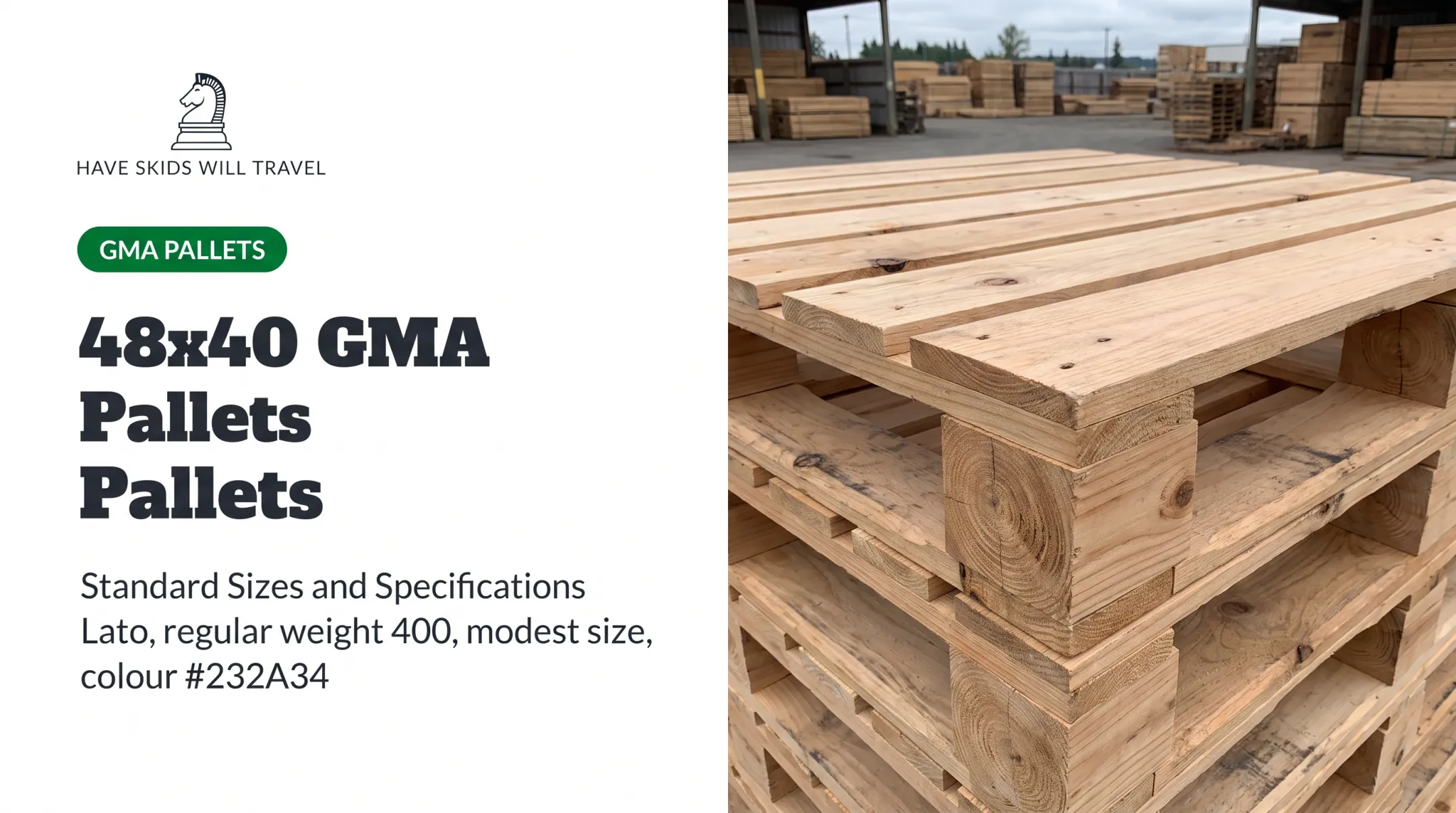
The 48"x40" GMA Pallet
This is the pallet most people picture when they hear "standard." It's built with standardized deck boards and stringer construction, and it originated from the Grocery Manufacturers Association's push for a universal footprint that would work across grocery distribution. Best suited for:
- Grocery and general warehousing
- Retail distribution
- Most general freight applications Key strengths:
- Widest availability of any pallet size
- Easiest to source, resell, or rent
- Compatible with most racking and forklifts nationwide Limitations: Not ideal for oddly shaped, extremely heavy, or unusually light loads—drum chemicals or slim beverage cases often need a different footprint. Palleton offers the 48x40 as a GMA stringer pallet in new hardwood or softwood, combo new-and-used wood, or 100% recycled lumber.
Square Pallets (42x42, 48x48, 40x40, 36x36)
Square pallets exist because not every product fits a rectangular 48x40 footprint—these sizes match specific container shapes instead of general cargo. Typical industry pairings include:
- 48x48: chemical drums and liquid containers
- 40x40: dairy products, sized to stack milk crates efficiently
- 36x36: beverage industry
- 42x42: telecom and paint equipment Key strengths: Optimized stacking and stability for cylindrical or uniformly-shaped containers. A drum sitting on a footprint built for boxes wastes space and risks tipping. Limitations: Less flexible for irregular loads, and a narrower resale market than the ubiquitous 48x40.

Industry-Specific & Custom Pallets
Some products simply don't fit standard footprints. Common industry-specific sizes include:
- 48x45: automotive parts, often for supplier-to-supplier and service-parts freight
- 48x36 and 48x42: beverage and paper shipments Custom and export pallets handle what stock sizes can't: exact product dimensions, higher weight capacity, or international compliance requirements. Best suited for:
- Oversized machinery shipments
- Exporters needing ISPM-15 heat treatment
- Businesses with unusual load shapes or weights Key strength: Reduces product damage and wasted trailer space when nothing standard fits. Limitation: Higher cost and longer lead time compared to grabbing a stock 48x40 pallet off the shelf. Palleton's custom pallet and crate shop builds to your product's exact dimensions, load weight, and handling method. With more than 45 years in pallets and lumber, that can mean a reinforced machinery crate or an ISPM-15 heat-treated export pallet (140°F core temperature for at least 30 minutes).

How to Choose the Right Pallet Size for Your Business
Don't default to 48x40 just because it's common. Choice should follow your product, not the other way around.
Key factors to weigh:
- Match stringer or block support to load weight and how weight sits on the deck
- Confirm fit with your forklifts, pallet jacks, conveyors, and racking before you switch sizes
- Plan export loads for ISPM-15 and the destination country's dimension rules
- Use recycled pallets to control cost on non-critical moves; choose new wood for food-grade or export needs
- Secure steady supply across sizes so multi-facility operations don't stall on mixed inventory
Palleton helps customers weigh product dimensions, handling methods, and budget before recommending a size and grade. That same conversation covers heat-treated export needs, food-grade options, and recycled or buy-back programs when they fit the lane.
What to Check Before Finalizing Your Pallet Order
A few final checks prevent costly surprises:
- Confirm exact dimensions with your supplier or customer. Don't assume your "standard" matches theirs. A 48x45 automotive pallet and a 48x40 GMA pallet look similar on paper but behave very differently on a truck.
- Verify weight capacity when switching sizes. Load ratings vary widely, from a 2,500-lb minimum on some GMA pallets to over 4,500 lbs on heavier-duty builds. Get the supplier's design basis, not just a headline number.
- Confirm supply flexibility. Ask whether your supplier offers recurring order programs or emergency access. Palleton's recurring supply programs and emergency options help prevent shortages from disrupting production schedules.
Conclusion
Pallet dimensions shape freight cost, product safety, and how smoothly your supply chain runs day to day. The 48x40 GMA pallet dominates the US market, but standard and custom sizes exist for specific industries, from square pallets for drums to 48x45 pallets for automotive freight.
Partnering with an experienced provider like Palleton takes the guesswork out of matching pallet to product, whether you need a stock GMA pallet or a fully custom, heat-treated design built for export.
Frequently Asked Questions
Are pallet sizes standardized?
The 48x40 GMA pallet is the most common US standard, but "standard" varies by region and industry. Europe's Euro pallet, for example, uses a completely different footprint.
What are the standard dimensions of a pallet?
The most common US standard is 48 inches by 40 inches. Several other sizes are also widely used depending on the product and industry.
What are the different sizes of pallets?
Common US sizes include 48x40, 42x42, 48x48, 40x40, 36x36, and 48x36. Each tends to serve a specific industry, from grocery to chemicals to beverage.
What are the dimensions of a 48x40 pallet?
It measures 48 inches long by 40 inches wide, with a typical height between 4.5 and 6.5 inches, depending on construction.
How heavy is a 48x40 pallet?
Empty wooden pallets typically weigh 30-50 lbs, though this varies by material and construction. Safe load capacity ranges from roughly 2,500 lbs to over 4,500 lbs depending on design.
Are pallet dimensions listed as L x W x H?
No. Pallet dimensions are conventionally listed as Length x Width only. Height is treated as a separate specification, since it varies more by construction than by standard classification.