
Introduction
If you ship products domestically or overseas, you've probably searched for a straight answer on 48x40 heat-treated pallet pricing and found a dozen different numbers instead.
That's because there isn't one answer. A 48x40 heat-treated wood pallet can run anywhere from under $10 to well over $20 per unit, depending on whether it's new or recycled, how it's built, and how far it has to travel.
One 2025 pallet manufacturer example prices a standard 48x40 wood pallet at $16, rising to $18 or more once heat treatment is added . That figure is a useful illustration, not a national price guarantee (Pallet Company Pro, 2025).
This article breaks down current U.S. pricing ranges, the cost components behind every quote, and how to compare a cheap pallet against a reliable one before you order.
Key Takeaways
- New 48x40 heat-treated pallets typically cost $16–$20+ per unit before freight; recycled grades often start lower.
- ISPM-15 heat treatment, pallet condition, order volume, and delivery distance all move the final price up or down.
- Recycled pallets fit one-way or internal use; new stock suits export, automation, and food or pharma handling.
- Weigh delivered cost, compliance, and reliability, not sticker price alone.
How Much Does a 48x40 Heat-Treated Wood Pallet Cost?
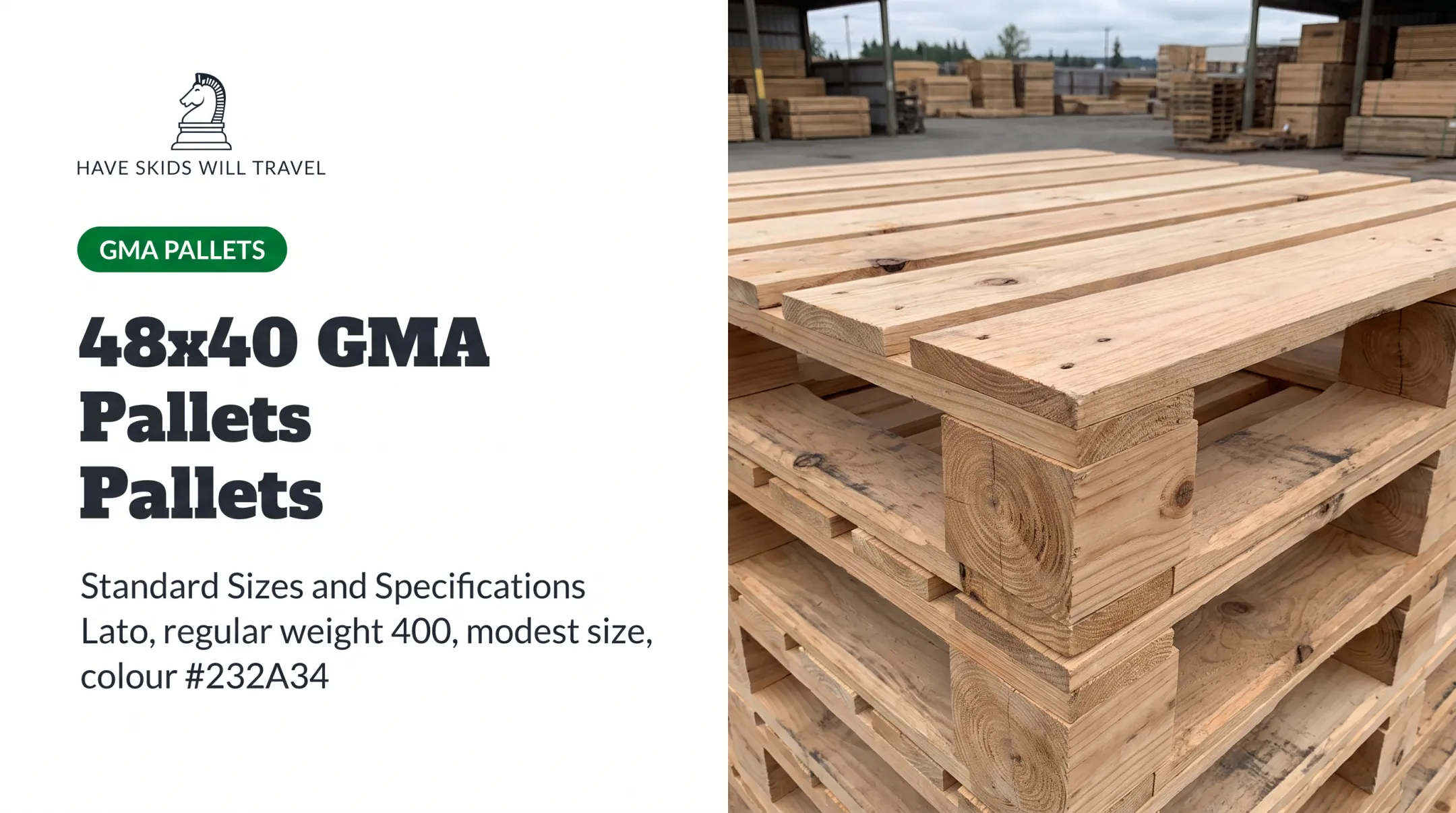
A 48x40 pallet and a 40x48 pallet are the same footprint, just described in reverse order. Both mean the 48-inch by 40-inch base that dominates U.S. grocery and general freight.
That footprint follows Grocery Manufacturers Association (GMA) stringer specs. It does not mean standard pricing. Construction grade, wood source, and heat-treatment status still move the unit cost.
Current U.S. Price Ranges
| Category | Price Evidence | What's Included |
|---|---|---|
| New, standard-spec heat-treated | $18+ per unit (illustrative, 2025) | Freight and quantity not specified in source |
| New, standard (non-HT comparison) | $16-$20 | Baseline before treatment surcharge |
| Recycled/used, Grade A (typically non-HT) | $8-$12 | Condition-based; HT status often unverified |
| General new pallet range (market-wide) | $15-$30 | Delivery not always included |
| General used pallet range (market-wide) | $5-$15 | Larger orders typically lower per-unit shipping cost |
Sources: Pallet Company Pro, 2025; AAA Pallet & Lumber, Jan. 2025
Important caveat: no dated 2023-2025 source establishes a confirmed national range specifically for recycled heat-treated or heavy-duty/custom heat-treated 48x40 pallets. Treat any number you see for those categories as a starting reference, not a quote.
What's Actually in the Quote
Every 48x40 pallet price is built from five components:
- Lumber and construction: deckboard thickness, stringer specification, and whether the mill uses hardwood or softwood.
- Assembly labor, nails, and inspection: including repairs on recycled cores.
- Heat-treatment processing: the ISPM-15 chamber cycle plus marking and documentation, estimated at a $1-$3 per-pallet surcharge in one 2025 industry example (Pallet Company Pro, 2025).
- Order quantity: full-truckload orders (often 500+ units) typically earn volume discounts.
- Freight and delivery: fuel surcharges, unloading requirements, and delivery scheduling.
A low advertised unit price can turn into a high delivered price fast. Small orders, long-haul freight, mixed-quality recycled lots, odd dimensions, and export documentation requirements are the usual culprits.

Rather than guessing from an online price list, Palleton builds quotes around your actual order: quantity, construction, condition, destination, and whether you need recurring delivery or export documentation.
Key Factors That Affect the Price of Heat-Treated 48x40 Pallets
Price reflects more than wood and labor. Specs, compliance requirements, and end use all shape what you pay.
Type, Condition, and Grade
New, recycled, and reconditioned pallets aren't interchangeable, even at the same footprint.
- New pallets offer consistent dimensions, fresh lumber, and predictable service life.
- Recycled Grade A pallets look close to new with minimal repairs.
- Recycled Grade B / #2 pallets show more wear and often carry reinforced or repaired stringers.
Before requesting "48x40 pallets," define whether you need rack-compatible performance, one-way export use, or internal plant transfers. That distinction determines which grade actually fits — and what you should expect to pay.
Construction, Materials, and Capacity
Two pallets at the same 48x40 size can perform completely differently.
- Stringer vs. block construction: stringer pallets use three parallel supports; block pallets allow four-way entry from every side.
- Deckboard thickness and spacing: drives both cost and load support.
- Lumber species: hardwood costs more than softwood but usually handles more repair cycles.
Weight and capacity vary by the same factors. One industry estimate puts a typical 48x40 GMA pallet's empty weight at 44–59 lbs depending on wood species, with a common minimum load-bearing capacity around 2,500 lbs (Kamps Pallets, 2025).
Moisture content and repair history shift those numbers further. There is no single universal weight for every 48x40 pallet.
Heat Treatment and Export Compliance
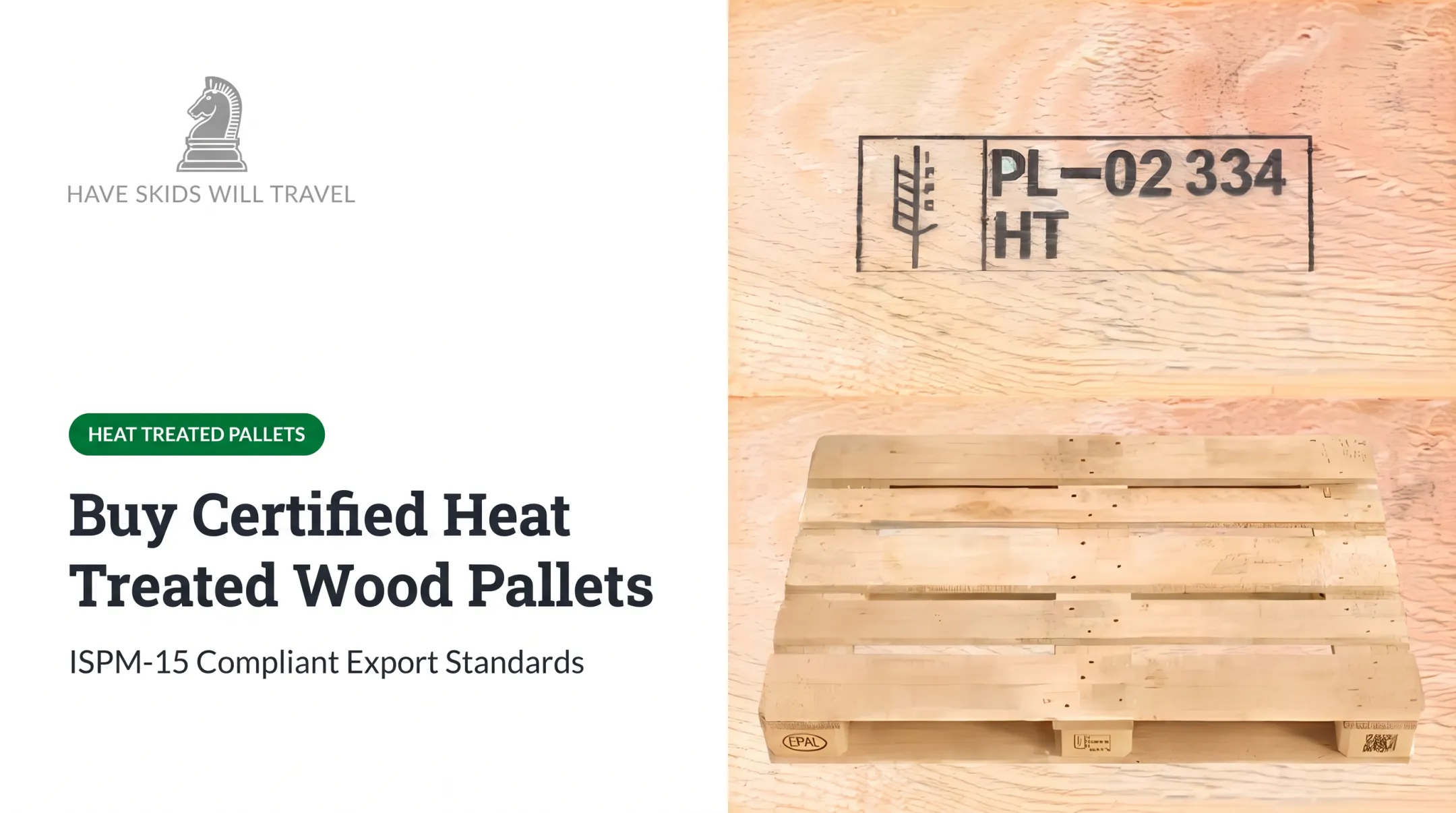
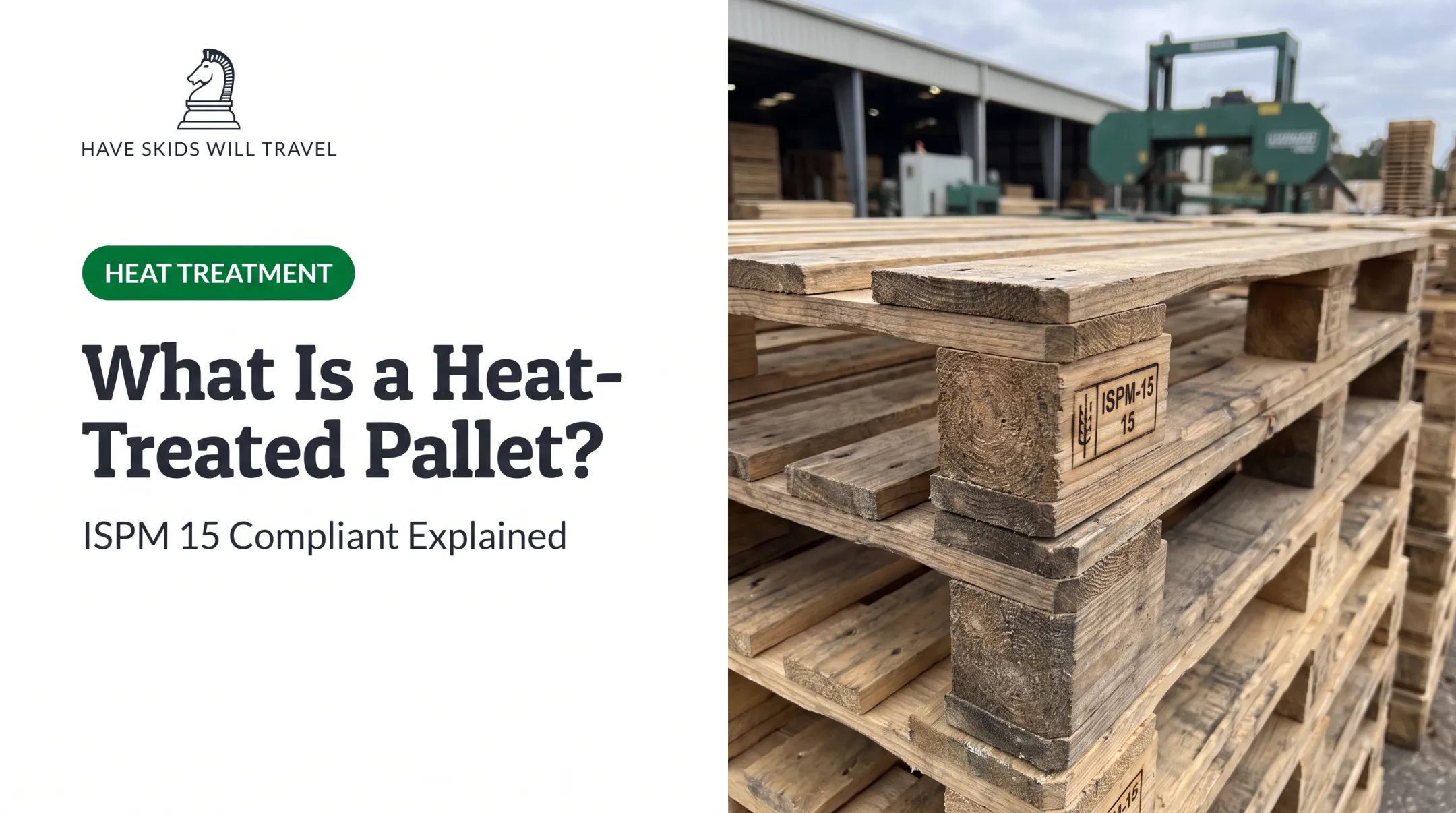
ISPM-15 is the international standard for wood packaging used in cross-border shipments. It's designed to reduce the spread of wood-boring pests — and it's not the same thing as kiln drying or chemical treatment.
The compliance threshold is specific: wood must reach 56°C (133°F) throughout its core for 30 continuous minutes (IPPC, 2017). Kiln drying alone targets moisture content, not pest elimination, so it doesn't automatically prove compliance.
To verify a pallet actually meets the standard, check for:
- The IPPC mark with country code and authorized facility number
- The treatment code "HT" (not "MB," which denotes a chemical method)
- Supplier documentation confirming the treatment cycle
Destination countries can set additional requirements, so confirm current rules before export. Palleton creates treatment records and certification markings for every heat-treated unit, giving inspectors and customers a clear compliance trail.

Order Size, Timing, and Delivery
Volume changes everything. Full-truckload orders — often 500 units or more — typically unlock per-unit discounts that smaller orders can't reach.
A lower-cost pallet upfront doesn't always mean a lower total cost per shipment. Compare options across:
- Dimensional consistency
- Compliance documentation
- Durability and repair needs
- Supply reliability during peak demand
Rush orders, long hauls, and tight unloading windows add freight and handling cost that a unit quote often hides until the invoice arrives.
How to Estimate the Right Budget—and Avoid Overlooked Costs
Start with fit, not price. Define product weight, load distribution, stacking method, and forklift or pallet-jack entry. Then confirm whether the pallet must handle rack storage, export transit, or a single one-way trip.
Quote-Request Checklist
Before you request pricing, gather:
- Pallet dimensions and construction type
- Required grade (new, recycled, combo)
- Treatment certification needs (ISPM-15, documentation)
- Order quantity and delivery frequency
- Delivery address and unloading method
- Whether pallets must be washed or custom-built
Calculating Your Real Budget
Multiply the quoted unit price by your required quantity, then add:
- Freight and fuel surcharges
- Taxes or fees
- Storage space
- Inspection and repair allowances
- Disposal or recycling costs where applicable
Common Buying Mistakes
Avoid these five errors. They are the most common reasons a "good deal" turns expensive:
- Comparing a delivered quote against a pickup-only quote. They're not the same number.
- Assuming "heat-treated" guarantees cleanliness or structural grade. It only confirms pest-control compliance.
- Choosing the cheapest recycled pallet without confirming grade. Also verify repair history and dimensional consistency.
- Ordering too late and paying rush fees for expedited production or delivery.
- Over-specifying capacity when a standard pallet would safely handle the load.
Palleton's lumber, custom manufacturing, and heat-treatment capabilities help you lock in the right-fit specification, whether you need a recurring supply program or an emergency order. With new hardwood, softwood, combo, and 100% recycled options across multiple grades, the goal is matching the pallet to the application.

Conclusion
A 48x40 heat-treated wood pallet's price depends on condition, construction, treatment, quantity, and freight. Any single number you find online is only a starting reference.
Before you commit to an order, compare documented, delivered quotes against your actual performance and compliance requirements. Contact Palleton for a specification-based quote built around your quantity, destination, and export needs. Reach the team at 1-402-933-3375 or info@palleton.net.
Frequently Asked Questions
What is the price of a 48x40 pallet?
Price varies by condition, grade, construction, and heat-treatment status. New pallets typically run $16-$20+, while recycled options often start around $8-$12, before freight and quantity discounts apply.
How much does a heat-treated wooden pallet cost?
Heat treatment adds roughly $1-$3 per pallet on top of the base price, based on 2025 industry pricing. The final quote also depends on documentation requirements and order volume.
How do I know if a pallet is treated or not?
Check for the IPPC mark showing the country code, facility number, and "HT" treatment code. Visual appearance alone doesn't prove treatment. Always confirm with supplier documentation.
Are pallets made from treated wood?
Not always. Pallets can be untreated, heat-treated, kiln-dried, or chemically treated. Specify the exact treatment standard your shipment requires before ordering.
How much does a 40x48 wood pallet weigh?
40x48 and 48x40 describe the same footprint. Weight typically falls between 44 and 59 lbs, depending on wood species, moisture content, and repair history.
Is a pallet size of 40 x 48 standard?
Yes, it's one of the most common industrial pallet sizes in the U.S. "Standard" refers to the footprint only; it doesn't guarantee one universal load rating, entry type, or treatment status.