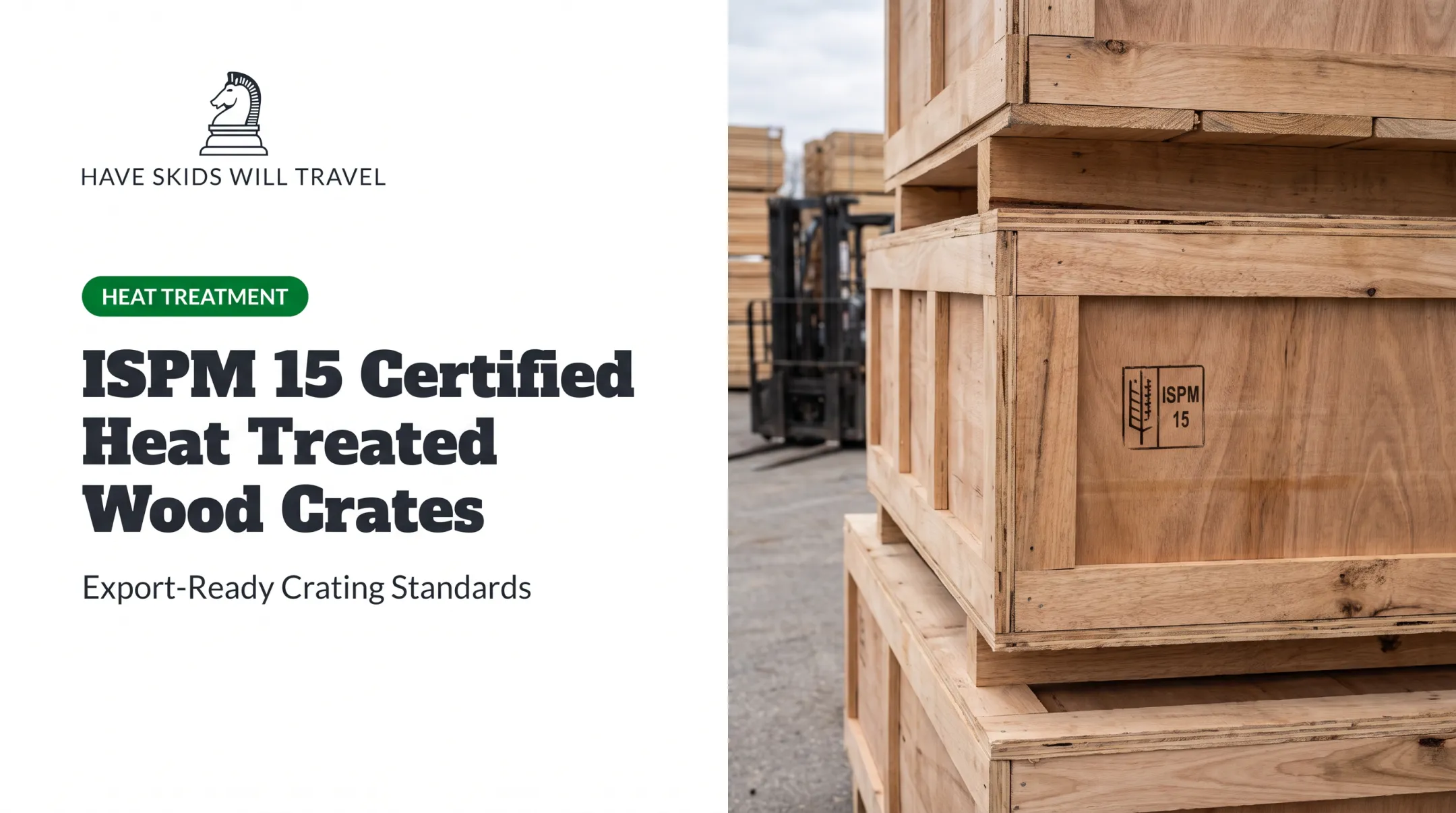

This scenario plays out more often than most shippers realize. USDA APHIS is clear on the rule: wood packaging material entering or crossing U.S. borders must be pest-free, debarked, properly treated, and marked with an ISPM 15 logo, or it simply won't be allowed in.
Heat-treated (HT) pallets are the industry's answer to this requirement. This guide covers what heat treatment actually does to wood, how to read the compliance stamp, and what to look for when sourcing pallets for export.
Key Takeaways
- Heat-treated (HT) pallets reach a core temperature of 56°C (132.8°F) for 30+ minutes to kill pests, per ISPM 15
- The stamp must show the IPPC logo, country code, and producer number on international shipments
- Non-compliance risks rejected shipments, fines, or costly delays at customs
- Palleton supplies ISPM 15 heat-treat certified pallets and crates for compliant export shipments
What Is a Heat-Treated Pallet?
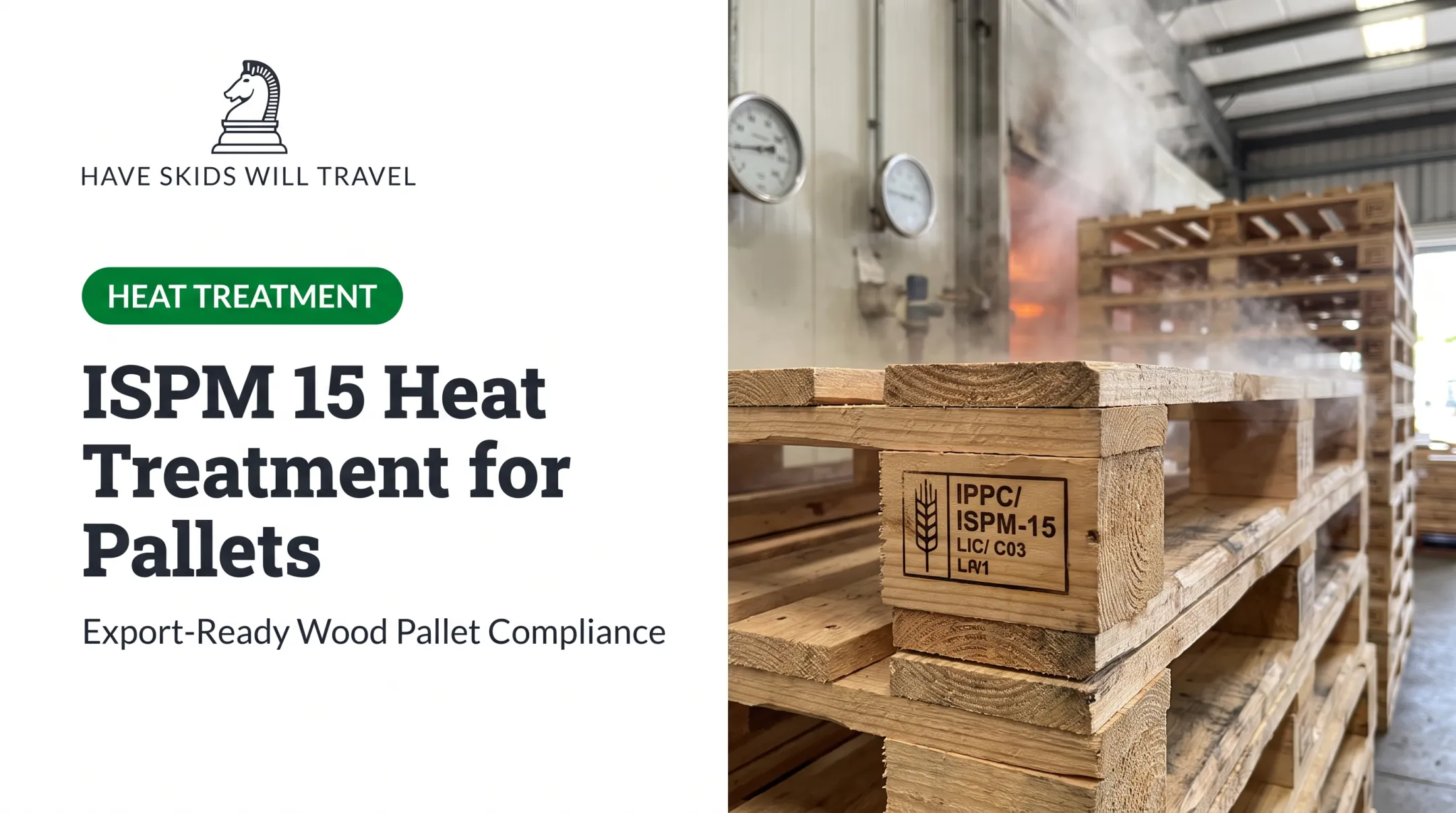
A heat-treated pallet is a wooden pallet processed in a heat chamber to kill insects, larvae, and fungi living inside the wood. Unlike surface treatments, heat treatment penetrates the entire piece of lumber.
The technical requirement is specific: the wood's core must reach 56°C (132.8°F) and hold that temperature for a minimum of 30 minutes. Not the surface. The core.
Heat Treatment vs. Methyl Bromide Fumigation
Older pallets were often fumigated with methyl bromide (MB). The EPA phased out U.S. production and consumption of methyl bromide on January 1, 2005, citing ozone depletion concerns, with only narrow quarantine and pre-shipment exceptions remaining.
Heat treatment has become the industry-preferred method because it:
- Uses no chemicals, eliminating residue concerns
- Reduces the wood's moisture content
- Can extend the pallet's usable life
Note: HT compliance is primarily an export requirement. If you're shipping domestically within the U.S. or Canada, you generally won't need ISPM 15-marked pallets. The moment your freight crosses an international border, though, the rules apply.
What Is ISPM 15 and Why Does It Matter?
ISPM 15 (International Standards for Phytosanitary Measures No. 15) is the global regulation from the International Plant Protection Convention (IPPC) governing wood packaging in international trade. The U.S. adopted these standards back in 2002, and they've since been embraced by virtually every major trading partner, including Canada.
What Happens Without Compliance
CBP sorts violations into three buckets:
- Unmarked
- Inappropriately marked
- Infested
The consequences are blunt. Wood packaging without the required mark, or marked material that turns out to contain pests, must be immediately exported. The disposition costs land on the importer, carrier, or bonded custodian, not the pallet supplier.
Who Can Certify Pallets?
Certification authority stays with the national plant protection organization or an entity it audits and approves. In the U.S., that means ALSC-accredited inspection agencies oversee the quality-mark program that treatment facilities use.
How Often Are Ports Checking?
This isn't a rare spot-check. APHIS's Agricultural Quarantine Inspection Monitoring (AQIM) program covers 19 participating ports. Inspectors sample randomly selected containers weekly, roughly 8-10 monthly samples per port.
The national approach rate has held steady around 2-3% in recent years, meaning a meaningful share of wood packaging still gets flagged for a closer look.
How to Identify a Heat-Treated Pallet: Reading the Stamp
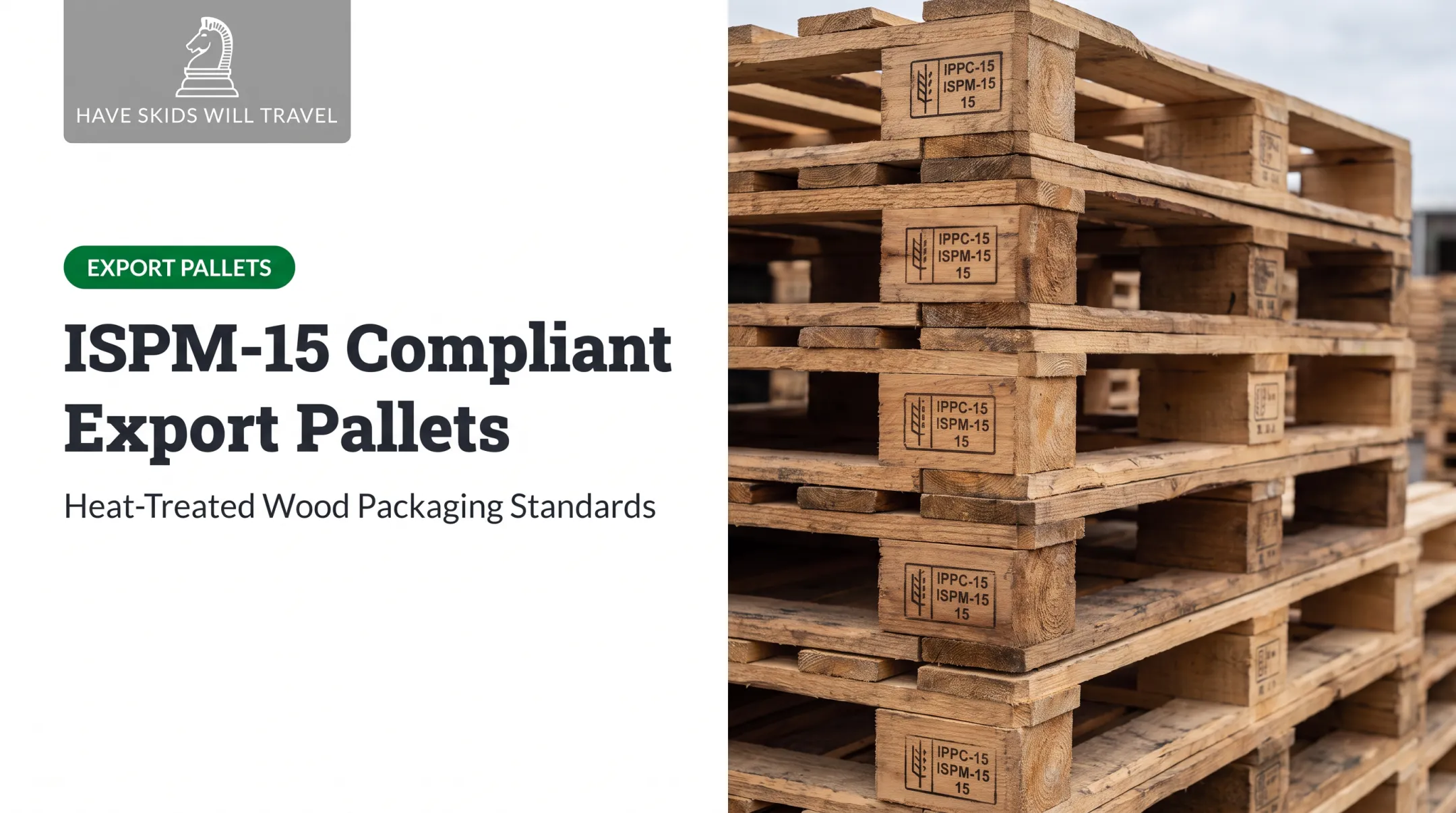
Every ISPM 15-compliant pallet needs a visible stamp on at least two opposite sides of the stringer (the long support beam). Faded or missing stamps are the single most common reason shipments get held.
The stamp breaks down into four parts:
| Component | What It Shows |
|---|---|
| IPPC logo | The wheat-stalk symbol confirming international standard compliance |
| Country code | Two-letter code identifying where treatment occurred |
| Producer number | Facility ID tracing the pallet back to its treatment provider |
| Treatment code | HT for heat-treated, or MB for methyl bromide |

Watch for that treatment code closely. HT means heat-treated. MB means methyl bromide fumigation, a method that's largely phased out but still occasionally shows up on older or imported pallets.
The Falsification Risk Is Real
A clear stamp still isn't enough on its own—counterfeit marks do enter the supply chain. In a documented federal case, American Pallet Recycling LLC pleaded guilty to a felony charge for falsifying HT stamps between 2007 and 2011. The company paid $100,000 in penalties, and its former owner faced a separate misdemeanor charge and probation.
Buyers thought they were getting compliant pallets. They weren't.
Before loading any shipment, inspect the stamp yourself — especially on recycled or repaired pallets. Repairs to a pallet's boards can invalidate the original treatment, requiring re-heat-treatment and a fresh stamp.
Benefits of Using Heat-Treated Pallets
Beyond simply meeting the legal bar, HT pallets deliver real operational value:
- Avoids customs delays, fines, and shipment rejection at the border
- Protects product integrity during long-haul or overseas transit
- Supports sustainability goals with a chemical-free process, unlike fumigation
A 2022 USDA Forest Service study analyzed nearly 20 years of AQIM inspection data and found that wood borer detection rates fell substantially after ISPM 15's debarking requirement took effect in 2009, dropping from 0.34% in 2003-2004 to as low as 0.21% overall. That's a meaningful reduction in pest introductions tied directly to treatment and debarking standards.

Because heat treatment leaves no chemical residue, HT pallets also give you more flexibility when it comes to reuse and end-of-life handling.
Can You Reuse or Burn Heat-Treated Pallet Wood?
Generally, yes. Since heat treatment uses no chemicals, HT pallet wood doesn't carry the same contamination concerns as chemically fumigated wood.
That said, check for these before burning any pallet wood:
- Paint or coatings
- Staples, nails, or other metal fasteners
- Signs of chemical contamination from what the pallet transported
If the wood is clean, free of chemical treatment, and free of hardware, it's typically safe for burning. When in doubt, verify before you burn.
Sourcing Compliant Heat-Treated Pallets: What to Look For
Not every pallet supplier can legally apply an ISPM 15 stamp. Certification requires ongoing oversight, not a one-time approval.
When evaluating a supplier, ask about:
- Current ISPM-15 Heat Treat Certification — confirm it's active, not expired or pending renewal
- In-house treatment capability — own kilns mean tighter control over timelines and quality than third-party treatment
- Product range — new, custom, and standard-size options for varied export needs
- National sourcing capacity — important for recurring export programs across multiple facilities
- Tracking systems — documentation trails matter when you need to prove compliance history
Those checks separate suppliers who can keep export programs moving from those who can't. Palleton is ISPM-15 Heat Treat Certified for both pallets and crates. Wood is treated to a minimum core temperature of 140°F for at least 30 minutes in its own monitored kilns.
Treatment happens under Palleton's direct oversight, not a third-party network. Each unit is stamped with the country code, facility ID, and HT treatment code before it leaves.
For exporters running recurring programs, Palleton also offers custom pallets and crates in new hardwood or softwood lumber, standard 48"x40" GMA sizing, and multiple grades (A, B, #1, #2). Encrypted, cloud-based tracking gives you 24/7 access to shipment and pallet records.

Frequently Asked Questions
What is a heat-treated pallet?
A heat-treated pallet is a wooden pallet heated to kill pests and pathogens inside the wood, meeting the ISPM-15 standard required for safe international shipping. It's the most common compliance method used today.
What does "HT" mean on a pallet?
HT stands for heat-treated. It appears on the compliance stamp alongside the IPPC logo, a two-letter country code, and a producer number identifying the treatment facility.
What does heat treatment do to pallets?
It eliminates insects, larvae, fungi, and other pests living inside the wood. As a side effect, it also reduces moisture content and can extend the pallet's usable lifespan.
How can I tell if a pallet has been heat-treated?
Check the stringer for the official stamp, which should appear on at least two opposite sides. Look for the IPPC logo and the "HT" treatment code specifically.
Can I burn heat-treated pallet wood?
Generally, yes, since no chemicals are used in the treatment process. Just check first for paint, staples, or other contaminants before burning.
How do I get an ISPM-15 stamp?
Only a certified, audited heat treatment provider can legally apply the stamp. Work with an ISPM-15-certified company like Palleton to ensure your pallets meet export requirements.