
Many shippers struggle with rejected loads, wasted trailer space, and surprise fees that never show up in the initial quote. This article defines 3PL pallets, explains how they support full truckload shipping, breaks down the real cost drivers, and gives you a practical framework for evaluating pallet and logistics partners.
Key Takeaways
- A 3PL pallet is the same industrial pallet used in outsourced logistics—not a separate product type—so standard specs and grades still apply.
- Pallet dimensions, condition, and load stability drive truck utilization, load safety, and carrier acceptance.
- Landed cost goes well beyond unit price: handling, storage, freight, accessorials, and recovery shape total spend.
- Choose suppliers for consistent supply and quality control—not the lowest unit price—to protect truckload performance.
What 3PL Pallets and Truckloads Mean
Third-party logistics means outsourcing some or all of your warehousing, inventory management, fulfillment, or transportation coordination to an external provider. DHL's breakdown of logistics models describes a 3PL as a provider that bundles warehousing, transportation, and related distribution tasks under one contract.
A 3PL pallet is the load platform that supports your product through that outsourced operation, from inbound receiving through storage, order preparation, and outbound shipping. The term describes a standard pallet doing a specific job within a 3PL's workflow, not a separate product category.
Pallet vs. Truckload: Two Different Jobs
These terms cover different roles in the same move:
- A pallet protects and supports freight at the unit level.
- A truckload is the transportation movement that carries one or more palletized shipments.
- 3PL handling connects both across receiving, storage, and outbound shipping.
Palletized freight often passes through several hands: the shipper, the pallet supplier, a 3PL warehouse, a carrier, a distribution center, and finally the consignee. Consistent pallet specifications matter across that whole chain, because a pallet that works fine in your warehouse might not meet a retailer's receiving requirements three stops later.
When Full Truckload Makes Sense
Full truckload (FTL) shipping dedicates an entire trailer to one shipper's freight, moving directly from origin to destination. According to the National Motor Freight Traffic Association, FTL typically fits when a shipment:
- Uses enough trailer capacity to justify a dedicated move
- Needs fewer handling points between origin and destination
- Involves sensitive or high-volume freight
There's no universal "X pallets equals FTL" rule. Trailer capacity depends on freight dimensions, weight, loading method, and the specific carrier's equipment. Carrier pallet-count categories for what qualifies as "full" also vary by equipment. LTL (less-than-truckload) makes more sense when a shipment doesn't justify a full trailer on its own.
Pallet Specifications and Ownership Models
Before committing to a pallet program, confirm the specifications that actually matter for your freight:
- Footprint, length, and width - does it match your product and trailer loading plan?
- Height and deck configuration - affects stacking and cube utilization
- Entry type - two-way or four-way, depending on your forklift and pallet jack access
- Weight capacity, rackability, and stackability - confirm load ratings match your racking and stacking plan
- Compatibility - verify fit with forklifts, pallet jacks, racks, conveyors, and trailer floors
Comparing Pallet Materials
Material choice shapes cost, durability, and sanitation suitability:
| Material | Strengths | Trade-offs |
|---|---|---|
| New wood | Consistent condition, customizable design | Higher upfront cost than recycled |
| Recycled/repaired wood | Lower cost, repair extends life | Grades and appearance vary; confirm receiver acceptance |
| Plastic | Washable, nonporous surface | Higher acquisition cost; compare cost per completed trip |
Palleton offers new hardwood, new softwood, combo new/used wood, and 100% recycled wood across its 48×40 GMA pallets, with in-house inspection and repair standards applied to every recycled unit.
Three Ownership Models
- Client-supplied pallets - you control the spec but manage replenishment and delivery logistics yourself.
- 3PL-provided pallets - the provider supplies or bills for pallets under contract terms you should review line by line.
- Pooled or reusable programs - a third party manages circulation, recovery, and associated usage or loss fees.
When reuse is part of the plan, clarify recovery credits, loss fees, and who owns the empty. Palleton's buy-back and core-recovery options, plus tracking on pallets purchased through the company, help reduce the manual work of managing pallet flow.
Watch for: Damaged stringers, missing deck boards, protruding nails, excessive warping, and contamination create safety risks, product damage, and rejected loads. Inspect before the pallet ever reaches the dock.
Export Shipments and ISPM-15
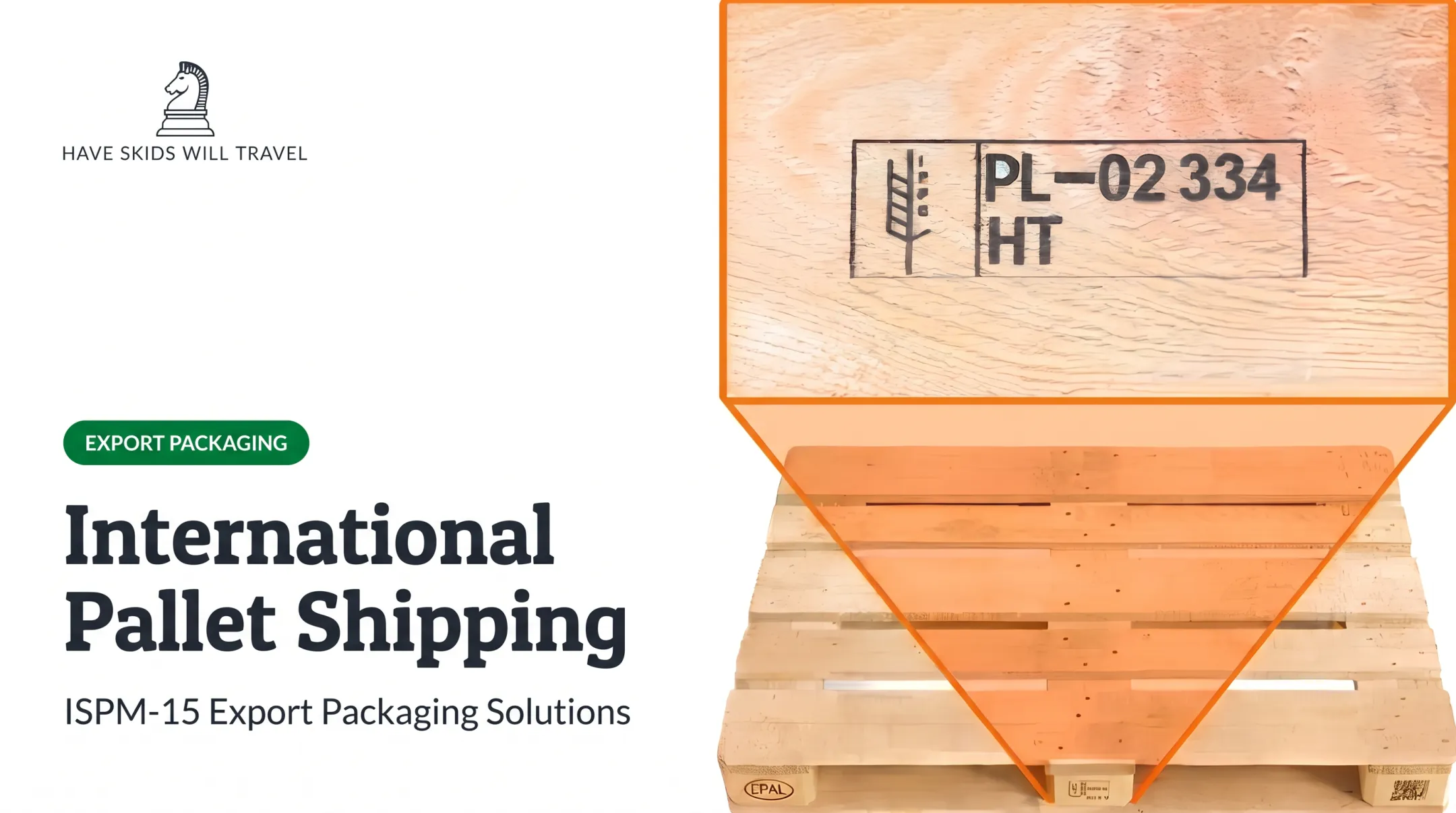
If your freight is leaving the country, confirm whether the destination requires ISPM-15 compliance for wood packaging. Per USDA APHIS, one approved heat-treatment method brings the wood core to at least 56°C (133°F) for 30 minutes, then applies an accredited compliance mark.
That rule follows the destination's requirements. It does not apply automatically to every domestic shipment. Palleton's ISPM-15 heat-treated pallets and crates are a compliant option when freight actually crosses an international border.
How Pallets Move Through 3PL and Truckload Operations
Understanding the pallet's path through a 3PL warehouse helps you spot where problems typically start.
Receiving and Storage
Warehouse teams inspect each pallet and load on arrival, verify quantities, check for visible damage, and scan or record shipment information. From there, the pallet either moves into storage or gets flagged for repair or repalletization.
Storage methods vary by product and turnover:
- Floor storage for high-turnover or bulk items
- Selective racking for mixed SKUs needing individual access
- Block stacking for uniform, stackable products
Pallet dimensions, weight, and FIFO or lot-control requirements all influence where a pallet lands in the warehouse.
Order Preparation and Truck Loading
Full-pallet moves are simpler than case picking or mixed-pallet assembly, but every outbound load still needs the same stability prep. Stretch wrapping, labels, corner protection, blocking, and bracing all matter before the pallet reaches the trailer.
Truck loading itself requires planning around:
- Weight distribution and axle limits
- Pallet footprint, height, and stackability
- Loading sequence and dock appointments
- Retailer or consignee routing requirements
Inconsistent pallet specifications reduce usable trailer space, cause rework, and increase handling. Those problems can escalate into freight claims or rejected shipments.

Handling technique creates a second failure point. Forklift impacts, short forking, and poor pallet-jack positioning damage wood components and can interrupt the flow further down the line.
Documentation and Visibility
Outbound documentation includes bills of lading, pallet counts, lot information where applicable, and proof of delivery. Palleton's Paperless Delivery System sends trailer, volume, and facility information instantly to designated recipients, which McCain Foods USA has cited as supporting its transaction audit trail.
3PL Pallet and Truckload Cost Factors
A low pallet unit price rarely produces the lowest total program cost. Here's what actually makes up your spend.
Pallet-Related Costs
- Purchase or rental
- Custom design and repair
- Washing or sanitation
- Heat treatment for export
- Delivery, storage, and disposal
- Replacement of lost or damaged units
Transportation-Related Costs
- Linehaul and fuel-related charges
- Loading or unloading services
- Detention, layover, and redelivery
- Reweighing and appointment failures
- Accessorials tied to freight class or special handling
Why Cheap Pallets Can Cost More
A pallet that causes product damage, poor cube utilization, repeated repairs, or rejected loads costs you more than its sticker price suggests. Compare options on measurable inputs:
- Pallets per shipment
- Product dimensions and trailer utilization
- Damage history
- Storage duration
- Recovery rate
What Drives 3PL Pricing
3PL pricing typically combines storage, handling, fulfillment, transportation, technology, and accessorial fees. A 2024 Warehousing & Fulfillment survey of hundreds of warehouses estimated average monthly storage at roughly $20.37 per pallet, with receiving billed separately.

Treat those figures as benchmarks, not quotes you should expect to match exactly.
Request an itemized quote that separates recurring charges from one-time implementation fees, and that clearly identifies:
- Minimums and fuel or transportation adjustments
- Pallet fees and storage measurement methods
- Accessorials and cancellation terms
- Service-level commitments
Palleton's buy-back and core recovery options offer one way to offset replacement costs over the life of a pallet program.
How to Choose a Pallet and Logistics Partner
Run through this checklist before signing with a pallet supplier or 3PL:
- Consistent availability - can they supply volume reliably, including during demand spikes?
- Documented inspection standards - do they have repeatable repair and replacement processes?
- Custom manufacturing capability - can they handle oversized, narrow, or odd-shaped loads?
- Emergency supply programs - what's the lead time when something goes wrong?
- Industry fit - do they support your handling conditions for food and beverage, pharmaceuticals, automotive, chemicals, or export freight?
Technology and Multi-Facility Considerations
Visibility matters as much as the physical pallet. Look for:
- Barcode or asset tracking
- Inventory reporting
- Exception alerts
- Secure system access
Palleton's cloud-based tracking gives encrypted 24/7 access to inbound and outbound pallet details. Hormel Foods has cited that visibility in a multi-year supply partnership.
If you operate across multiple facilities, confirm specification consistency, regional availability, and one point of accountability.
Palleton operates seven facilities, including a lumber mill and custom pallet and crate shop, with reach across the Midwest, the East and West Coasts, the Canadian border, and as far south as Mexico. That mix of custom manufacturing, national account sourcing, and recycled or combination pallet options matters most when freight specs must stay consistent across several receiving docks.

Before requesting a program quote, walk through pallet dimensions, projected volume, product requirements, destinations, truckload patterns, and export needs with a qualified partner. Getting that conversation right up front prevents most invoice surprises later.
Frequently Asked Questions
What is 2PL, 3PL, 4PL, and 5PL?
- 2PL: Outsources a single transport function
- 3PL: Bundles warehousing, transportation, and distribution
- 4PL: Adds process planning and coordination across providers
- 5PL: Focuses on technology-led network optimization
How much does 3PL cost?
Costs depend on storage, receiving, handling, fulfillment, transportation, technology, and accessorial requirements. Compare itemized quotes across providers rather than relying on a single average price.
What is a 3PL pallet?
A 3PL pallet is the pallet used to receive, store, handle, and ship goods inside a third-party logistics operation. Specs follow your product, the warehouse equipment, and transport requirements—not a special pallet category.
Who owns the pallets in a 3PL relationship?
Ownership may stay with the shipper, belong to the 3PL, or run through a pooled pallet program. Confirm ownership, loss, repair, exchange, and billing terms directly in the contract before signing.
How do pallets affect full truckload shipping?
Pallet footprint, height, weight, and load stability determine trailer utilization, loading plans, and overall safety. Poor specifications raise freight costs and increase the risk of damage or a rejected shipment at the dock.