
Get the material wrong, though, and the consequences stack up fast. Under-built wood cracks under load. Untreated lumber invites pests and moisture. Non-compliant wood packaging gets flagged at customs, stalling shipments for days. Overbuilt crates burn freight budget on materials you didn't need.
This guide breaks down crating materials, essential supplies, how to choose between them, and the mistakes that cost businesses the most.
Key Takeaways
- Material choice controls protection, freight cost, and customs compliance in one decision
- Wood, metal, plastic, and corrugated crates fit different weight, budget, and durability needs
- Export wood packaging requires ISPM-15 heat-treated lumber or a compliant alternative
- A qualified crate manufacturer matches materials to the load so you avoid overbuilding and overpaying
What Is Crating and Why It Matters
Crating means building a rigid, custom enclosure (typically wood, metal, or plastic) engineered around an item's dimensions and weight. It's structural protection, not just wrapping.
Packing vs. crating trips up a lot of buyers:
- Packing refers to cushioning and wrapping materials (foam, bubble wrap, glassine paper) that protect an item's surface
- Crating refers to the load-bearing frame and enclosure that carries the item through handling, stacking, and transit
You need both. Packing without crating leaves a fragile item exposed to crushing. Crating without packing leaves it rattling around inside a box that can take a hit.
Industries that lean on crating heavily include manufacturing, automotive, technology, oil and chemicals, food and beverage, and any business shipping oversized machinery. If your freight is heavy, irregular, valuable, or handled multiple times before reaching its destination, a standard box isn't going to cut it.
Consequences of Choosing the Wrong Material
Get the material wrong and you're looking at real, expensive problems:
- Crushing damage from under-built crates that can't handle the load or stacking pressure
- Moisture and pest damage from untreated wood exposed to humidity or long transit times
- Customs delays when wood packaging fails ISPM-15, triggering an Emergency Action Notification and forced re-export
- Wasted freight spend from overbuilt crates that add unnecessary weight and cost
One Express Packing case study found a customer's shipping damage rate above 21% before a redesign brought it near zero. That figure is one company's experience, not an industry average, but it shows how much rides on getting the design right—not just picking a material off a list.
Core Crating Materials Explained
Solid Wood Crates
Wood remains the default for heavy, irregular, or export-bound freight. It's load-bearing, repairable in the field, and more affordable than metal or plastic at scale.
- Best for: Heavy or irregular machinery, export shipments, one-time or recurring builds
- Strengths: Strong, repairable, widely available, cost-effective for most weight ranges
- Limitations: Heavier tare weight than plastic; needs moisture protection and, for exports, ISPM-15 heat treatment
Metal Crates (Steel/Aluminum)
Metal is the better choice when a crate must survive dozens of round trips or extreme impact.
- Best for: Repeated heavy-duty shipments, high-security cargo, harsh environments
- Strengths: Durable, high load capacity, long service life
- Limitations: Higher upfront cost, longer lead times to fabricate
Plastic Crates (HDPE/Injection-Molded)
Plastic fits loads that need moisture, corrosion, or contamination control more than raw structural mass.
- Best for: Electronics, medical equipment, sensitive instruments
- Strengths: Lightweight, weatherproof, corrosion-resistant
- Limitations: Cost climbs fast at scale; load capacity is generally lower than wood or metal

Corrugated Cardboard Crating
Corrugated cardboard works when the load is light and the haul is short and domestic.
- Best for: Lightweight items, single-use shipments, short domestic hauls
- Strengths: Low cost, recyclable, quick to produce
- Limitations: Limited structural protection, single-use only
Corrugated board strength is rated by ECT (edge crush test) (Nelson Container):
- Standard single-wall: 32 ECT
- Double-wall: 44-48 ECT
- Heavy-duty triple-wall: 60-90 ECT
ECT measures compression strength, not wood or metal load capacity. Treat it as one input, not a universal ranking across materials.

Essential Crating Supplies and Components
A crate is more than its outer shell. The supporting hardware and materials determine whether it actually protects the load.
- Fasteners and hardware — screws, nails, corner brackets, and handles that hold the frame together and reinforce weak points
- Cushioning and void-fill — foam, ethafoam, glassine paper, and desiccant packs that stop internal movement and absorb moisture
- Skids and base structures — pallet-style bases that let forklifts move the crate without extra handling equipment
- ISPM-15 heat-treated lumber and certification stamps — required for most international wood packaging
Why the ISPM-15 Stamp Matters
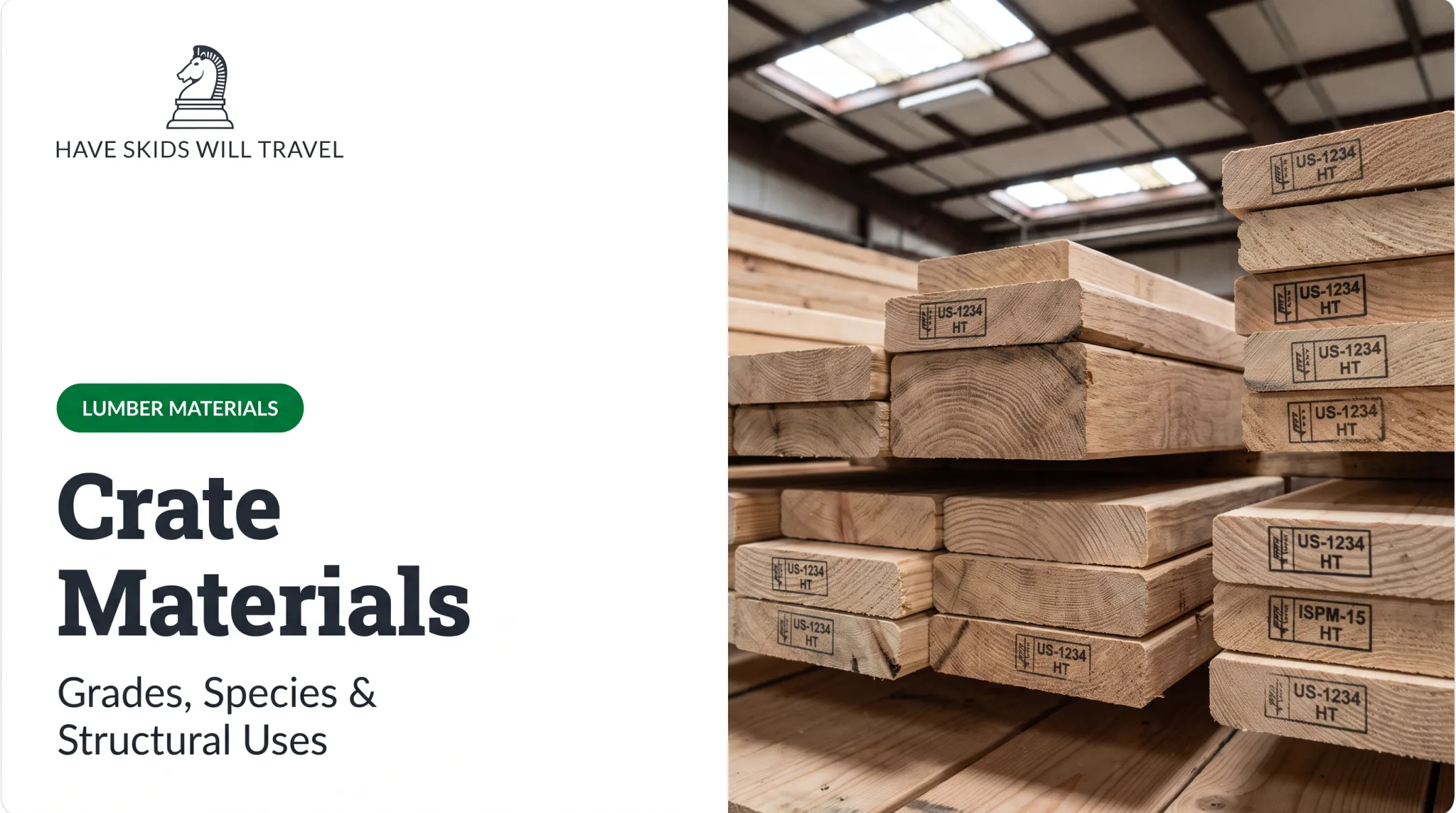
Any solid-wood crate crossing an international border typically needs ISPM-15 heat treatment. The wood core must reach 56°C (133°F) for at least 30 minutes to eliminate pests without chemicals.
After treatment, the wood gets a permanent stamp showing the IPPC logo, country code, facility ID, and the "HT" treatment code. Without that stamp, customs can hold, treat, or destroy the packaging at the border.

Palleton's custom pallet and crate shop builds hardwood and softwood crates in-house and offers ISPM-15 Heat Treat Certified processing on qualifying lumber, so treatment and manufacturing stay under one roof.
How to Choose the Right Crating Materials and Supplies
Four factors drive most crating decisions:
- Item weight, fragility, and value — heavier or more fragile items need more robust framing and internal bracing
- Shipping distance and mode — ocean and air freight often require ISPM-15 compliant wood or an approved alternative like plywood or OSB
- Reusability vs. one-way budgets — a crate making a single trip has different economics than one cycling through your supply chain repeatedly
- Environmental exposure — outdoor storage, long dwell times, or humid climates all call for moisture protection and sturdier materials
According to the US Commercial Service, air shipments generally need less heavy packing than ocean freight, though both still require adequate protection. That's a starting point for route planning, not a substitute for testing your specific crate design against real handling conditions.

Common Mistakes to Avoid When Sourcing Crating Materials
Three sourcing mistakes show up often—and each one is avoidable with the right spec up front:
- Overbuilding: Speccing heavier materials than the shipment needs, which raises freight cost without adding real protection
- Skipping compliance: Leaving off ISPM-15 treatment or stamping on international wood shipments, which can mean rejection or delay at customs
- Ignoring repeat cost: Picking the cheapest one-way build for a monthly shipment when a reusable option would pay for itself
A manufacturer that handles both engineering and compliance helps you dodge all three. Palleton's team reviews product weight, handling method, and shipping requirements before recommending a design, so you get the protection you need without extra material you don't.
Frequently Asked Questions
What materials are used to make storage crates?
Wood, metal, plastic, and corrugated cardboard are the primary crating materials. The right choice depends on weight, fragility, budget, and whether the crate needs to survive multiple trips.
What is the difference between packing and crating?
Packing refers to cushioning and wrapping materials like foam or bubble wrap. Crating refers to the rigid structural enclosure — the frame and panels — that carries the load.
Do wooden crates need to be heat-treated for international shipping?
Most solid-wood packaging used in international trade needs ISPM-15 heat treatment and a permanent stamp. Some engineered wood products, like plywood, are typically exempt.
Can crating materials be reused or recycled?
Wood and metal crates can often be repaired and reused across multiple shipments. Corrugated crating is generally single-use but recyclable.
Which crating material is most cost-effective for heavy machinery?
Solid wood is typically the most cost-effective upfront option for heavy or irregularly shaped machinery, balancing load capacity with material and labor cost.