
The choice isn't trivial. Pick wrong, and you're looking at higher damage claims, wasted freight spend, or a shipment stuck at customs because your packaging didn't meet export rules. Pick right, and your supply chain runs smoother with fewer surprises.
This guide breaks down cost, durability, weight capacity, sustainability, and use cases so you can match the crate to the cargo — not the other way around.
TL;DR
- Wooden crates lead on weight capacity, durability, and reusability for heavy or high-value loads
- Cardboard crates cost less upfront and handle easier for lighter, short-distance shipments
- Choose based on product weight, fragility, export requirements, and shipping frequency
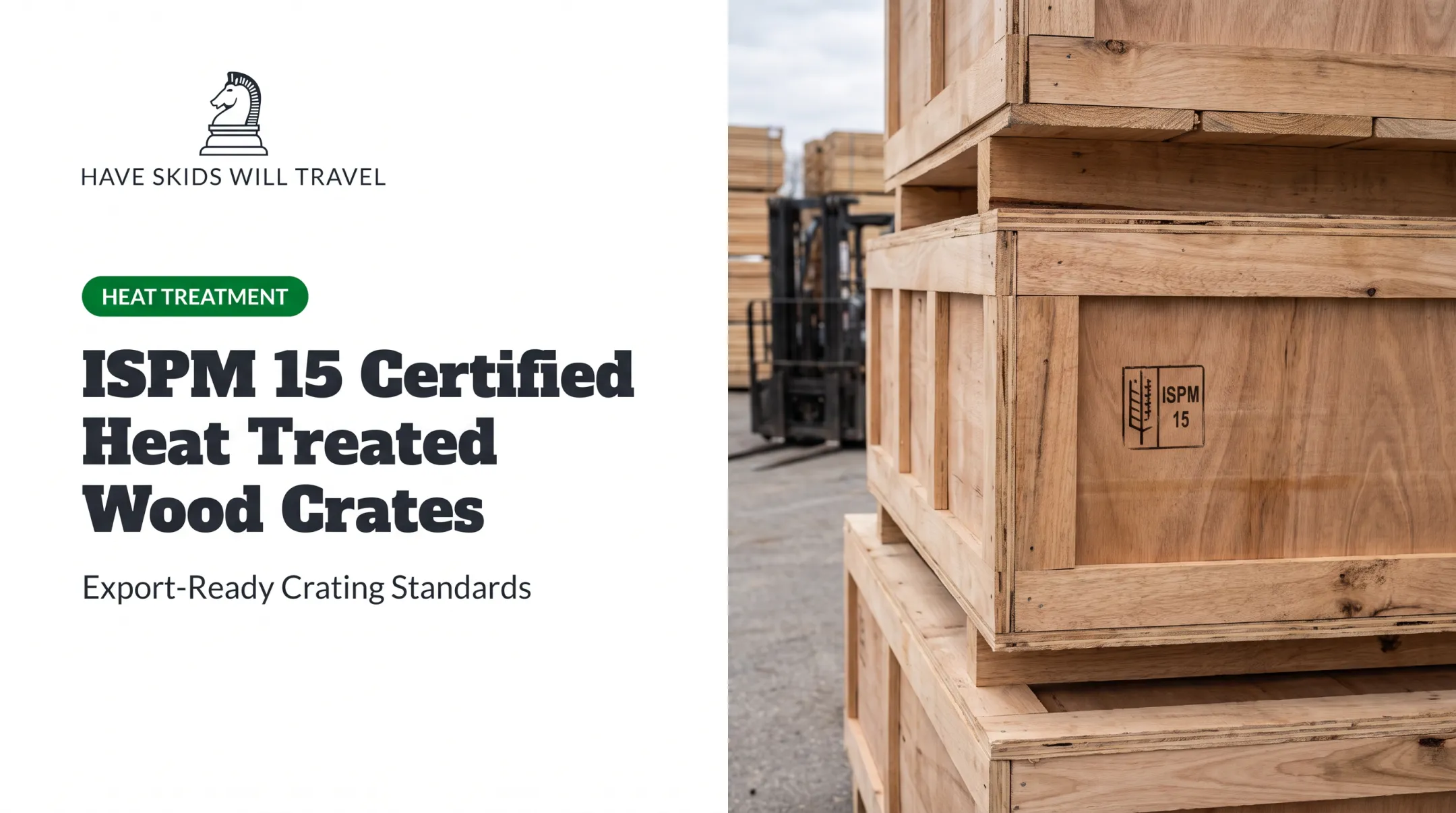
- International wood shipments require ISPM-15 heat treatment
- When durability is the priority, Palleton’s custom wooden crates deliver right-fit protection
Wooden Crates vs. Cardboard Crates: Quick Comparison
| Factor | Wooden Crates | Cardboard Crates |
|---|---|---|
| Cost | Higher upfront; often lower cost per use with repeated reuse | Cheaper to buy; typically single-use, then recycled or discarded |
| Weight capacity & durability | Built for heavy, bulky, or oversized loads; some designs hold several tons | Better for lighter payloads; stacking strength limited by wall construction |
| Handling & equipment | Often need forklifts or pallet jacks because of weight | Light enough for manual handling; no equipment required |
| Reusability & sustainability | Reusable multiple times and repairable when damaged | Highly recyclable but generally single-use |
| Export & regulatory | Need ISPM-15 heat treatment for international shipments | No heat-treatment rule; less protection on long international transit |

What Are Wooden Crates?
Wooden crates are slatted or solid wood containers engineered for heavy-duty, industrial, and export shipping. Unlike a basic box, a wood crate is a structural assembly designed around a specific load, route, and risk profile.
Core benefits include:
- High load capacity for heavy or bulky items
- Customizable dimensions for irregular or oversized products
- Impact and moisture protection
- Repairability, which extends usable life
Subtypes typically include standard slatted crates, solid-wall crates, and heat-treated export crates. Capacity depends heavily on lumber grade, panel thickness, fastener pattern, and engineering design — not on crate type alone.
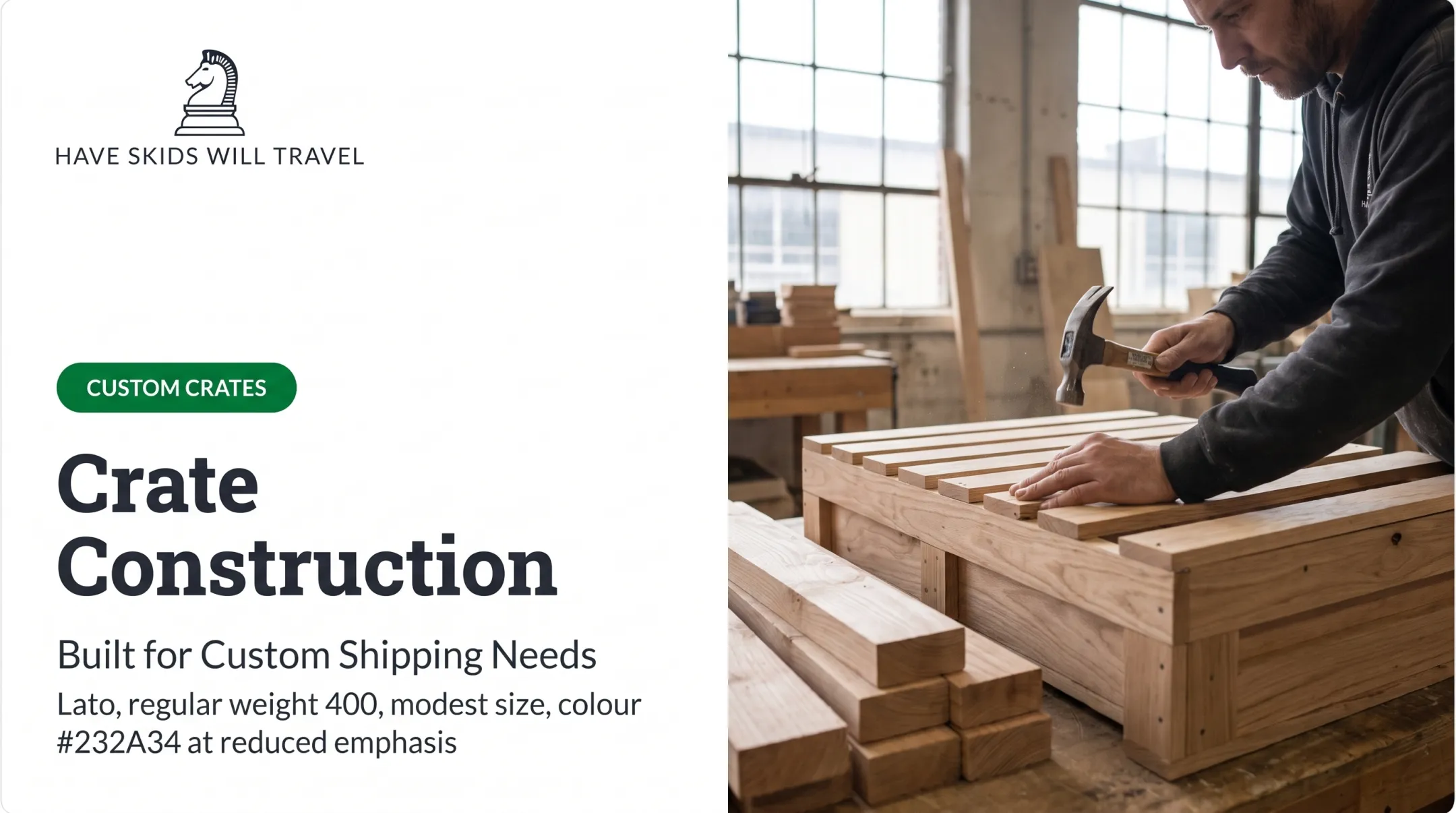
Palleton's custom crate shop starts with the load: weight, handling path, shipping requirements, and destination. From there, the team chooses materials and structure—reinforced builds for heavy equipment, or padding, bracing, and climate options for sensitive cargo.
They work with hardwood, softwood, and combination lumber, matching performance targets without overbuilding.
Use Cases of Wooden Crates
Wooden crates are the go-to for:
- Automotive components and machinery
- Oversized industrial equipment
- International exports requiring ISPM-15 compliance
- Pharmaceuticals and chemicals where regulatory compliance and product protection both matter
One anonymized Express Packing case tracked a customer with a 21% shipping-damage rate from repeated handling and fork-truck contact. After switching to custom wood crating with reinforced bases, damage dropped to near zero—a single supplier example, not a controlled study, but a clear signal that reinforced wood can close handling-damage gaps.

What Are Cardboard Crates?
Cardboard, or corrugated, crates are fluted multi-layer paper containers built for lighter industrial and B2B shipments. Shops rely on them when volume is high and loads stay relatively light.
Core benefits include:
- Lightweight handling with no special equipment
- Lower freight cost from reduced package weight
- High recyclability
- Adjustable flute strength for different load needs
Corrugated crates come in single-wall, double-wall, and triple-wall constructions. According to a Crown Packaging whitepaper, suggested maximum loads range from 20–120 lb for single-wall up to 240–300 lb for triple-wall.

Those figures are chart estimates, not guarantees. Scoring and slotting also affect real-world strength.
Use Cases of Cardboard Crates
Cardboard crates fit best where volume and speed matter more than reuse:
- Retail goods and e-commerce shipments
- Electronics
- Food and beverage products
- Frequent, high-volume domestic shipping
The EPA reports a 96.5% recycling rate for corrugated boxes, with roughly 32.1 million tons recycled in 2018 alone. For bulk domestic shippers, that recovery rate is hard to match with most other packaging materials.
Wooden Crates vs. Cardboard Crates: Which Is Better?
Neither wins outright. The right pick comes down to:
- Product weight: heavier goods need wood's structural support
- Fragility: high-value or delicate items benefit from wood's rigidity and bracing options
- Shipment distance: longer, international routes favor wood's durability
- Export requirements: wood packaging on international shipments needs ISPM-15 treatment; cardboard avoids that step
- Number of shipping cycles: repeat shipments favor wood's reusability; one-off shipments favor cardboard's low cost

Choose wooden crates for heavy, high-value, or export shipments needing maximum protection and reuse.
Choose cardboard crates for lighter, high-volume, domestic, or single-use shipments where cost and speed matter more than reuse.
Some businesses split the difference. A hybrid approach uses wooden crates for core equipment and cardboard for accessories or documentation, so you protect what matters most while keeping costs down on the rest.
Real-World Example: Choosing the Right Crate for the Job
Manufacturers shipping heavy equipment or automotive components often start with corrugated packaging because it's cheap and available. The problem shows up later: repeated handling, forklift contact, and staging before crating chip away at protection. The Express Packing case mentioned earlier is instructive. The customer's process involved multiple loading, unloading, and repositioning steps before the product ever got crated — a recipe for damage regardless of material. Once the company moved to immediate custom wood crating with reinforced bases, the reported damage rate fell from 21% to near zero. Cardboard still works for many loads. Heavier, higher-value, or export-bound shipments need packaging engineered around the actual handling conditions, not just a container that fits. If your team is watching damage claims climb or facing new export requirements, talk with Palleton about custom, ISPM-15-certified wooden crates built around your specific shipment, not a generic box.
Conclusion
The better crate is the one that matches your load. Weight, fragility, shipping distance, and export rules drive the call—and sometimes the answer is both, used on different parts of the same shipment.
Heavy, high-value, or international freight usually gets better long-term protection and cost efficiency from wooden crates once reuse is factored in. Cardboard stays the smarter pick for lighter, high-volume domestic shipments where speed and low upfront cost matter most.
Map those factors against each shipment before you buy. When wood is the fit, a custom build sized to the product—and ISPM-15 heat treatment when you export—keeps protection aligned with cost instead of defaulting to one material for every load.
Frequently Asked Questions
Are wooden crates still used?
Yes. Wooden crates remain widely used across manufacturing, automotive, and export industries for heavy or high-value shipments, thanks to their strength, durability, and reusability.
Is it better to move with boxes or totes?
For household or office moves, boxes and totes offer easier handling and lower cost. Wooden crates are built for heavier commercial goods, not typical household moves.
How much weight can wooden crates hold?
Capacity ranges from a few hundred pounds to several tons, depending on lumber thickness and design. Custom crates from Palleton can be engineered for specific load requirements.
What is the main disadvantage of wooden crates?
They're heavier, often requiring forklifts or pallet jacks to move. International shipments also require ISPM-15 heat treatment before export.
Are cardboard crates strong enough for industrial shipping?
Multi-wall corrugated crates handle moderate industrial loads well, but they're generally less suited to very heavy or long-distance international shipments than wood.
Do wooden crates need special certification for export?
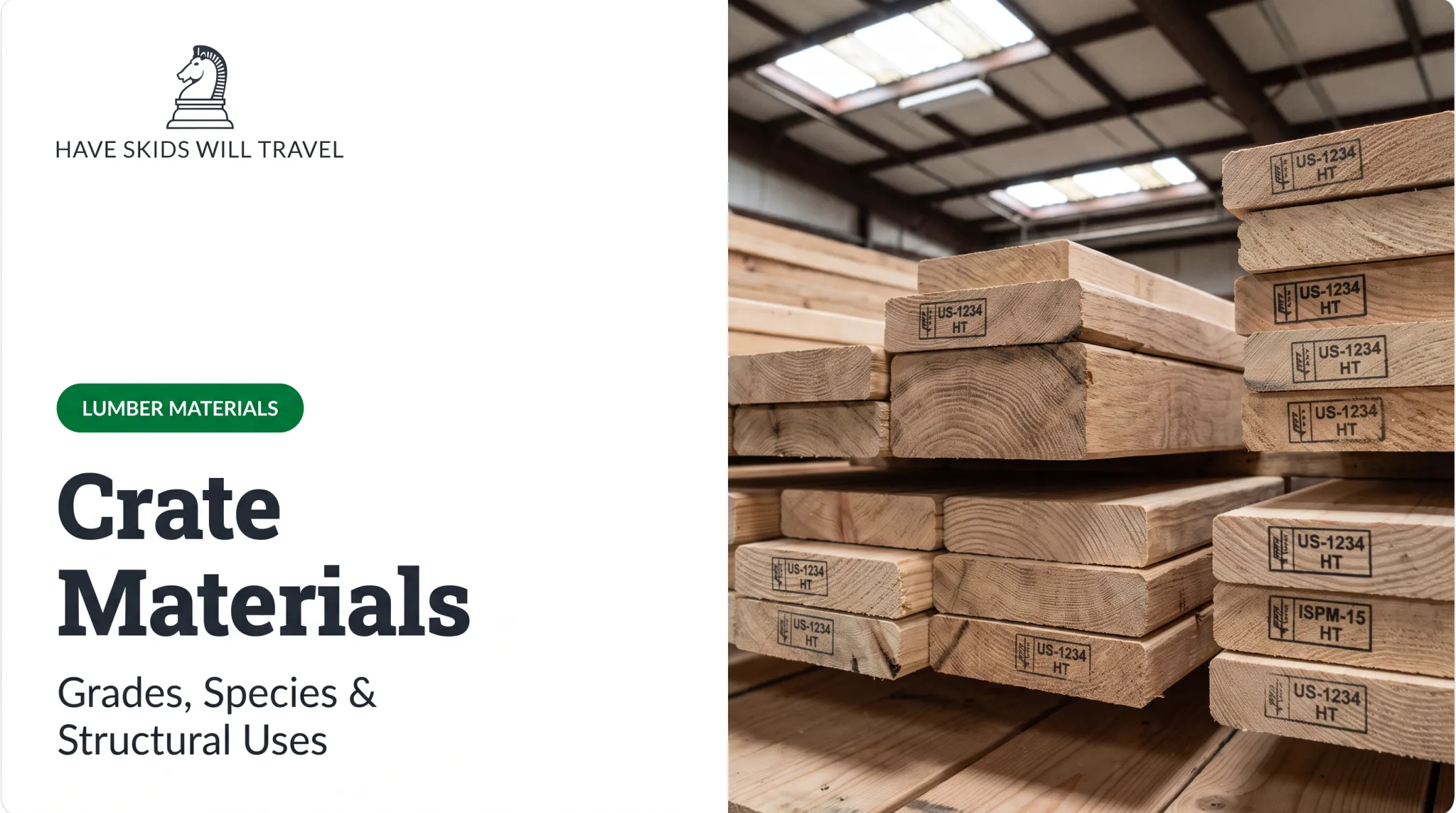
Yes. International wood packaging must meet ISPM-15 standards: the wood core reaches at least 56°C (133°F) for 30 minutes and carries an approved treatment stamp. Palleton performs this heat treatment in-house at certified facilities.