
This scenario plays out more often than shippers admit. Wood dunnage lumber is the fix: loose boards, blocks, and runners used to support, separate, and protect cargo during transport and storage. It shows up in trucking, rail, ocean freight, and warehousing across nearly every industry that moves physical goods.
This article covers what dunnage actually is, the types and species available, how it differs from cribbing and blocking, when heat treatment is required, what it costs, and how to source it before you're stuck making dock-side decisions under pressure.
Key Takeaways
- Wood dunnage supports, separates, and protects cargo in transit and storage
- Dunnage, cribbing, and blocking serve related but distinct functions
- International shipments often require ISPM-15 heat-treated dunnage
- Pricing depends on species, dimensions, treatment, and order volume
What Is Wood Dunnage and Why Does It Matter?
Dunnage is loose material placed under, around, or between cargo to support, separate, or protect it. Unlike finished dimensional lumber built into a structure, dunnage is functional and often disposable, cut to fit the load rather than a fixed spec.
The Federal Motor Carrier Safety Administration includes dunnage among the acceptable ways to immobilize or secure cargo, alongside blocking, bracing, and tiedowns. The federal cargo securement rule also states that dunnage can't have damage or defects that compromise the securement system. Cracked, rotted, or undersized boards don't count as protection; they're a liability.
Where the Word Comes From
Merriam-Webster traces the shipping sense of "dunnage" back to the 15th century, but admits the actual etymology is unknown. Dictionary.com finds an earlier form, dynnage, dating to the 1600s. Nobody can pin down exactly where the word originated. It's simply been maritime cargo-handling vocabulary for centuries.
Why Skipping Dunnage Is Risky
Dunnage does four jobs at once:
- Prevents cargo shift during transit, braking, and turns
- Elevates loads so forklifts and pallet jacks can access them
- Absorbs shock from vibration and handling impacts
- Blocks moisture from contact with trailer floors or damp storage surfaces
The stakes are real. TT Club estimates that poor packing practices contribute to as much as 66% of intermodal cargo-damage incidents, costing insurers more than $500 million annually. That figure covers the whole packing process, not dunnage alone, but support material still isn't an afterthought.

Dunnage alone isn't a complete securement plan. It has to be sized and placed correctly alongside blocking, bracing, and tiedowns to actually work.
Types of Wood Dunnage and Acceptable Wood Species
Common Dunnage Configurations
There's no federal standard dictating dunnage dimensions. What you'll see in the market are common conventions:
- 2x4 and 2x6 boards for general cargo separation and void filling
- 4x4 and 4x6 timbers for heavier support and load-bearing applications
- Custom-cut runners, blocks, and skids for irregular or oversized loads
Nominal sizes aren't a guarantee of load capacity. A 4x4 isn't automatically strong enough for your shipment just because it's bigger than a 2x4. The right size depends on the weight, geometry, and bearing points of the actual cargo.

Acceptable Wood Types
Common dunnage species include:
- Softwoods such as pine and fir
- Hardwoods such as oak
There's no universal federal list approving specific species for domestic use. FMCSA simply requires that dunnage remain structurally sound and free of defects. Match species to load weight, durability needs, and moisture exposure rather than defaulting to whatever's cheapest.
Rough-sawn and planed lumber both work as dunnage, with different tradeoffs:
- Rough-sawn keeps a saw-textured surface that grips cargo better and usually costs less
- Planed lumber is smoother but costs more to produce
Neither finish is universally correct. The better choice depends on what you're shipping and how it sits against the wood.
Working with a supplier that mills its own lumber, rather than reselling whatever's on hand, gives you more control over species, grade, and cut consistency between orders.
Dunnage vs. Cribbing vs. Blocking: Clearing Up the Confusion
These terms get used interchangeably on the dock floor, but they're not the same thing.
- Dunnage: Loose material that supports, separates, or protects cargo—the broadest of the three functions.
- Cribbing: Stacked wood structures under heavy machinery or equipment that distribute load to the ground. OSHA's crane standard calls this "blocking, also referred to as cribbing."
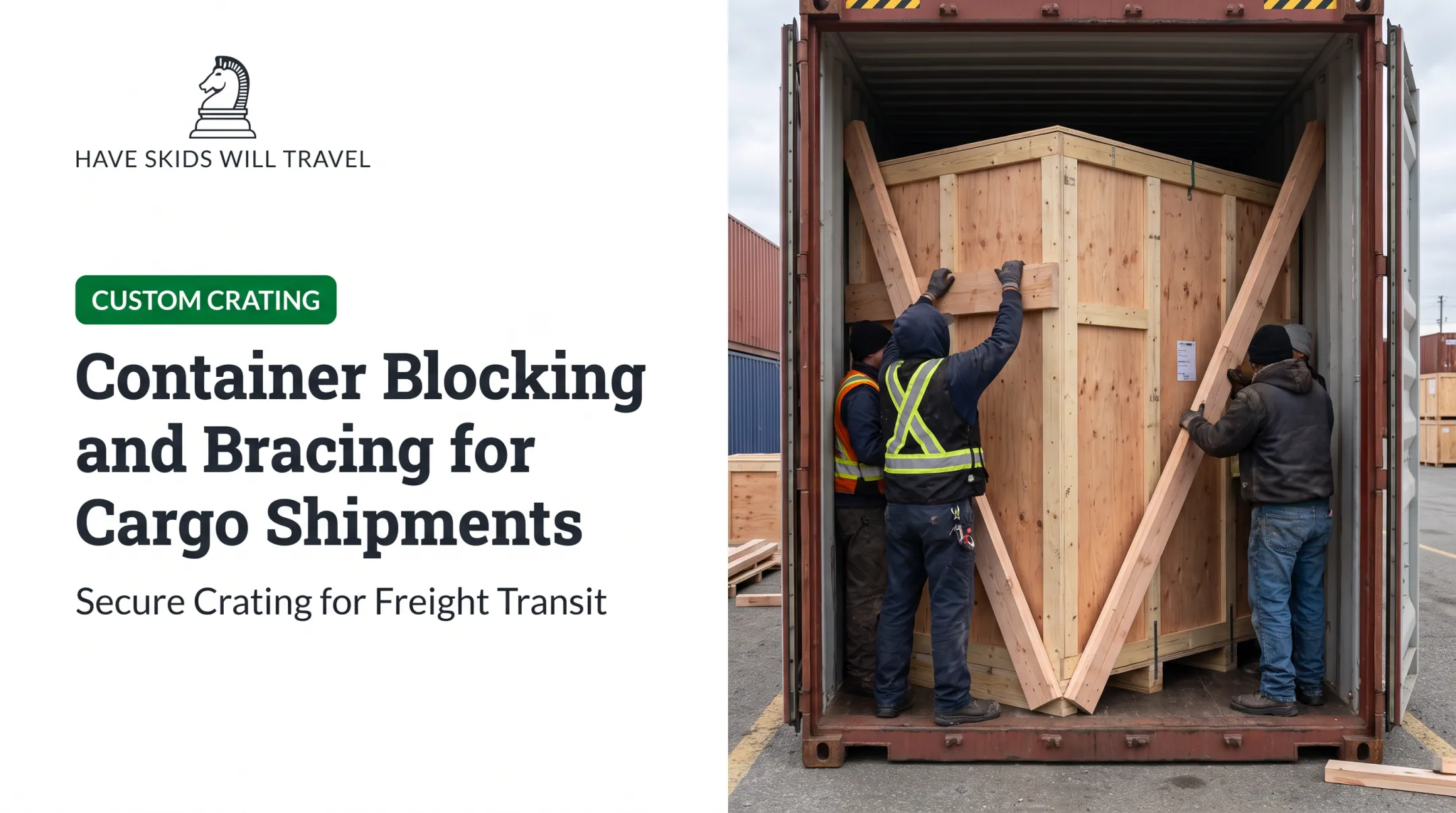
- Blocking/bracing: Lumber positioned to resist cargo movement in one direction. Bracing transfers those forces into the trailer structure.
Here's the distinction that matters most: a loose board sitting near your cargo isn't automatic protection. If it's not positioned to resist actual force, it's just dunnage doing a separating job, not a blocking job. Knowing which function you need determines how the lumber gets placed, not just what size you order.

Is Dunnage Wood Treated? ISPM-15 and Export Requirements
For domestic shipments within the U.S., there's generally no treatment mandate on dunnage wood. You can use standard, untreated lumber for most truck and rail moves that stay inside the country.
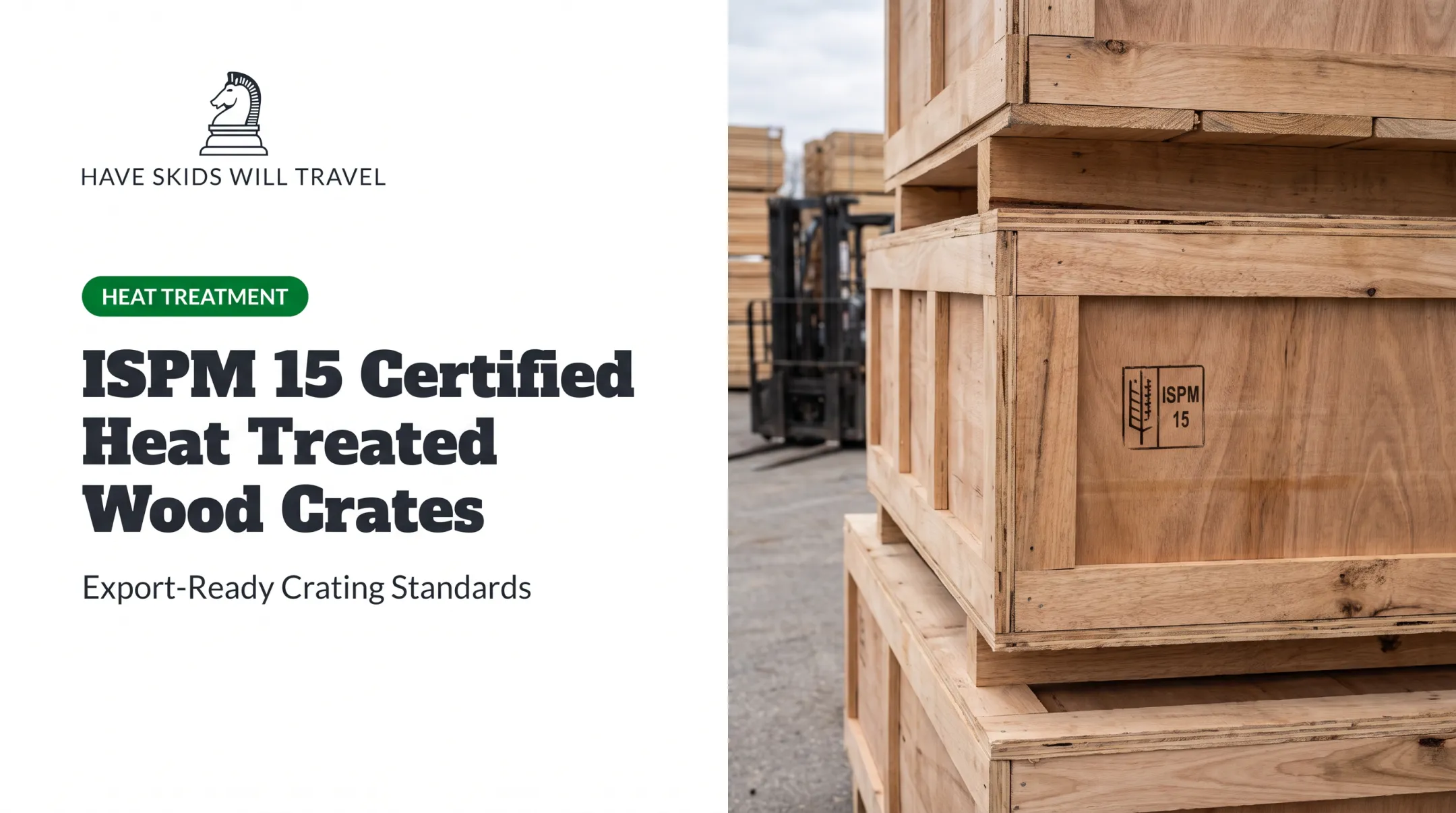
International shipments follow stricter rules. ISPM-15 is the international standard governing raw-wood packaging material in global trade, and it explicitly includes dunnage. If your shipment is heading overseas, the wood supporting it likely needs to meet this standard.
What ISPM-15 Actually Requires
- Wood must be debarked before treatment
- Heat treatment requires a minimum core temperature of 56°C (133°F) for 30 continuous minutes
- Treated material carries a visible stamp confirming compliance (the "HT" code identifies heat-treated wood)
- Small amounts of residual bark are allowed within specific size limits
USDA APHIS puts the responsibility on the exporter: you have to confirm what your destination country requires and use registered treatment facilities to meet it. Don't assume. Check before you load.
Palleton holds ISPM-15 Heat Treat Certification. Qualifying wood packaging, including dunnage, is treated in monitored kilns to the required core temperature, then marked with a compliant stamp for inspectors and customers on the receiving end.

How Much Does Wood Dunnage Cost?
There's no fixed price sheet for dunnage lumber, and any generic number you find online should be treated skeptically. Real pricing depends on:
- Wood species and grade (hardwood generally costs more than softwood)
- Dimensions and length of the cut pieces
- Rough-cut vs. surfaced finish
- ISPM-15 treatment requirements, if exporting
- Order volume — larger and recurring orders typically bring down per-unit cost
Custom-cut dunnage ordered as part of a repeat program tends to run cheaper per unit than one-off purchases, since the supplier isn't starting from scratch on setup each time.
Those per-unit savings still sit inside a larger lumber market. NAWLA points to supply, demand, and competition as core price drivers. Dunnage pricing moves with the same conditions that affect pallets and framing lumber.
Request a quote from your lumber supplier based on load specs, species preference, and volume rather than a rule-of-thumb price per board foot.
Sourcing Reliable Wood Dunnage for Your Supply Chain
The riskiest way to source dunnage is letting a driver grab whatever's lying around the dock at the last minute. Mismatched sizes, wrong species, or damaged boards slow down loading and increase the odds of in-transit damage.
Planning ahead means:
- Establish specs in advance: species, dimensions, and treatment status
- Set up a recurring order if you ship similar loads regularly
- Confirm treatment requirements before an international shipment reaches the dock
Palleton has been in the pallet and lumber business for over 45 years, running seven facilities including its own lumber mill and custom pallet and crate shop. Dunnage can come from the same source as your pallets, with ISPM-15-certified heat treatment available for export loads.
Delivery covers the Midwest. Businesses shipping machinery, oversized equipment, or mixed domestic/export loads gain the most from one supplier who handles both the lumber and the logistics.
Frequently Asked Questions
What is the purpose of dunnage?
Dunnage supports, separates, and protects cargo during transport and storage. It prevents shifting, elevates loads for forklift access, and cushions against shock and moisture.
What type of wood is acceptable for use as dunnage?
Common choices include pine, fir, and oak. There's no strict federal species requirement for domestic shipments — the wood just needs to be structurally sound and defect-free.
Is dunnage wood treated?
Generally, only for international shipments. ISPM-15 requires heat treatment or fumigation for wood packaging, including dunnage, used in export trade.
What's the difference between cribbing and dunnage?
Cribbing is stacked wood used specifically to support heavy machinery or equipment and distribute its weight. Dunnage covers the broader job of separating and protecting cargo generally.
Why is wood called dunnage?
The term has roots in maritime cargo handling dating back centuries, referring to loose material used to protect a ship's cargo. Its exact origin isn't definitively known.
How much does wood dunnage cost?
Cost depends on wood species, dimensions, treatment status, and order volume. Request a custom quote based on your specific load rather than relying on a generic price.