
That rule is ISPM-15, and it applies to nearly every exporter using wood packaging. The good news: compliance isn't complicated once you understand the standard. Palleton has spent more than 45 years in the pallet and lumber business, and its ISPM-15 Heat Treat Certification means exporters don't have to guess.
This article covers the requirements, how to read the compliance stamp, treatment methods, which industries are most exposed, and how to pick a certified supplier.
Key Takeaways
- Solid wood packaging over 6mm thick needs ISPM-15 treatment for international shipments enforced in dozens of countries
- Choose heat treatment (56°C core for 30 minutes) as the residue-free preferred method over methyl bromide fumigation
- Verify compliance via the permanent IPPC stamp with country code, facility number, and treatment code
- A certified supplier like Palleton cuts export compliance risk and documentation liability
What Is ISPM-15 and Why It Matters for Exporters
ISPM-15 (International Standards for Phytosanitary Measures No. 15) is a global standard developed by the International Plant Protection Convention (IPPC). Its goal: stop quarantine pests from hitching a ride in raw wood packaging like pallets, crates, and dunnage as they cross borders.
Untreated wood packaging can carry insects, larvae, and fungi capable of devastating a foreign country's forests or farmland. The Asian longhorned beetle likely entered the United States hidden in wood packaging, with the first infestation discovered in Brooklyn trees in August 1996. That single pathway triggered years of costly eradication efforts.
Dozens of countries now enforce ISPM-15, including major U.S. trading partners across the EU and Asia. Requirements vary slightly by destination, so exporters should always confirm the current rule before shipping.
Consequences of Getting It Wrong
Non-compliance can stall cargo and trigger costly penalties. Consequences include:
- Customs holds at the port of entry
- Forced re-treatment or destruction of the wood packaging
- Liquidated damages — CBP guidance sets penalties as high as 3x entered value, capped at the bond amount
- Shipment destruction if the packaging is deemed infested
- Reputational damage with overseas partners and carriers
Industries Most Exposed
Exporters in these sectors face the highest exposure based on product type and destination:
- Pharmaceutical manufacturers shipping temperature-sensitive goods
- Automotive component suppliers
- Food and beverage companies
- Chemical and oil producers
- Machinery and oversized-load exporters
These are core industries Palleton supplies with ISPM-15 heat-treated pallets and crates across the Midwest and its broader U.S. service area.
How ISPM-15 Compliant Pallets Are Made: Heat Treatment Explained
Heat treatment (HT) is the process most exporters rely on to meet ISPM-15 requirements. Here's how it works.
The Kiln Process
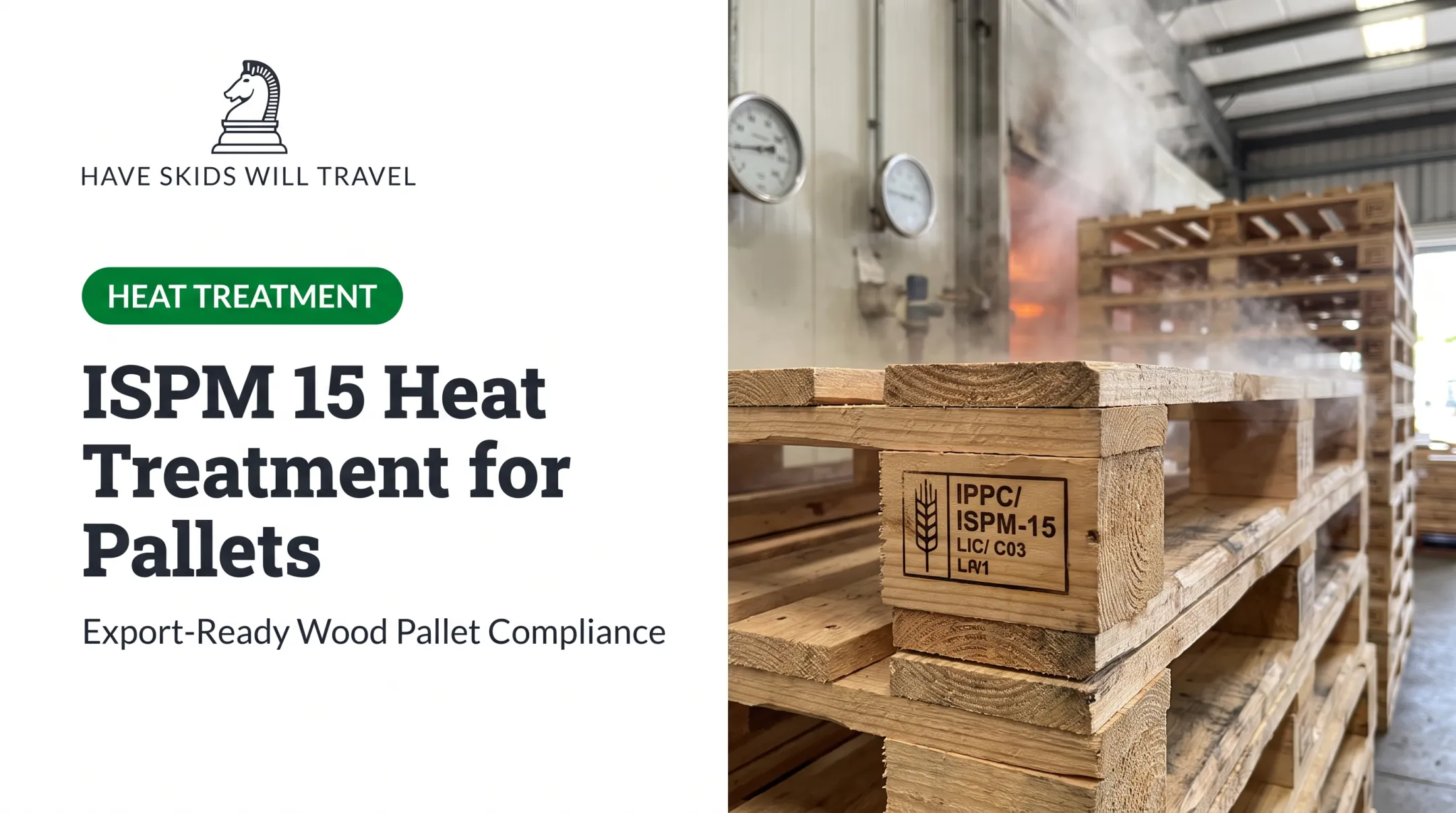
Pallets and crates go into a controlled kiln, where temperature rises until the wood core — not just the surface — reaches at least 56°C (133°F) for a minimum of 30 continuous minutes. Monitoring equipment tracks the internal temperature throughout the cycle to confirm the standard was actually met, not just approximated.
Palleton runs this process at its ISPM-15 Heat Treat Certified facilities, loading each unit into a kiln and holding it at temperature long enough for heat to fully penetrate the wood. The treatment kills insects, larvae, and fungi without weakening the wood's structural integrity.

Why Debarking Matters
The standard also requires wood to be debarked before treatment. Small bark fragments under 3 cm wide are allowed, but larger pieces can shelter pests even after heat treatment. Skipping this step defeats the purpose of the treatment entirely.
Heat Treatment vs. Methyl Bromide
Methyl bromide (MB) fumigation is the other approved method, but it comes with baggage:
| Factor | Heat Treatment (HT) | Methyl Bromide (MB) |
|---|---|---|
| Chemical residue | None | Yes |
| Ozone impact | None | Ozone-depleting substance |
| Preferred for food/pharma | Yes | No |
| Production status | Standard, unrestricted | Phased out for most uses since 2005 |

Given the residue-free result, HT is the clear choice for food, beverage, and pharmaceutical exporters who can't risk chemical contact with their products.
What's Exempt
Not everything needs treatment. The standard exempts:
- Plywood
- Oriented strand board (OSB)
- Particleboard
- Solid wood 6mm or less in thickness
If your packaging is built from these materials, ISPM-15 marking doesn't apply.
Decoding the ISPM-15 Stamp
Every compliant pallet carries a permanent mark with four required elements. Learning to read it takes seconds.
The Four Stamp Elements
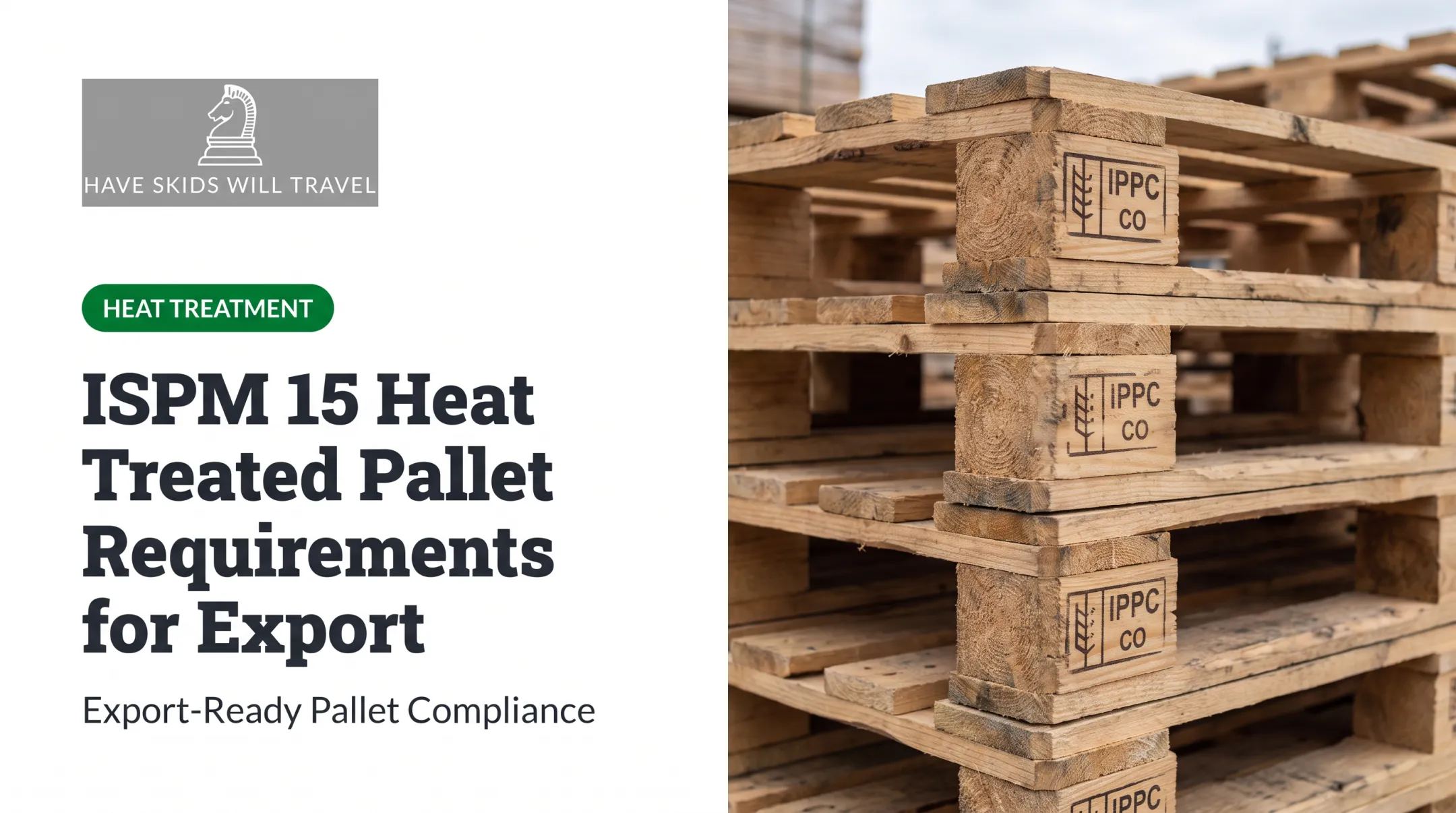
- IPPC symbol — the wheat-style logo confirming the standard was applied
- Country code — a two-letter code identifying where treatment occurred
- Facility registration number — a unique ID tied to the certified provider
- Treatment code — HT for heat treatment, MB for methyl bromide
A typical stamp reads something like "US-14526 HT": country code, facility number, then treatment type, all in one compact mark.

Placement Rules
The mark must be:
- Branded or stamped directly into the wood — not printed on a paper tag or sprayed loosely
- Legible, durable, and non-transferable
- Visible on at least two opposite sides of the unit
Repairs Reset the Clock
A treated, marked pallet stays compliant for its service life as long as it remains unmodified.
Once you repair, rebuild, or swap components, that assumption no longer holds. Replaced parts generally need the same treatment standard, and heavily rebuilt units may need fresh treatment and a new mark from a certified facility.
Choosing an ISPM-15 Certified Pallet Partner
Not every supplier claiming "export-ready" pallets can back it up. Before signing on, verify:
- Valid certification from an authorized inspection agency, not just a verbal assurance
- Correct stamp elements — country code, facility number, and treatment code all present and legible
- Documentation on request — treatment records and process details available without hesitation
Why One Provider Beats Five
Juggling multiple vendors for pallets, crates, and treatment creates gaps. A mismatched stamp or missed treatment cycle from one supplier can hold up an entire shipment. Consolidating sourcing, tracking, and certification with a single accountable partner closes that gap.
Palleton combines ISPM-15 heat-treat certification with custom pallet and crate manufacturing under one roof, backed by seven facilities including its own lumber mill. Its Midwest reach covers exporters who need documented compliance without managing multiple vendors.

For machinery, oversized loads, or mixed international shipments, Palleton also builds custom crates alongside heat-treated pallets, matching dimensions, weight, and carrier requirements before production begins.
Frequently Asked Questions
What is an ISPM pallet?
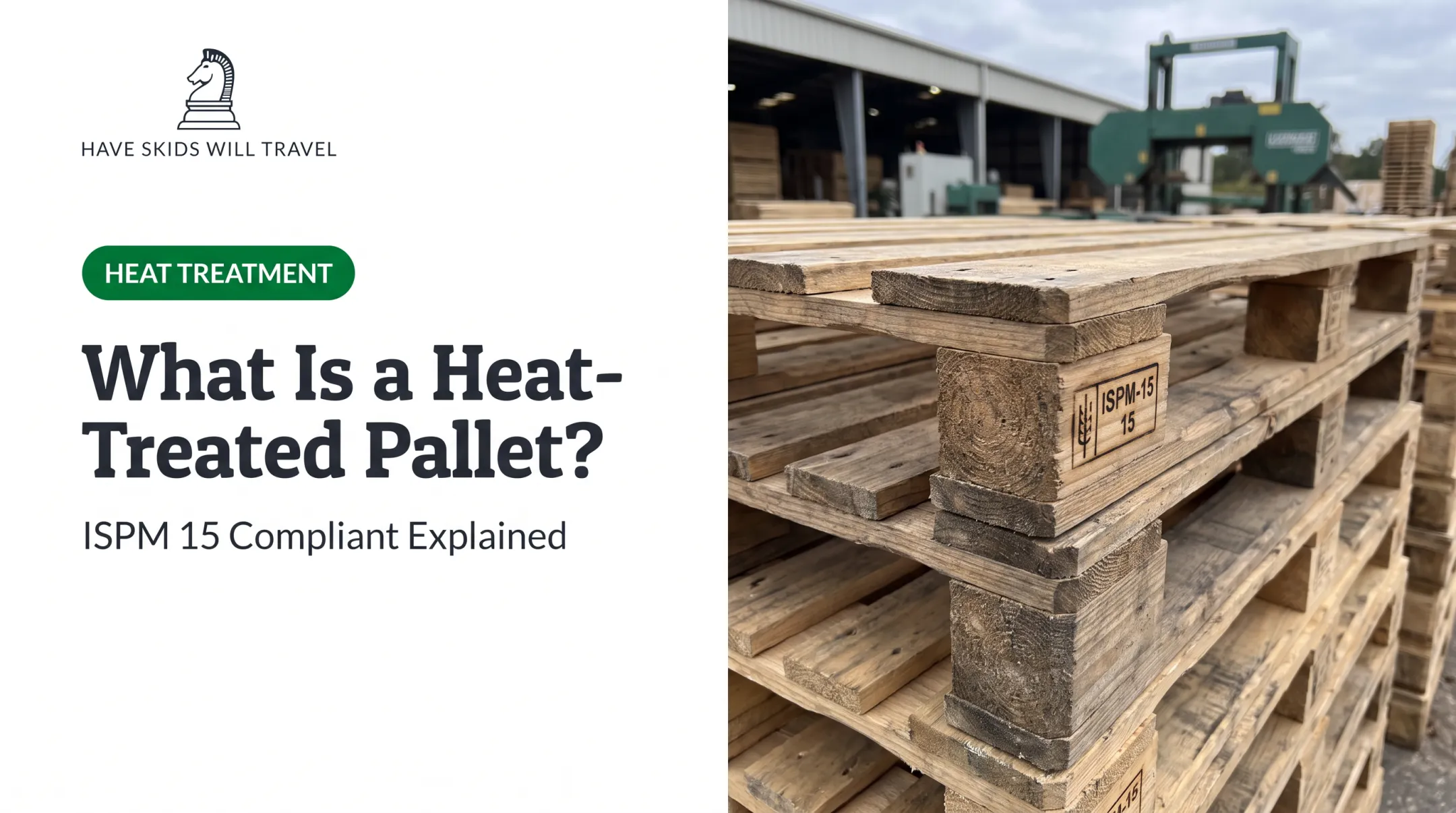
An ISPM-15 compliant pallet is one made of solid wood that's been treated (typically heat-treated) and permanently marked with an IPPC stamp. That stamp confirms it's approved for international shipping.
How can you tell if a pallet has been heat-treated?
Look for the branded IPPC stamp with the "HT" code, stamped directly into the wood on at least two sides. Heat-treated pallets also tend to be lighter due to moisture loss, and the wood should be debarked.
Which countries require heat-treated pallets?
A large majority of countries involved in global trade enforce ISPM-15, including the United States, EU member states, China, and India. Rules vary by destination, so always confirm the specific requirement before shipping.
What wood is exempt from ISPM-15?
Plywood, oriented strand board (OSB), particleboard, and any solid wood 6mm thick or less are exempt from ISPM-15 marking requirements.
Are heat-treated pallets weatherproof?
No. Heat treatment kills pests, but it doesn't waterproof the wood. Pallets facing prolonged outdoor exposure may need additional coatings or protective wrapping.
How long does a heat-treated pallet last?
Lifespan depends heavily on handling, load weight, and storage conditions, but pooled pallets in circulation have been estimated at around 10 years. Proper storage and careful handling extend usability well beyond a single shipment.