
Generic crates and standard pallets weren't built for loads that are heavy, top-heavy, and packed with fragile electronics. A rack that tips over on a loading dock doesn't just get scratched. It can suffer internal component damage that isn't visible until the servers fail weeks later.
This guide breaks down why standard packaging fails server racks, what a proper packaging solution actually includes, and how to ship this equipment domestically and internationally without gambling on your hardware.
Key Takeaways
- Server racks demand custom-engineered crates and heavy-duty pallets, not off-the-shelf packaging
- Most transit damage is prevented with cushioning, corner protection, and shock-absorbing bases
- ISPM-15 certified wood packaging keeps international shipments moving through customs without hold-ups
- Custom crate engineering cuts damage and loss risk on high-value IT equipment
Why Standard Packaging Fails for Server Racks and Data Center Equipment
Server racks are a packaging engineer's nightmare: heavy, narrow, and top-loaded with delicate electronics that hate vibration.
Consider the numbers. A 42U APC NetShelter enclosure has a net weight around 232.70 lb, while a comparable HPE G2 Advanced rack weighs roughly 281.09 lb empty (HPE's published specs).
Once populated with servers, switches, and cabling, that weight climbs fast. These enclosures are rated to hold up to 3,000 lb static and 2,250-2,500 lb rolling.
That's a lot of mass sitting high off the ground in a narrow footprint. A few things make this dangerous in transit:
- Tipping risk — narrow, tall enclosures shift their center of gravity easily during turns, stops, or forklift handling
- Vibration sensitivity — internal components can loosen or fail from sustained road vibration, even without a visible impact
- Environmental exposure — heat, cold, humidity, and dust can degrade electronics during long-haul or international transit
- Sizing mismatches — rack footprints vary (HPE alone lists four different width/depth combinations for its 42U line), so a one-size-fits-all box rarely fits anything well
Standard cardboard boxes and generic pallets were never built for this mix of weight, height, and fragility. Purpose-built crates and reinforced pallet systems exist because off-the-shelf packaging cannot control tip, vibration, or fit on its own.

Essential Components of a Server Rack Packaging Solution
Protecting a server rack in transit means building the packaging around the equipment, not the other way around.
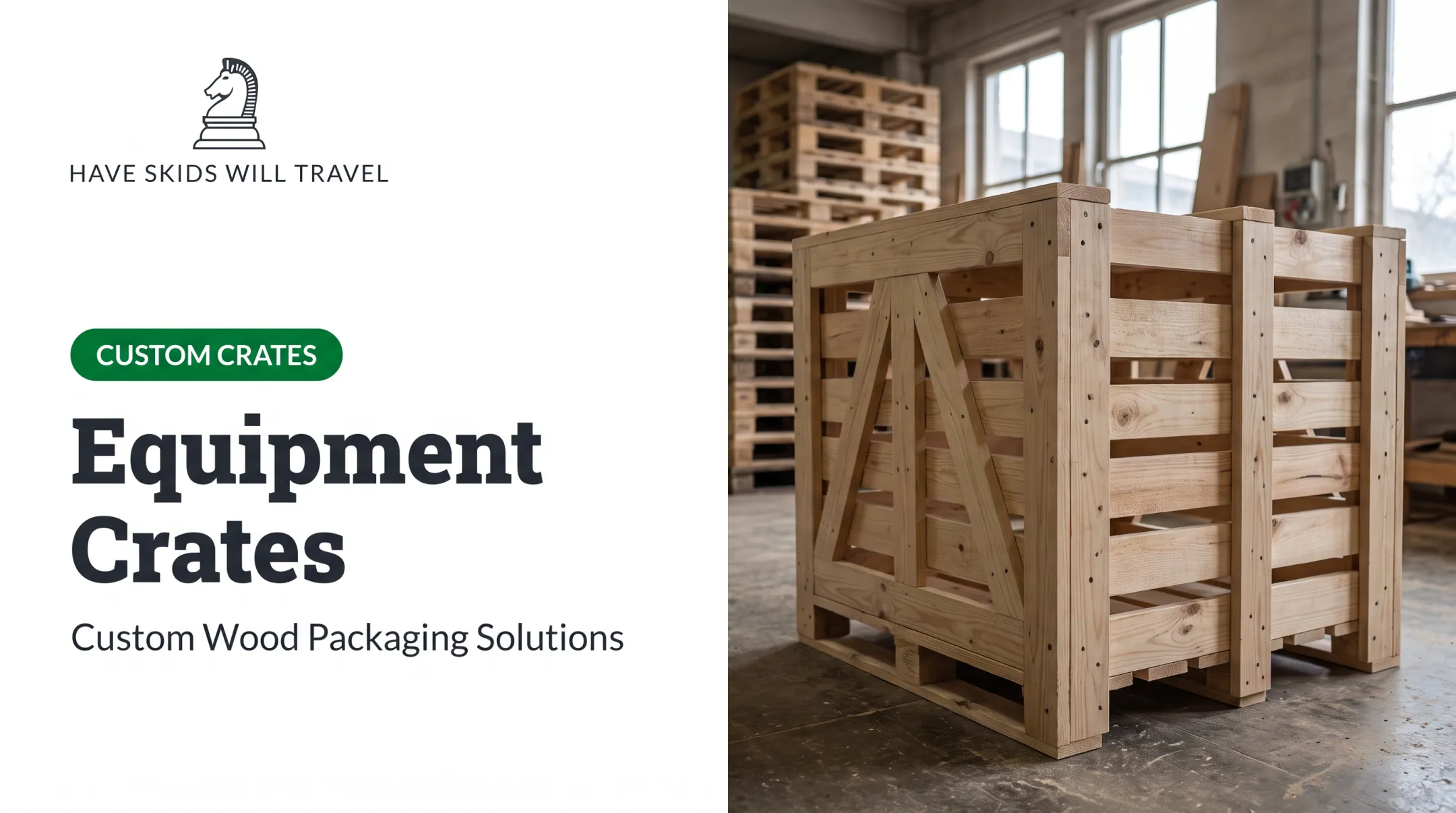
Custom-Built Wooden Crates
A properly built crate is engineered to the rack's exact dimensions, not an approximate fit. Palleton evaluates the rack's dimensions, weight, handling needs, and carrier requirements, then designs the crate around those specs.
A snug fit matters because:
- It limits internal movement during transit
- It distributes weight evenly across the crate structure
- It reduces the crate's total material use without sacrificing protection
Crates can include padding, bracing, and even climate-control features when the equipment demands it. Palleton also provides sample or prototype crates for approval before committing to full production runs.
Heavy-Duty, Shock-Absorbing Pallets
The pallet underneath the crate matters as much as the crate itself. For dense, top-heavy loads, a heavy-duty pallet is built for the rack's weight and configuration. Design factors include:
- Load weight and balance
- Handling method (forklift, pallet jack, or crane)
- Carrier and shipping requirements
- Custom dimensions for oversized, narrow, or irregular equipment
Drawings and sample pallets are available for approval before production.
Cushioning and Cornering Materials
Between the rack and the crate walls, cushioning does the real work of absorbing shock:
- Foam padding or bubble wrap buffers the rack against minor impacts before crating
- Edge and corner protectors shield hard corners—the most common impact points in handling
Securing and Monitoring
Once the rack is cushioned and crated, securing it for the road is next:
- Shipping blankets and strapping cut force transfer during sudden stops or turns
- Tilt/shock indicators flag mishandling in real time and create a clear damage trail
For international shipments, wood packaging must meet ISPM-15 heat-treatment standards: the wood core reaches at least 140°F for a minimum of 30 minutes to eliminate pests.
Palleton's pallets and crates are ISPM-15 certified, so export loads clear border wood-packaging checks without last-minute rework.

Step-by-Step Best Practices for Packing and Shipping Server Racks
Getting a server rack from your data center to its destination intact takes planning at every stage.
Prepare on-site: Gather all packaging materials before the move and disconnect and organize cables ahead of time. Scrambling for materials mid-move increases the odds of a rushed, sloppy pack job.
Wrap and crate: Cushion the rack thoroughly, place it inside a custom-built wooden crate sized to the unit, and add corner and edge protection at every exposed point.
Load and secure: Strap racks to trailer walls or floor anchors so they cannot shift, and use lift-gate trucks during loading and unloading to avoid jostling the equipment.
Choose the right carrier: Work with a freight partner experienced in fragile, high-value freight, and confirm adequate insurance coverage before shipment.
Deliver and install: Coordinate facility access ahead of arrival, uncrate carefully, and inspect immediately for any signs of damage.

Why Testing Standards Matter
Look for packaging validated against ISTA 3E, a general simulation performance test for unitized loads shipped by truckload. It replicates real-world hazards, including random vibration, drop impacts, and extreme conditions such as high humidity or freezing temperatures (ISTA's test procedures overview).
Crates tested to this standard are built to survive the same stresses your server rack will face in transit.
Key Considerations for International and Export Shipments
Shipping a server rack across borders adds a regulatory layer that domestic shipments don't have.
ISPM-15 Compliance Is Non-Negotiable
Wood packaging material entering or transiting most countries must be pest-free, debarked, heat-treated, and marked with the official ISPM-15 logo. This applies to crates, pallets, skids, and dunnage alike. The required treatment is a minimum wood-core temperature of 56°C (140°F) for at least 30 minutes, verified through certified facilities.
Palleton's pallets and crates carry ISPM-15 certification, meeting this requirement directly. Skipping this step risks:
- Customs delays or shipment refusal at the border
- Fines or forced re-treatment overseas
- Costly rerouting of high-value equipment
Data Security During Transit
Compliant crates protect the hardware; they do not protect the data inside. If your server rack holds sensitive or classified information, sanitize storage media before shipment according to data sensitivity levels, following frameworks such as NIST SP 800-88.
Choosing the Right Pallet and Crate Partner for Data Center Equipment
Generic suppliers can build a box. They can't necessarily engineer a crate around a 300-pound enclosure with a documented weight capacity and a fragile electronics load inside.
When evaluating a packaging partner, look for:
- Custom manufacturing capability: engineering crates and pallets around exact product specs, not generic templates
- Certifications: specifically ISPM-15 for any international shipping
- Nationwide sourcing and reach: coverage across the regions you actually ship to
- Pallet tracking technology: 24/7 visibility into inbound and outbound pallet activity
Palleton brings over 45 years of experience in pallet and crate manufacturing, operating seven facilities including a dedicated lumber mill and custom crate shop. The company's ISPM-15 heat-treated products meet export requirements out of the box, and its encrypted cloud-based tracking system gives customers 24/7 access to inbound and outbound pallet details.

For data center operators managing high-value hardware moves, that mix of custom engineering and export-ready certification means crates are built to the load—and ready for the lanes you actually ship.
Frequently Asked Questions
What components should be in a server rack?
Core components include the frame or enclosure, mounting rails, cable management systems, power distribution units (PDUs), and cooling equipment. Packaging must account for each component's weight and configuration to prevent shifting in transit.
What are server rack enclosures?
Enclosures are the housing structure that organizes and protects server equipment inside the rack. Because enclosure dimensions vary by manufacturer and model, packaging must be built to match the specific unit being shipped.
How much does it cost to ship a server rack?
Costs vary based on the rack's weight, dimensions, shipping distance, and packaging complexity. Freight class factors like density and handling requirements also affect pricing, so a custom quote is the most reliable way to get an accurate number.
Can server racks be shipped on their side?
Racks should generally ship upright to avoid stressing internal components in ways they weren't designed for. Always check manufacturer specifications first, since orientation requirements can vary by model.
Do server racks need custom crates, or will standard pallets work?
Populated, heavy racks need custom-engineered crates paired with heavy-duty pallets. Standard packaging can't accommodate the weight, dimensions, and fragility of a fully configured rack.
What certifications matter for international data center equipment shipments?
ISPM-15 heat-treatment certification is essential for any wood packaging crossing international borders. It confirms the wood has been treated to eliminate pests and meets customs requirements in most destination countries.