
Machinery crating and shipping services combine equipment preparation, internal packing, custom crate construction, pallet or skid integration, and freight coordination into one process. The goal is simple: get the machine to its next operational step in the same condition it left in, not a damaged one.
Key Takeaways
- Packing protects machinery internally; crating builds the rigid external structure around it.
- Match crate design to weight, dimensions, center of gravity, fragility, lifting method, and destination.
- International shipments often need ISPM-15 heat-treated wood, plus moisture or corrosion protection for sensitive equipment.
- An accurate quote needs more than dimensions: origin, destination, timing, and handling details all matter.
What Machinery Crating and Shipping Services Include
Machinery crating is the planning and construction of a custom protective enclosure built around a specific piece of equipment. Freight shipping is a separate function — it covers carrier selection, transport mode, and delivery coordination. Most machinery shipments need both working together.
Packing vs. Crating: Two Different Jobs
Internal packing handles what happens inside the crate:
- Cushioning and foam to absorb shock
- Blocking and bracing to stop movement
- Straps and anti-static materials for sensitive components
- Vapor barriers and desiccants for moisture-prone equipment
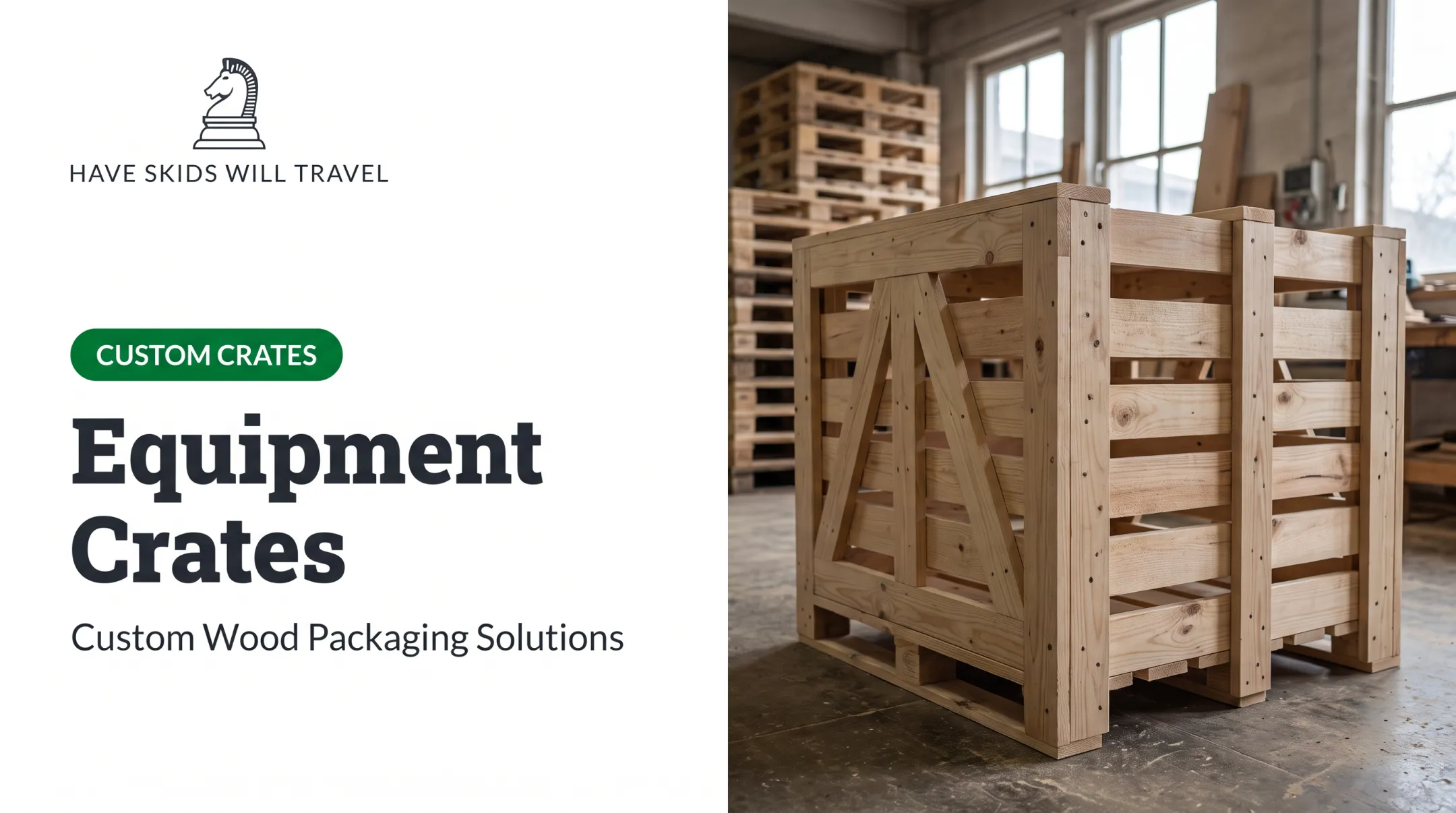
Crating, by contrast, handles the structural side — resisting impacts, supporting lifting points, and protecting against compression or rough handling during transit. A crate without proper internal packing is just a box; packing without a crate offers no structural protection at all.

Common Equipment That Needs Custom Solutions
Palleton's custom crate work regularly covers equipment where off-the-shelf packaging won't work, including:
- CNC machines and presses
- Generators and fabrication equipment
- Automation systems and robotics
- Electrical panels and control cabinets
- Commercial equipment and oversized industrial components
Each crate is built around the product's actual dimensions, weight specifications, and shipping requirements rather than a standard size.
Skid, Open-Frame, or Fully Enclosed?
The right structure depends on exposure risk and handling needs:
- Skid — a load-bearing base for equipment that doesn't need full enclosure but does need a stable handling surface.
- Open-frame crate — suited to goods that aren't easily damaged by outside forces and need only limited weather protection.
- Fully enclosed crate — necessary when equipment needs visual concealment, full weather protection, or added security during transit.
Note that the governing ASTM standard for open and covered wood crates only covers loads up to 4,000 pounds, so heavier machinery usually needs engineered solutions beyond that scope.
Custom dimensions still matter. Uneven loads, protruding components, and off-center weight can shift a machine if the crate isn't built to match.
The Machinery Crating Process: From Assessment to Carrier Handoff
A well-built crate starts long before any lumber gets cut. It starts with the right information.
Assessment and Equipment Preparation
Before building anything, a crating provider needs:
- Accurate dimensions, total weight, and weight distribution
- Center of gravity and photos, drawings, or CAD files
- Equipment value and details on removable or fragile parts
- Origin, destination, delivery deadline, and shipping mode (road, rail, air, ocean, or combined)
Once that's confirmed, equipment preparation begins. Typical prep steps include:
- Manufacturer-approved disassembly
- Securing loose parts and locking moving components
- Draining fluids where required
- Protecting electrical connections
- Documenting the machine's condition before packing
Internal Protection and Crate Construction
With prep complete, the team selects the internal protection plan. Common options include:
- Blocking, bracing, straps, and cushioning
- Custom supports matched to the machine's geometry
- Anti-static materials, vapor barriers, desiccants, or corrosion protection when the route or environment requires them
Crate and base construction follows, covering:
- Load-bearing surfaces and reinforced corners
- Fasteners sized for the load
- Forklift access and clear lifting points
- Ventilation and access panels where applicable
- Weight distribution across the base
Final Inspection and Handoff
Before the crate leaves the shop floor, a final check confirms:
- The machine cannot shift inside the crate
- Markings and handling instructions are clearly visible
- The finished shipment is fully documented
The last step is confirming the crate can be moved safely by the lifting equipment used at pickup and delivery.

Materials, Export Compliance, and Protection Against Transit Conditions
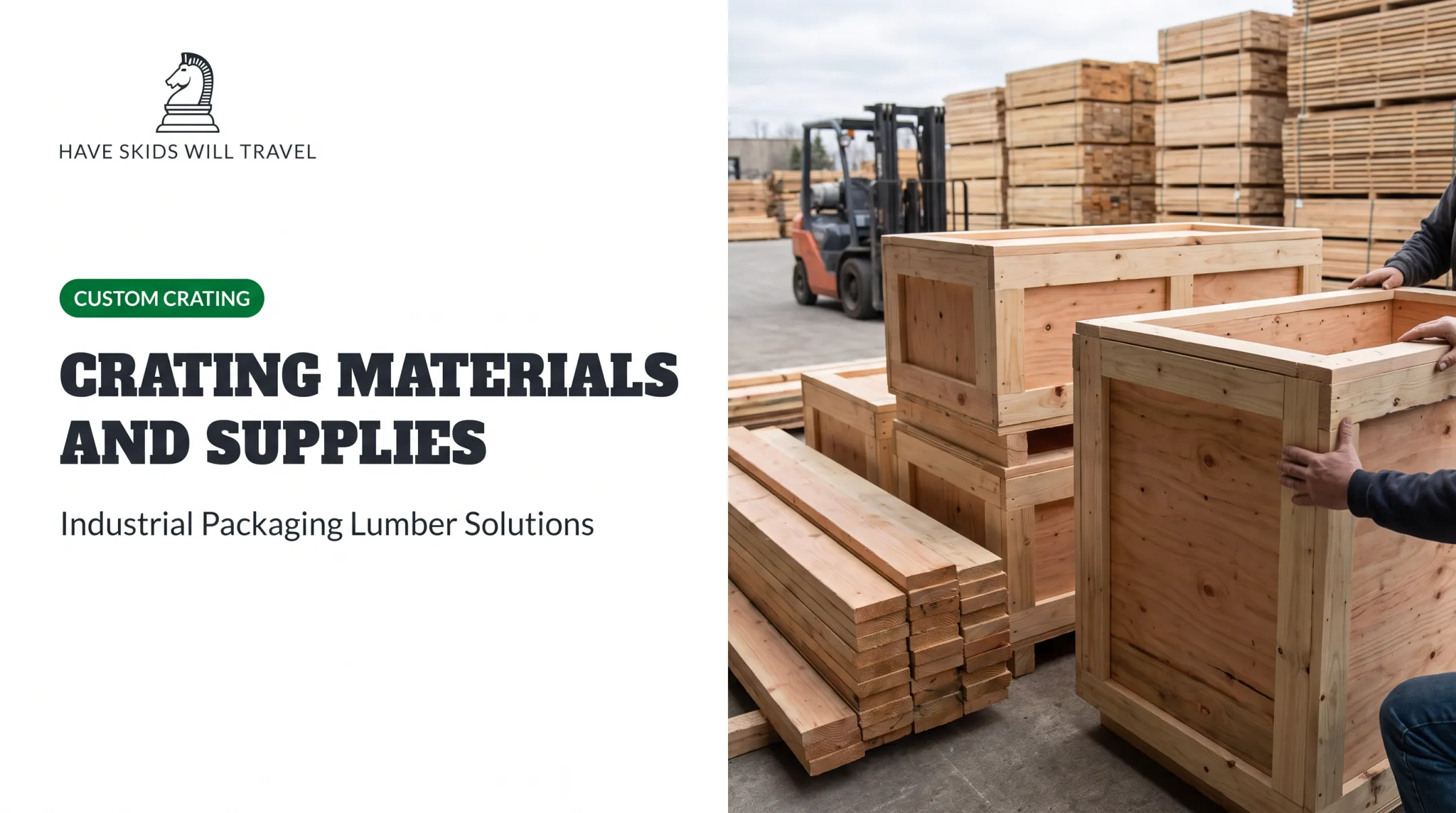
Crate material choice comes down to load weight, size, expected handling, and whether the crate needs to be reused.
Choosing the Right Materials
- Solid lumber: strong and reliable for heavier loads
- Plywood: lighter weight with good surface coverage
- Engineered wood panels: OSB or similar panels with timber framing for structural crates
- Pallets and skids: appropriate when full enclosure isn't needed
Palleton selects new, combination, or recycled lumber based on the shipment's performance targets, so cost stays in check without weakening the build. Right-sized design, plus repair and reuse where the structure is still sound, cuts material waste without giving up protection.
ISPM-15 for International Shipments
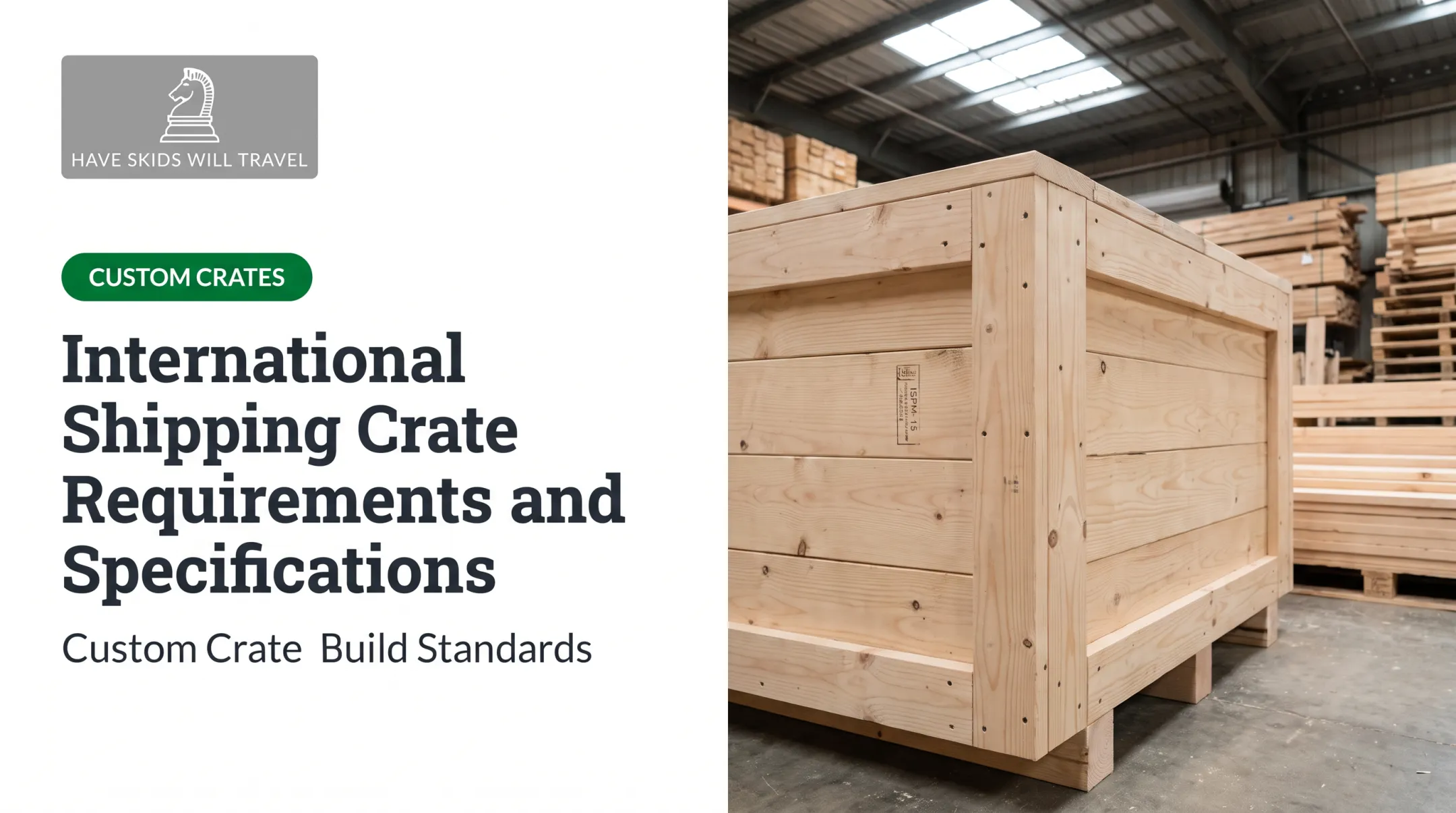
Export shipments moving in solid wood packaging often need heat treatment and proper marking under international phytosanitary rules. Palleton heat-treats pallets and crates to a minimum core temperature of 140°F for at least 30 minutes, then stamps them with the recognized mark: country code, facility ID, and treatment code (HT).
That said, requirements vary by destination. The USDA APHIS export guidance places responsibility on the exporter to confirm destination-specific rules, since country requirements aren't universal. Always verify current rules for the specific country before shipping.
Moisture, Corrosion, and Handling Labels
Heat treatment addresses pest risk. It does not address moisture. Equipment exposed to humidity or ocean transit may also need vapor-barrier film, desiccants, or rust inhibitors layered inside the crate.
External markings tell handlers how to move the load and where it is vulnerable:
- Forklift pockets and crane/sling points
- "This side up" and center-of-gravity labels
- Shock or tilt indicators where applicable
Clear labels reduce mishandling in transit and give receivers a faster read on whether the shipment stayed upright and within shock limits.
Shipping Coordination and Cost Factors
Crate design only works when it matches how the shipment will actually move.
How Freight Planning Shapes the Crate
These logistics details shape crate size and construction:
- Trailer or container dimensions
- Dock-door clearance
- Forklift capacity and crane access
- Loading orientation
- Final unloading conditions
A crate built without this information risks not fitting through the destination's dock door or exceeding a carrier's handling limits.
What Drives the Cost
Pricing depends on several factors working together rather than a flat rate:
- Equipment dimensions and weight
- Crate complexity and internal protection needs
- Materials selected and on-site work required
- Disassembly or special preparation
- Origin, destination, and shipping mode
- Accessorial handling, such as liftgate or limited-access delivery
- Storage, insurance, and delivery timing
Carriers like FedEx Freight list liftgate service, extended-length handling, and storage as separate charges from base transport — which is why crate fabrication and freight costs should be quoted separately, not assumed to be bundled.
Pre-Quote Checklist
Before requesting a quote, have ready:
- Photos or drawings of the equipment
- Exact measurements and weight data
- Requested pickup and delivery dates
- Origin and destination addresses
- Export status and any facility-access constraints
Palleton evaluates each shipment against product specs, weight, and logistics requirements, then provides detailed specs and sample crates for approval. That process supports businesses that need custom crates, ISPM-15-certified heat-treated packaging, or a recurring crating program with clear lead-time communication.
Choosing a Machinery Crating and Shipping Provider
Not every pallet shop can handle a 6,000-pound press or a delicate robotics system. A few things separate a capable provider from one that's guessing.
Look for demonstrated experience with heavy, oversized, fragile, or export shipments, not just standard pallets.
Confirm they offer custom design and manufacturing, understand material and compliance requirements, and coordinate directly with carriers rather than leaving that step to you. Before committing, ask:
- Can they assess the shipment remotely or on-site?
- Can they accommodate unusual dimensions or weight distributions?
- Will they provide handling instructions and document the finished crate?
- How do they communicate schedule changes before they become delivery problems?
For companies with recurring shipping needs, a provider's broader supply-chain capabilities matter just as much as a single crate build. Consistent specifications, dependable material sourcing, and emergency support all reduce friction over time.
Those are the capabilities Palleton has built over more than 45 years in the pallet and lumber industry. Seven Midwest facilities—including a lumber mill and a dedicated custom pallet and crate shop—support custom wooden crates for machinery, equipment, and international shipments.
In-house ISPM-15 heat treatment, national account sourcing, and cloud-based tracking help businesses that manage shipments across multiple locations.
If you're preparing to ship machinery or oversized equipment, contact Palleton to discuss your shipment's specifics. A solid quote should cover the machinery itself, the route, handling requirements, and destination—not just a general size category.
Frequently Asked Questions
How do you ship large machinery safely?
Start by assessing the equipment, preparing it properly, and securing it internally. Then build a custom crate matched to its weight and fragility, mark it clearly, and coordinate transport with a carrier equipped to handle the load.
Does large machinery need to be crated?
Heavy, oversized, fragile, high-value, or frequently handled machinery usually needs a custom crate. The final decision depends on the equipment, shipping method, and exposure risks along the route.
What information is needed for a machinery crating quote?
A solid quote usually needs dimensions, weight, weight distribution, photos or drawings, origin and destination, timing, shipping mode, available handling equipment, export status, and any disassembly or environmental-protection needs.
How much does machinery crating and shipping cost?
Pricing varies by crate design, materials, internal protection, equipment size and weight, handling requirements, route, freight mode, and timing. A shipment-specific quote is the only reliable way to estimate cost.
Can machinery be shipped internationally in a wood crate?
Yes, but the shipment may require ISPM-15-compliant heat-treated and marked wood packaging, destination-specific documentation, and additional moisture or corrosion protection depending on the route.
What is the difference between packing and crating?
Packing protects and secures machinery inside the crate using cushioning, blocking, bracing, or barriers. Crating provides the external structural enclosure. Most machinery shipments need both.