
Many shippers assume there's one "standard" size for every pallet. That's not quite true. Dimensions shift based on region, industry, and what you're actually shipping.
This guide breaks down standard US pallet dimensions, common industry-specific sizes, weight capacities, and how to pick the right one for your shipment.
TL;DR
- The 48"x40" GMA pallet is the most common US size, used across grocery, retail, and general shipping
- Industry standards differ—dairy, beverage, chemical, and automotive each run their own common sizes
- Standard pallets typically hold 2,500–4,600 lbs, depending on construction and design
- Choose size by product weight, racking fit, container/trailer use, and industry norms
- Palleton can match standard or custom pallet specs to your load, racking, and shipping route
What Is a Standard Wood Pallet?
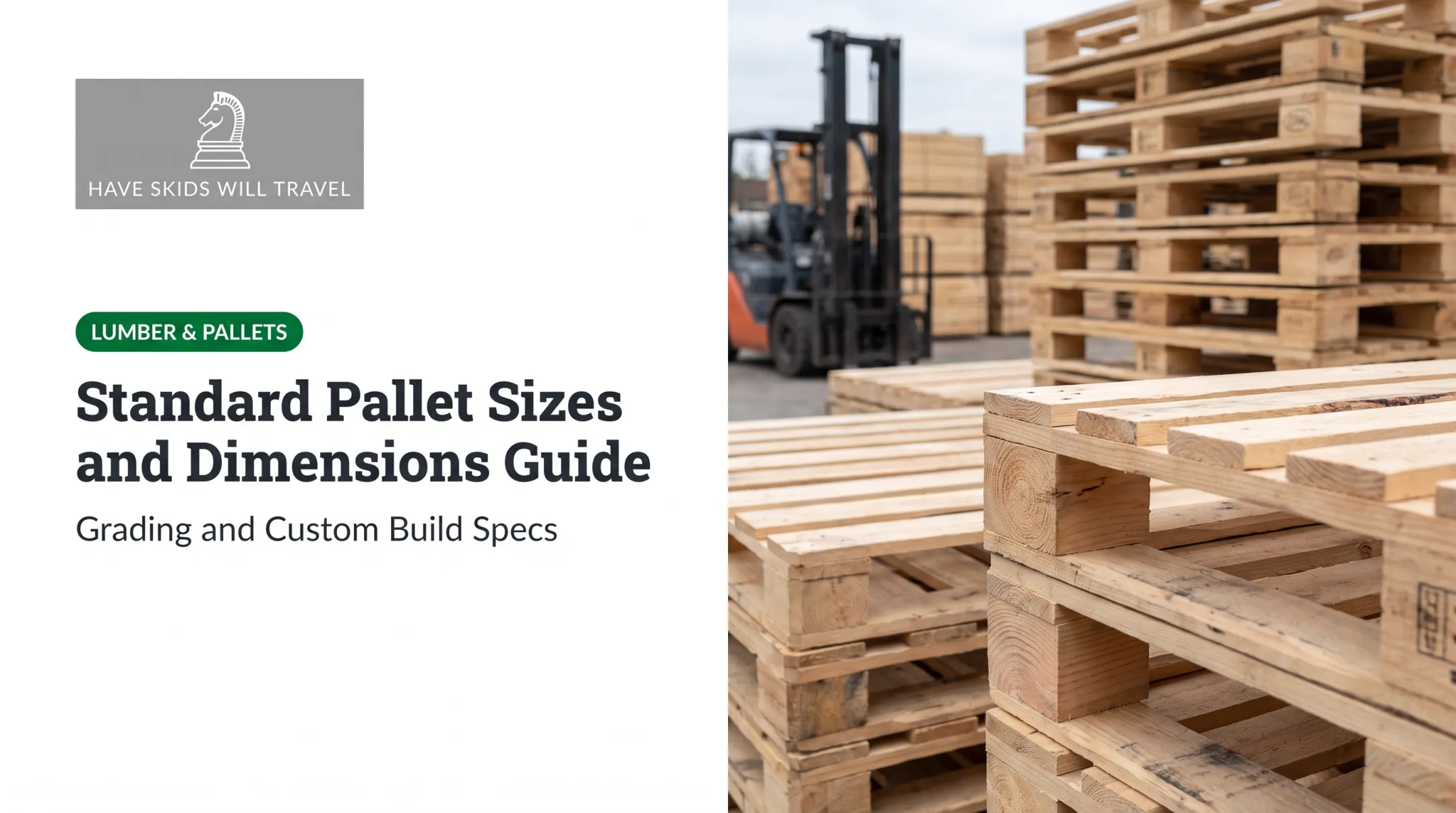
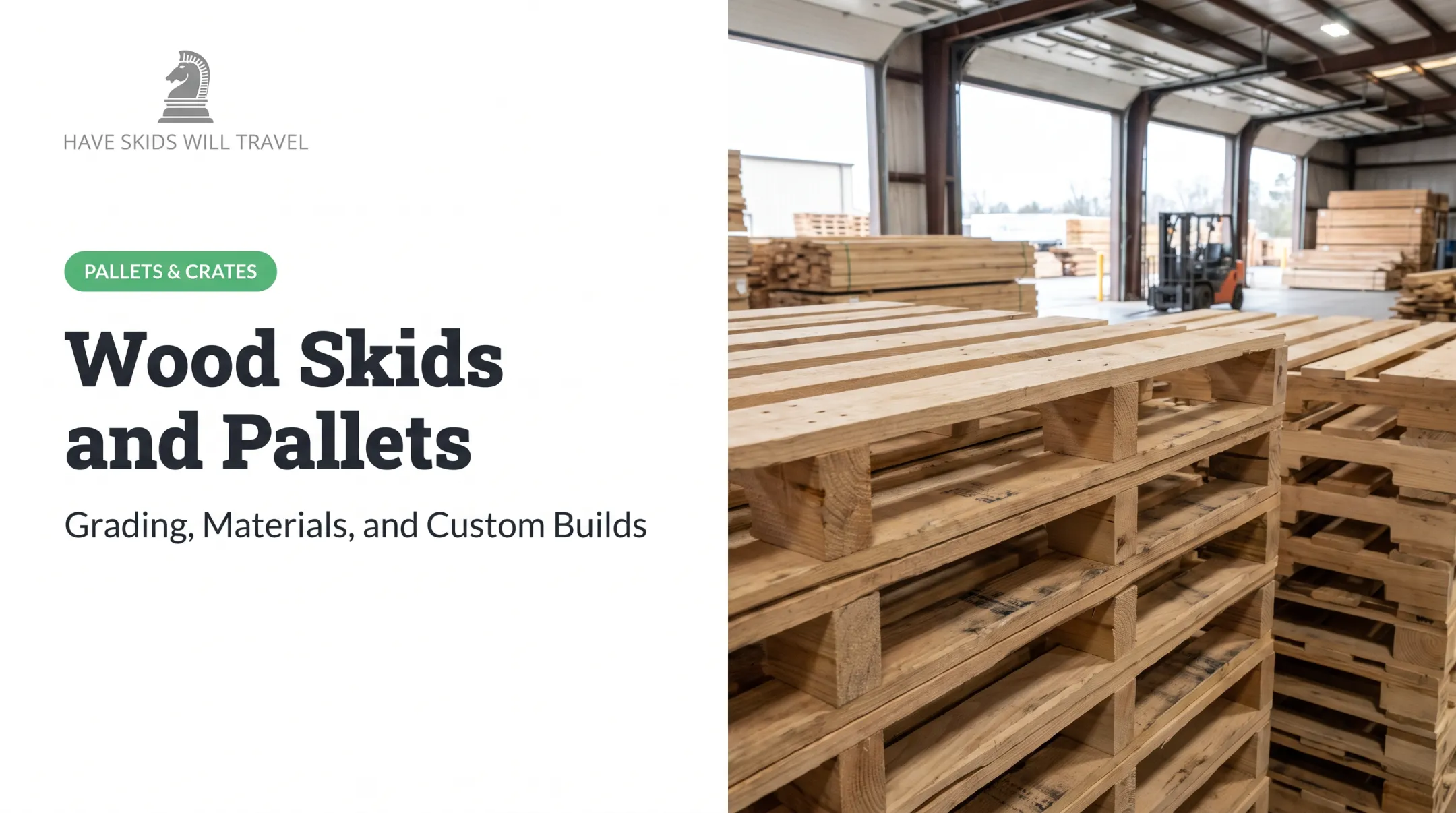
A wood pallet is a flat structural platform, built from deck boards attached to stringers or blocks, designed to support goods for forklifts and pallet jacks. Pallets are measured by stringer length by deck-board length. A 48"x40" pallet has 48-inch stringers and 40-inch deck boards.
According to the 2025 Uniform Standard for Wood Pallets, pallets fall into two construction classes: stringer and block. Each class comes in several entry styles:
- Two-way
- Partial four-way
- Full four-way
Size and design combinations vary widely beyond those options.
Pallets aren't one-size-fits-all. Selection depends on your load, your industry, and your shipping lane, not just whatever's cheapest or most available.
Why Standard Pallet Sizes Matter
Standardized sizes make truck and container loading predictable. They reduce wasted cube space and simplify racking, conveyor systems, and automation.
Mismatched sizing creates real problems:
- Instability during transit, increasing damage risk
- Wasted trailer or container space, driving up per-unit freight costs
- Slower warehouse throughput when pallets don't fit existing racking
A 2024 logistics optimization study modeling over 28,000 cargo units found that coordinated pallet-loading planning achieved above 90% average utilization. Standard footprints make that kind of planning repeatable instead of guesswork.
Palleton supplies standard and custom pallets matched to your load and racking, so freight costs stay down and product damage stays low.
Standard Pallet Sizes and Dimensions in the US
GMA Pallet (48" x 40")
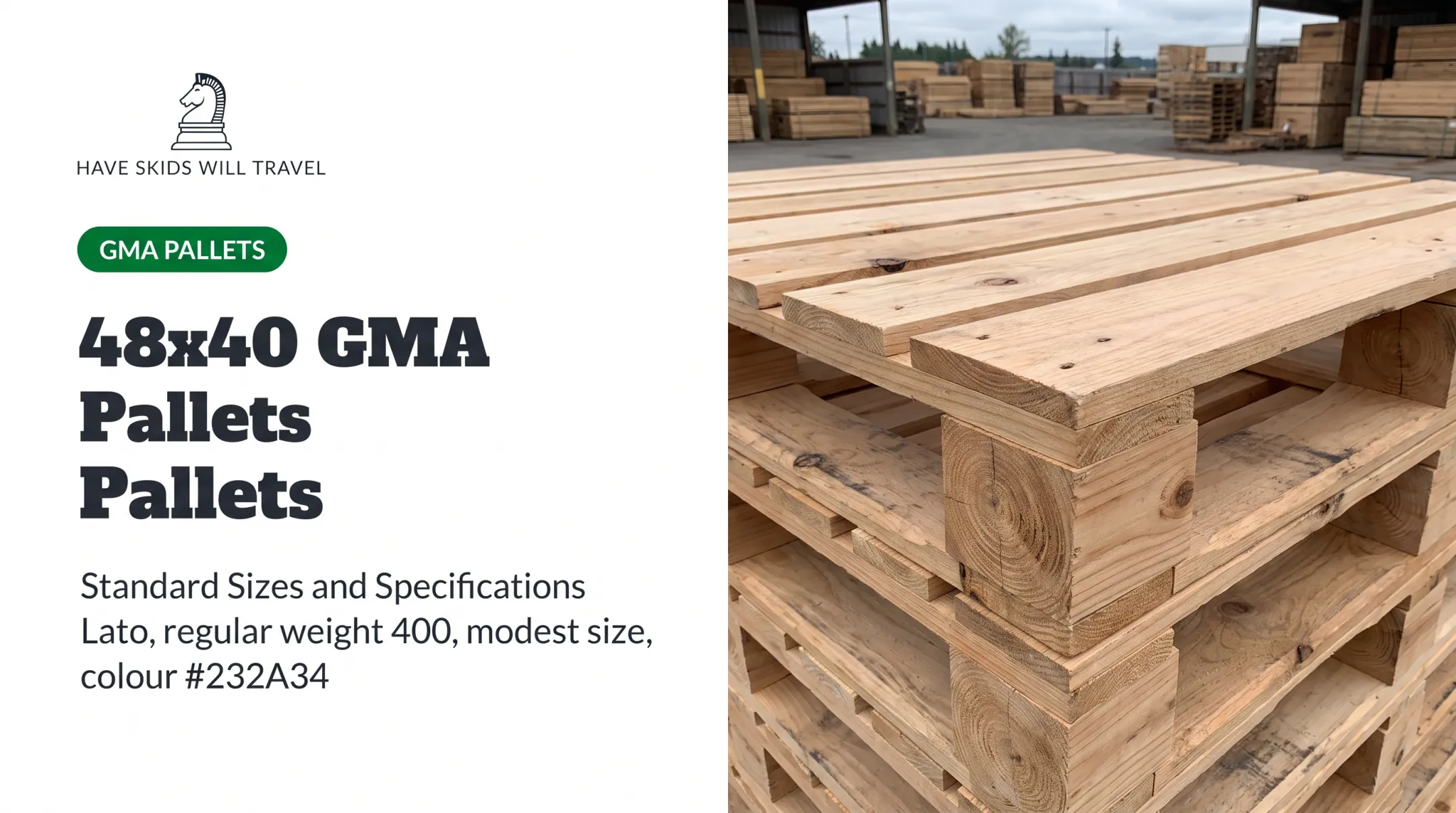
The GMA pallet, named for the Grocery Manufacturers Association, is the most widely used pallet size in the US. It typically uses stringer or block construction with deck boards roughly 3.5 inches wide.
Industry estimates put GMA pallets at roughly 27–29% of the US market, whether you measure pallets in circulation or new production. That share is why it remains the default for grocery and general freight.
Best suited for:
- Grocery and general retail distribution
- General warehousing
- Businesses that want easy access to used or recycled inventory
Key strengths: Fits standard doorways, trucks, and racking systems. Easy to source, repair, and replace.
Limitations: Not ideal for oversized, heavy, or irregularly shaped loads.
Palleton's 48"×40" GMA option is a stringer-style pallet in new hardwood or softwood, combo (mixed new/used), or 100% recycled wood. You can match material grade to load and budget instead of paying for capacity you do not need.
Industry-Specific US Pallet Sizes
Certain industries developed their own standard footprints based on product shape, weight distribution, and handling equipment.
| Size | Common Application |
|---|---|
| 40" x 40" | Dairy |
| 36" x 36" | Beverage |
| 48" x 20" | Retail |
| 48" x 42" | Beverage, chemical |
| 48" x 45" | Automotive |
| 44" x 44" | Chemical, drums |
| 42" x 42" | Paint, telecom, medical |

Best suited for: Businesses in dairy, beverage, automotive, or chemical sectors needing sector-optimized handling.
Key strengths: Better space use and stacking stability for specific product types.
Limitations: Less universally available than GMA pallets. Custom ordering is often required.
Palleton also builds custom pallets for oversized, narrow, odd-shaped, and heavy-duty loads in automotive, chemical, and food and beverage. Layouts are engineered around the product so handling and cube use stay efficient.
ISO / International Pallets
If you're exporting, the domestic GMA standard won't apply overseas. ISO 6780 defines six recognized international footprints, including 1200 x 800mm and 1200 x 1000mm.
The EPAL Euro pallet is 1200mm × 800mm (about 25 kg, rated for 1,500 kg safe working load)—not 1200 × 1000mm, a size often confused with it. Australian shippers commonly use a regional 1165mm × 1165mm footprint. That size is not on the ISO 6780 list but remains widely used domestically.

Best suited for: US exporters and manufacturers shipping internationally who need ISPM-15 heat-treated pallets.
Key strengths: Reduces the need to re-palletize goods once they reach overseas ports.
Limitations: International sizes often won't fit US racking, trucks, or domestic handling equipment efficiently.
For export shipments, Palleton runs monitored heat-treatment kilns that hold each pallet's wood core at a minimum of 133°F for at least 30 minutes—the ISPM-15 requirement. Qualifying units receive a certification stamp with the IPPC symbol, country code, and HT treatment code for customs clearance.
Pallet Weight Capacity and Load Considerations
Weight capacity depends heavily on construction, not just footprint. For a standard GMA pallet, two figures matter most:
- Typical capacity range: 2,500 lbs for new wood GMA pallets, up to 4,600 lbs for heavier-duty designs
- Empty pallet weight: Roughly 30-48 lbs, depending on lumber grade and deck thickness
Virginia Tech's Center for Packaging and Unit Load Design notes that safe capacity depends entirely on loading and support conditions, not construction class alone.
Container planning follows the same footprint. On one floor tier, a 20-foot container holds roughly 10 standard 48"x40" pallets, and a 40-foot container holds up to 21. Double-stacking depends on cargo weight, bottom-pallet strength, and road weight limits, so always confirm before planning a load.

How to Choose the Right Pallet Size for Your Shipment
Start with your shipment, not the catalog. Match the pallet to these factors:
- Product weight, dimensions, and fragility: heavier or irregular loads need custom engineering
- Racking and automation compatibility: a pallet that doesn't fit your racking creates instability
- Domestic vs. international shipping: export loads need ISPM-15 compliance
- Industry norms: dairy, chemical, and automotive each have their own conventions
- Budget and availability: new, combo, recycled, or used pallets each hit a different price point
- Program length: a one-time export shipment has different needs than a recurring weekly program

Palleton's sales team starts by reviewing product dimensions, load weight, handling method, and shipping requirements before recommending anything. For routine shipments, that often means a standard 48"x40" GMA stringer pallet with material matched to budget. For oversized, conveyor-handled, or export loads, the team uses engineering tools to right-size the layout and provides drawings for approval before production begins.
What to Check Before Finalizing Your Pallet Order
Before placing a bulk order, run through this checklist:
- Don't overspec capacity. A standard GMA pallet often handles the job; heavy-duty custom builds cost more and aren't always necessary.
- Confirm ISPM-15 requirements for any export shipment. Missing this holds up customs clearance.
- Match weight capacity to your actual product load, not industry assumptions about what "should" work.
- Verify dimensions against existing racking, trucks, and handling equipment before a large order.
Skip any of these steps and you can end up with pallets that fail export checks, can't take the load, or don't fit dock doors and racking after the order is already placed.
Conclusion
Standard wood pallet sizes aren't one universal spec. They shift based on industry, region, and what you're shipping. The GMA 48"x40" remains the default starting point for most US businesses, but dairy, beverage, automotive, and export shipments often call for something different.
Getting the dimensions right protects your product, keeps freight costs predictable, and prevents disruptions from pallets that don't fit your truck or racking. Working with an experienced provider like Palleton, with over 45 years in the pallet and lumber industry, makes it easier to source the right pallet the first time.
Frequently Asked Questions
What are standard pallet dimensions (L x W x H)?
The GMA standard footprint is 48" × 40", with an empty height of about 4.75 inches before goods are stacked.
What are the standard pallet sizes (US and European)?
In the US, the default is the GMA 48" × 40" pallet. In Europe, the common EPAL Euro pallet measures 1200 mm × 800 mm (about 47" × 31.5").
How much weight can a standard pallet hold?
Capacity varies by design, but standard GMA pallets typically range from 2,500 lbs to 4,600 lbs. Always confirm the tested load case with your supplier rather than assuming a figure.
How many pallets fit in a 20-foot container?
Roughly 10 standard 48"x40" pallets fit on one floor tier in a 20-foot container. A 40-foot container holds up to 21 on a single tier.
How much does a pallet weigh?
Standard wood pallets typically weigh between 30 and 48 lbs empty, depending on lumber grade, deck thickness, and construction type.
What are the common types of pallets?
Common types include GMA (48"x40"), block, stringer, CP (chemical industry) pallets, and fully custom-built pallets designed around specific product or handling requirements.