
In 2006, pallet producers used 63.6% hardwood and 36.4% softwood by volume in the U.S., according to a USDA Forest Service study. That split isn't random. Each wood type serves distinct load and budget needs.
This guide covers what hardwood pallets are, the most common species used, how hardwood differs from softwood, and how to pick the right type for your shipment.
TL;DR
- Dense deciduous species like oak give hardwood pallets more strength than softwood
- Oak and mixed hardwood dominate U.S. hardwood pallet production
- Higher upfront cost often pays off through longer life under repeated use
- Choose by load weight, budget, industry rules, and supply availability
- Palleton helps match wood type to your actual shipping needs
What Is a Hardwood Pallet?
A hardwood pallet is built from wood harvested from deciduous trees, species that shed their leaves annually, such as oak, maple, and mixed hardwood blends. Softwood, by contrast, comes from cone-bearing conifers.
Hardwood is generally denser than softwood. That density translates into:
- Higher load capacity
- Better resistance to wear from repeated handling
- A longer service life in reuse programs
Hardwood pallets are a practical choice for heavy, high-value, or frequently reused shipments: automotive parts, drums of chemicals, or export machinery handled dozens of times before retirement.

Why Wood Type Matters in Pallet Selection
Wood species directly affects a pallet's weight capacity, moisture resistance, and total cost of ownership. Get it wrong, and the consequences show up fast.
What goes wrong with the wrong wood choice:
- Pallet failure under heavy or concentrated loads
- Product damage from splintering or deck collapse
- Rejected shipments at export inspection
- Frequent, costly replacement cycles
A Forest Service study of recovered pallet parts found mixed-hardwood parts averaged 41% stronger and 40% stiffer than mixed-softwood parts. That's meaningful evidence for part-level strength, though it doesn't replace a proper pallet design evaluation for your specific load.
Palleton has spent more than 45 years in the pallet and lumber business. Its custom pallet process starts by reviewing your product, load weight, handling method, and shipping requirements before recommending a material. That structured approach, rather than defaulting to whatever's familiar, is what keeps shipments protected and pallet spend under control.
Types of Pallet Wood
Pallet wood isn't one-size-fits-all. Hardwood, mixed hardwood, and softwood each suit different loads, budgets, and industries. Your choice should depend on strength needs, weight tolerance, cost constraints, and application.
Oak Hardwood Pallets
Oak is the most widely used single hardwood species in pallet production, representing 26.9% of hardwood volume in the 2006 Forest Service dataset. Oak pallets are typically built from lumber left over from other production runs rather than purpose-cut boards.
How it differs: Oak has higher density, more structural rigidity, and a rougher grain texture than lighter hardwoods or softwoods.
Best suited for:
- Heavy machinery and automotive parts
- Oil and chemical drums
- Export shipments requiring high load capacity
Key strengths:
- High dynamic load capacity
- Strong wear resistance under repeated handling
- Long reuse life
Trade-offs:
- Higher cost per unit
- Heavier weight, which increases freight cost
- Less consistent regional supply than mixed hardwood

Mixed Hardwood Pallets
Mixed hardwood pallets blend several species — maple, beech, ash, and other regional hardwoods — rather than relying on one type. In fact, the Forest Service found that 61.2% of hardwood lumber and parts used in pallet production were mixed species, not single-source. Producers often just need hardwood-grade material, not a specific species.
How it differs: Blending species balances strength with more consistent availability than sourcing pure oak.
Best suited for:
- Repeated-use pallet programs
- General industrial shipping where budget matters
Key strengths:
- Strong load-bearing performance at lower cost than pure oak
- More reliable regional supply
Trade-offs:
- Less uniform grain and appearance
- Strength can vary slightly batch to batch depending on the species mix
Softwood Pallets
Softwood pallets come from fast-growing coniferous trees — southern yellow pine, fir, or spruce — According to the Southern Forest Products Association, roughly 95% of Southern Pine lumber is kiln dried to 19% moisture or less.
How it differs: Lower density, lighter weight, and easier machinability than any hardwood.
Best suited for:
- Lightweight goods
- Single-use or export shipments
- Food and pharmaceutical loads where weight and cost matter most
Key strengths:
- Lower material cost
- Easier handling and faster kiln-drying
- Faster-growing, more renewable supply
Trade-offs:
- Lower load capacity than hardwood
- Greater risk of warping or splintering
- Shorter reuse lifespan

How to Choose the Right Pallet Wood Type
The right wood depends on your load, use case, and budget, not on which species has the best reputation.
Factors to weigh:
- Weight and fragility of the goods being shipped
- Reuse frequency: one-way shipment vs. a recurring pallet pool
- Total cost of ownership, not just the sticker price per unit
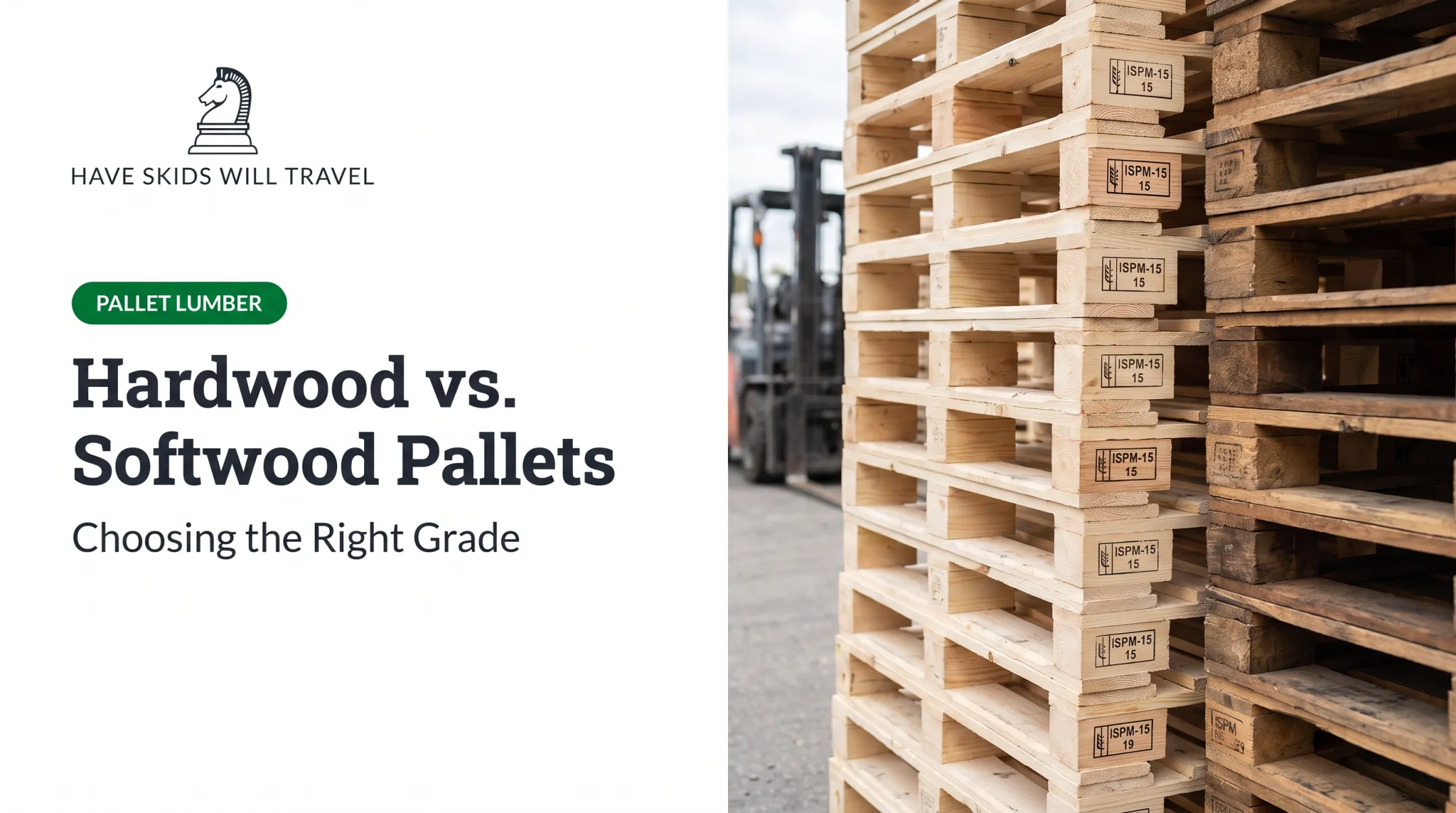
- Industry requirements, including food-grade standards or ISPM-15 heat treatment for exports
- Regional supply consistency for your chosen species
For export shipments, APHIS requires wood packaging to reach a minimum core temperature of 56°C (133°F) for at least 30 minutes under ISPM-15 if the destination country requires it. Skipping this step, regardless of wood species, risks having your shipment rejected at the border.
Supply consistency is easier to hold when sourcing is stable. Palleton's seven facilities, including its own lumber mill, plus a national sourcing network, help businesses lock in hardwood, softwood, or mixed hardwood at steady quality and volume. That matters when a single bad batch can throw off a production schedule.

What to Check Before Finalizing Your Pallet Wood Choice
A few common missteps keep showing up in pallet procurement:
- Defaulting to oak when mixed hardwood or softwood would meet load requirements at a lower price
- Overlooking moisture or heat-treatment requirements for export shipments, risking rejection at customs
- Ignoring long-term costs like weight-driven freight charges and how often pallets need replacing
- Choosing based on familiarity rather than actual load and industry needs
Run through your load specs, reuse plan, and destination rules before locking in a wood type. A quick conversation with a supplier who asks about your actual application, not just your budget, usually surfaces the right fit faster than guessing.
Conclusion
Wood species shapes a pallet's strength, cost, and lifespan. Hardwood, mixed hardwood, and softwood each serve different supply chain needs. The right choice depends on your load and budget, not a one-size-fits-all ranking.
Working with an experienced provider like Palleton helps you match pallet wood to your actual shipping requirements, so products stay protected and costs stay predictable over time.
Frequently Asked Questions
Are pallets made of hardwood?
Many pallets are made of hardwood, especially oak, though softwoods like southern yellow pine are also widely used depending on load and cost needs. The choice comes down to application, not a fixed industry standard.
How can I tell if a pallet is hardwood or softwood?
Check the weight, grain texture, and color. Hardwood feels noticeably heavier and denser, while softwood is lighter with visible resin, knots, and a pine-like smell.
How can I tell if a pallet is made of oak?
Look for a rough, fuzzy grain texture that develops as the wood ages, a heavier feel, and a tan-to-brown color. Oak also resists cutting and sanding more than softer woods.
What does a hardwood pallet cost?
Hardwood pallets generally cost more than softwood due to material density and sourcing challenges. Costs vary by size, grade, and volume, so it's best to request a quote based on your specific needs.
Is pallet wood good wood?
Pallet wood quality varies by species and grade. Reputable manufacturers use structurally sound lumber suited for safe, repeated handling, regardless of whether it's hardwood or softwood.
What's the difference between hardwood and mixed hardwood pallets?
Mixed hardwood blends several species for a balance of strength and cost. Single-species hardwood, like oak, offers maximum durability but usually comes at a higher price.