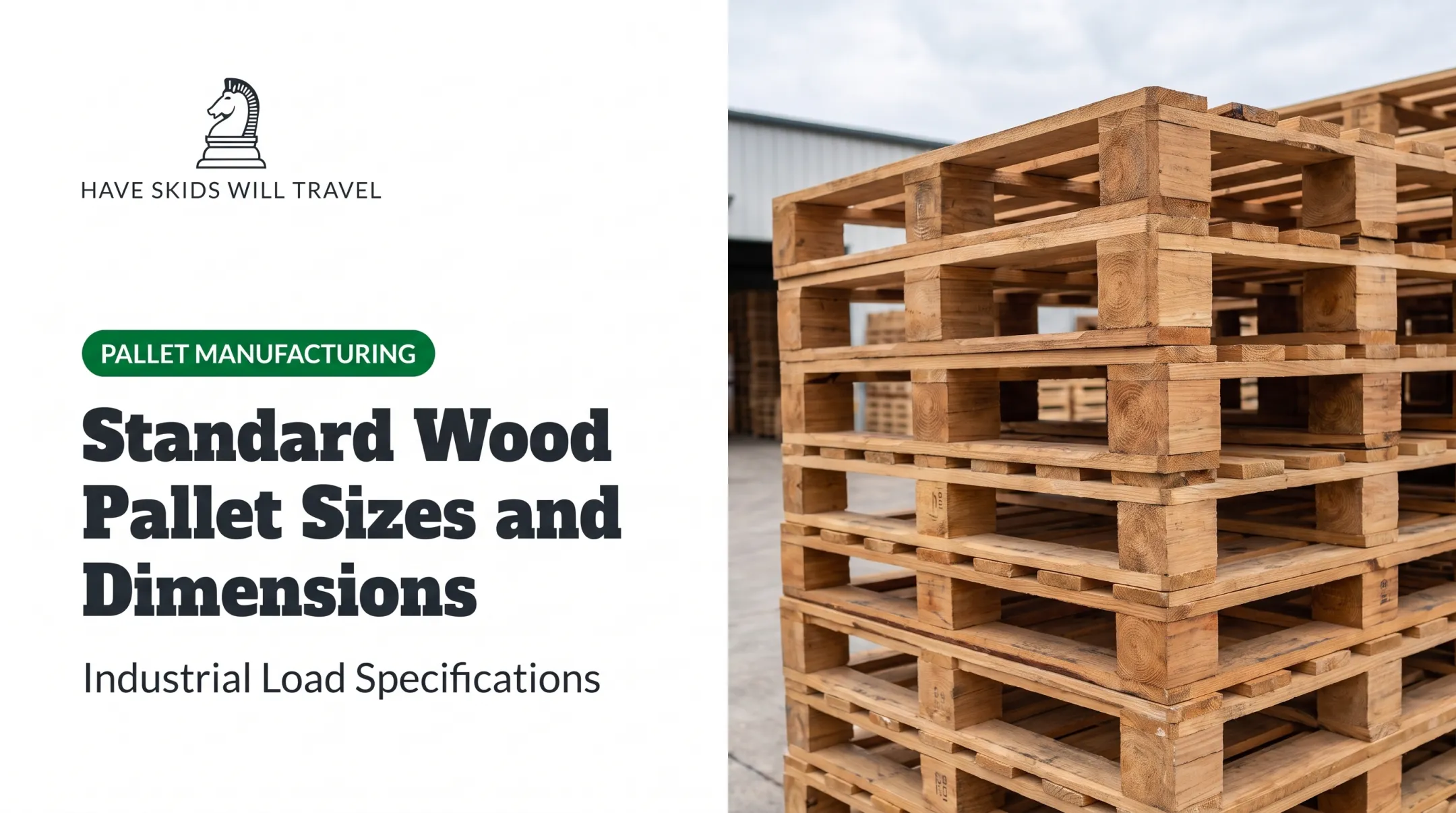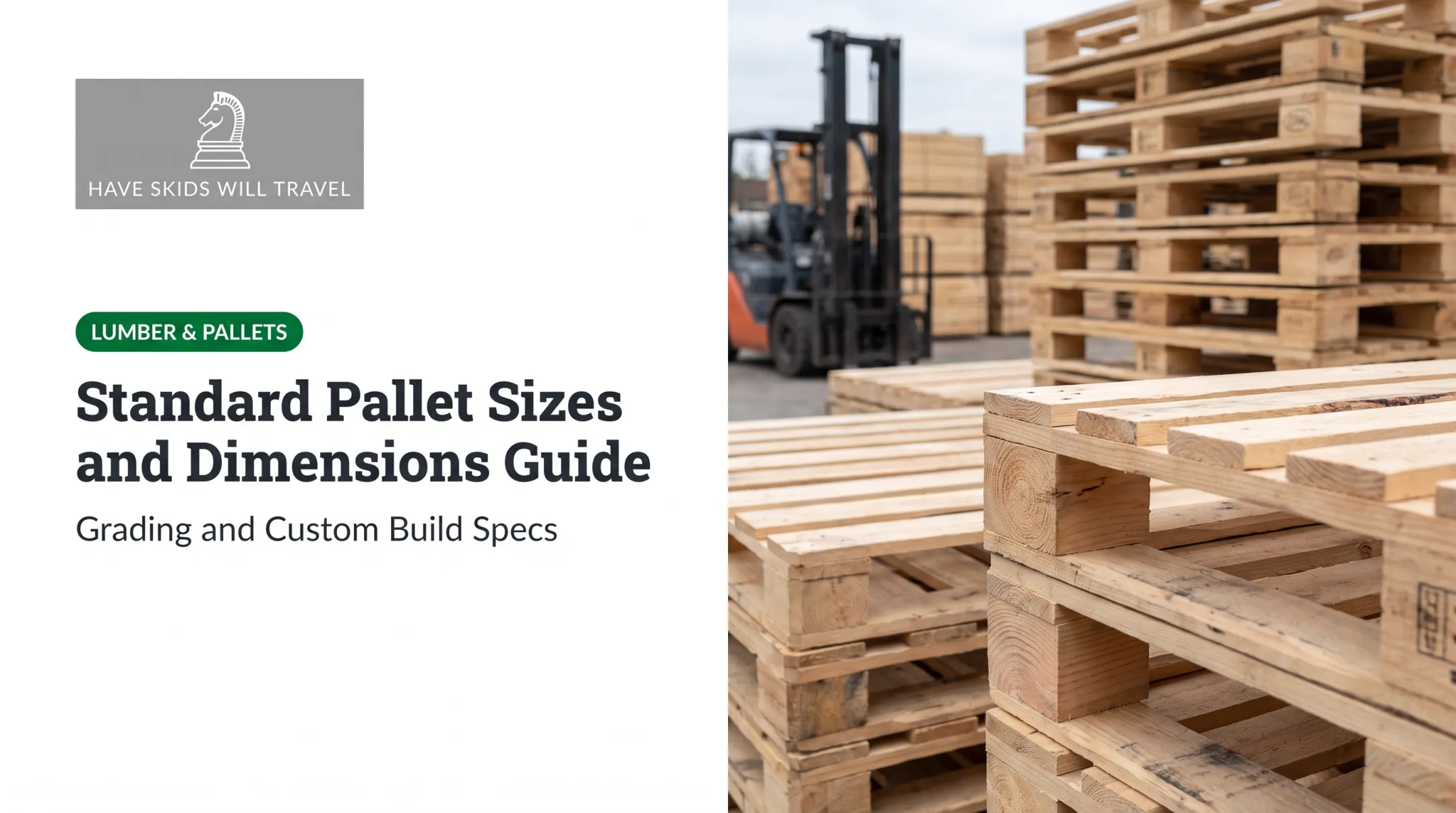

If you're sourcing pallets for warehousing, shipping, or automated racking systems, understanding this pallet's dimensions, construction, and grading isn't optional. Get it wrong, and you risk rejected shipments, damaged product, or wasted budget on the wrong grade.
This article breaks down everything: dimensions, construction types, grading, load capacity, and what to check before you buy.
TL;DR
- GMA pallets measure 48"x40" and dominate new pallet production in the US
- Stringer (2-way) and block (4-way) builds are the two main construction options
- Premium, A, and B grades set the tradeoff between price, durability, and use case
- Load capacity depends on construction, condition, and use (racked vs. stacked)
- Consistent suppliers and the right grade cut cost risk and support compliance
What a GMA Pallet Is and Why It's the US Standard
The Grocery Manufacturers Association developed the 48x40 pallet specification back in the 1970s. The organization itself later became the Consumer Brands Association in January 2020, but the pallet name stuck.
Today, the GMA pallet is the standard logistics unit. It's built to work with:
- Standard warehouse racking systems
- Forklifts and pallet jacks
- Conveyor systems
- Automated storage and retrieval systems (AS/RS)
GMA is a dimensional standard, not a regulated certification. Unlike EPAL pallets in Europe, which are certified through a formal licensing body, no single organization inspects and stamps every 48x40 pallet for quality compliance. Two pallets labeled "GMA" from different suppliers can still differ in construction quality, wood species, and repair standards.
Factors That Influence Real-World Specifications
The spec sheet pallet and the pallet that shows up on your dock aren't always identical. A few things drive that gap:
- Wood species, board thickness, and repair standards differ by manufacturer
- Reconditioned pallets carry different strength profiles than new builds
- Static, dynamic, and racked loads stress a pallet differently
- Repeated trips, moisture, and uneven repairs reduce capacity over time
That variance is why consistent build specs matter as much as the 48x40 footprint. Palleton supplies new hardwood, new softwood, combo new/used, and 100% recycled GMA pallets with matched deckboard and stringer specifications across those options, so load performance stays predictable from shipment to shipment.

Standard Dimensions and Specifications
The GMA pallet's footprint is fixed. Everything else — height, board count, weight — has some variability depending on who built it.
Core Dimensions
- 48" x 40" footprint (approximately 1,219 x 1,016 mm)
- Footprint area of roughly 13.3 square feet (from the 1,920 square-inch surface)
- Typical assembled height: about 5–6 inches, though no single industry body sets one universal figure
Deckboard count and thickness also vary by manufacturer. A commonly referenced example from Virginia Tech's Center for Packaging and Unit Load Design used five top deckboards on a standard two-way stringer pallet.
That setup reflects one tested configuration, not a universal GMA rule.
Weight and Load Capacity Range
No single universal load rating applies to every 48x40 GMA pallet. Capacity depends on:
- Wood species and board thickness
- Construction type (stringer vs. block)
- New vs. reconditioned condition
- Testing method (ISO 8611, ASTM D1185, and AIAG RC9 are common frameworks)
Virginia Tech's research is blunt: a capacity rating applies only to the exact load, support condition, and pallet design that was tested. Change any one of those variables, and the rating no longer holds.
That variability is why published numbers need careful handling in day-to-day operations.
Safe Operating Considerations
Published capacities are maximums, not guarantees — especially for reconditioned pallets that have already absorbed years of wear.
Exceed a pallet's rated capacity and you risk:
- Stringer failure mid-transit
- Product damage or contamination
- Rejected shipments at the receiving dock
If your load type changes (say, moving from floor stacking to rack storage), your pallet needs re-evaluation. A pallet rated safe for static floor storage isn't automatically safe under racked or dynamic conditions.
Construction Types and Entry Configurations
GMA sets the size. It doesn't set the build. That's why stringer and block construction both exist under the same "48x40 GMA" label.
Stringer vs. Block Pallets
Stringer pallets use solid wood stringers running the length of the pallet, creating 2-way forklift entry. They're the most economical option and dominate general distribution. Production data shows stringer-class pallets made up roughly 76-77% of new pallets in recent USDA Forest Service and Virginia Tech studies.
Block pallets use blocks instead of stringers, enabling 4-way entry from any side. That makes them better suited for automated systems and heavier, more complex loads.

Palleton's standard 48x40 GMA offering is the stringer pallet, built from new hardwood, new softwood, combo new/used wood, or fully recycled wood. These serve pharmaceutical, automotive, oil, grain, chemical, retail, and food and beverage customers, including long-term accounts like Hormel Foods and McCain Foods.
Grading System: Premium, A, and B
Grade separates pallets by repair history, board condition, and structural reliability:
- Premium grade — minimal repairs, strongest structural integrity, highest cost
- Grade A — light repair history, solid performance for most standard shipping
- Grade B — more repairs and wear, suited for lighter loads or shorter shipping cycles
A 1997 USDA Forest Service and Virginia Tech study found that heavily repaired pallets (grade C in their lab classification) retained about one-third the stiffness and half the racking strength of new comparable pallets. Repair count matters even when a pallet still looks structurally sound.

Palleton offers Premium, A-grade, and B-grade pallets matched to load type and budget. In-house inspection and repair standards keep deckboard and stringer specs consistent across orders.
How GMA Pallets Are Specified, Measured, and Validated
Getting the right pallet starts before it ever arrives at your dock.
Specification and Documentation
When requesting a quote, confirm these details upfront:
- Exact dimensions: nominal size vs. measured tolerance can differ slightly between suppliers
- Grade: Premium, A, or B, matched to your load and application
- Construction type: stringer or block, based on your handling equipment
- ISPM-15 status: required for any international shipment
Palleton's quote process reviews product dimensions, load weight, handling method, and shipping workflow. For custom orders, the team can provide drawings and samples before production begins.
Measurement and Verification at Receiving
Don't skip inspection just because a pallet arrives labeled "GMA." Run these quick field checks on arrival:
- Measure board thickness against your quote specs
- Check stringer notches for consistent forklift clearance
- Look for cracked, split, or missing deckboards
- Confirm the deck still feels solid; hidden rot or heavy prior repairs can weaken load capacity
Supplier consistency matters most for repeat orders. If your grade specification shifts silently between shipments, you'll feel it in damaged product or unexpected pallet failures down the line.
Implications of Choosing the Wrong Pallet or Grade
Pallet mismatches aren't just inconvenient. They're expensive.
- Undersized or overloaded pallets increase product damage risk and can trigger shipment rejections at the receiving end
- Low-grade pallets in high-cycle use wear out faster, driving up replacement costs over time
- Missing export compliance creates real risk for international shipments that need ISPM-15 heat-treated wood packaging
Noncompliant pallets can be refused, treated, or destroyed at the border, a costly delay for any exporter. ISPM-15 requires heat treatment to a minimum core temperature of 56°C (133°F) for at least 30 minutes.
Palleton's ISPM-15 Heat Treat Certification covers pallets, crates, and dunnage. Monitored kilns reach that core temperature without chemicals. Each treated unit gets the IPPC mark with country code, facility ID, and the "HT" treatment code, plus treatment records for customs inspectors.

Common Misconceptions About GMA Pallets
A few myths persist around this pallet size:
- "GMA guarantees identical quality across suppliers." There's no central certifying body like EPAL, so construction quality varies by manufacturer.
- "Static load ratings are safe for dynamic or racked conditions." A static rating only applies to the exact tested condition. Racked or dynamic loads need separate evaluation.
- "All GMA pallets are automatically heat-treated for export." Heat treatment isn't a default feature. It's a separate ISPM-15 process applied specifically for international compliance.
- "42x42 and 48x48 GMA variants are standard for beverage or chemical industries." These sizes exist in the market, but they aren't part of the core GMA 48x40 spec—confirm stock with your supplier.
Conclusion
The 48x40 GMA pallet sets a shared logistics standard across North American supply chains. Dimensions are fixed, but grade, construction, and load capacity still vary by builder and use case.
Sorting out those variables before you order helps prevent shipping damage, rejected freight, and compliance issues at the border. A supplier that documents grade, construction, and treatment status—Palleton included—makes it easier to match the right pallet to your load and compliance needs.
Frequently Asked Questions
What does GMA mean on a pallet?
GMA stands for Grocery Manufacturers Association, the organization that established the 48x40 pallet standard in the 1970s. That group is now the Consumer Brands Association.
How much does a GMA pallet cost?
Price depends on grade, wood type, and order volume. Request a quote for your grade and quantity to get an accurate number.
What are the standard dimensions of a GMA pallet?
The GMA pallet measures 48" x 40" (1,219 x 1,016 mm), with a usable footprint of roughly 13.3 square feet.
What are the requirements for GMA pallets?
GMA pallets use the 48" x 40" footprint with 2-way (stringer) or 4-way (block) entry. Deckboard count, stringer size, and fasteners follow the grade and load rating you specify.
How much does a GMA pallet weigh?
Empty weight varies by wood species and construction type. Confirm the weight on the spec sheet for the exact pallet you're ordering.
Are GMA pallets required to be heat-treated?
No, heat treatment isn't required for domestic use. It becomes mandatory under ISPM-15 for any pallet used in international export shipments.