
What is ISPM‑15?
ISPM‑15 is a global standard that governs solid wood packaging – including pallets, crates, and dunnage – used in international shipping. It requires that qualifying wood be heat treated or fumigated and marked to prove it is free of live pests that could damage forests and agriculture.
Any wood packaging over a minimum thickness used in export shipments must meet ISPM‑15 or risk being refused, treated, or destroyed at the border. Working with a certified supplier like Palleton keeps your supply chain moving and your documentation in order.
When do I need ISPM‑15 compliant pallets?
You need ISPM‑15 compliant wood packaging whenever you ship goods internationally to countries that enforce the standard. Many exporters use compliant pallets for any load that might be reused or re‑routed overseas to avoid customs delays or rejections.
What does “heat treated” (HT) mean?
“HT” indicates the pallet or crate has been heat treated so the wood core reaches at least 56°C (133°F) for a minimum of 30 minutes. This process eliminates insects, larvae, and other harmful organisms in the wood without using chemicals.
Our heat treatment process
Palleton uses controlled heat‑treatment kilns that bring each pallet or crate to the temperatures specified under ISPM‑15 and hold it there for the required time. This process drives heat into the core of the wood to eliminate insects, larvae, fungi, and other harmful organisms without compromising strength.
Each heat‑treated unit is processed under monitored conditions and then marked according to the ISPM‑15 standard, creating a clear record for inspectors and your customers. Because the treatment penetrates the entire piece, the pallet remains compliant for its service life as long as it stays structurally sound and unmodified.
Heat‑treated vs. chemically treated
Heat‑treated pallets rely only on high temperature and time, making them a safe option for workers, products, and the environment. There are no chemical residues to affect sensitive products, food‑grade items, or pharmaceutical packaging.
Chemical fumigation methods such as methyl bromide are increasingly restricted, require additional handling controls, and can raise concerns for end users. Choosing heat treatment helps reduce regulatory risk while still meeting ISPM‑15 requirements in markets around the world.
What does the ISPM‑15 stamp look like and what does it mean?
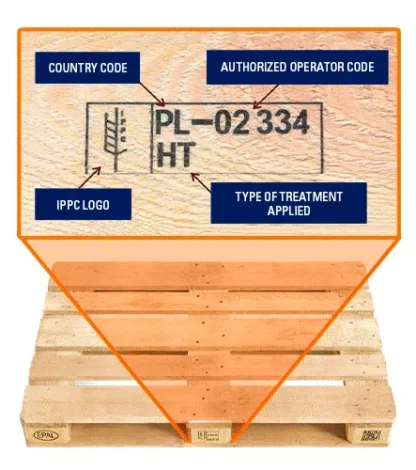
The ISPM‑15 stamp, often called the “wheat” or “bug” stamp, shows the country code, a unique facility ID, and the treatment code such as HT. This mark tells inspectors the wood packaging was treated and produced under an approved, audited program.
Applications and options
Use Palleton’s ISPM‑15 certified heat‑treated products for:
-
Export pallets for overseas shipments.
-
Custom crates for machinery, equipment, and oversized loads.
-
Mixed loads where only a portion of product is going outside the U.S.
Palleton can build standard sizes or custom designs to match your product dimensions, weight, and carrier requirements while ensuring every component that needs it is fully compliant. Pair heat‑treated packaging with Palleton’s other pallet services to streamline sourcing and simplify your export logistics.